What is personalized digital learning: Benefits, myths, and tools
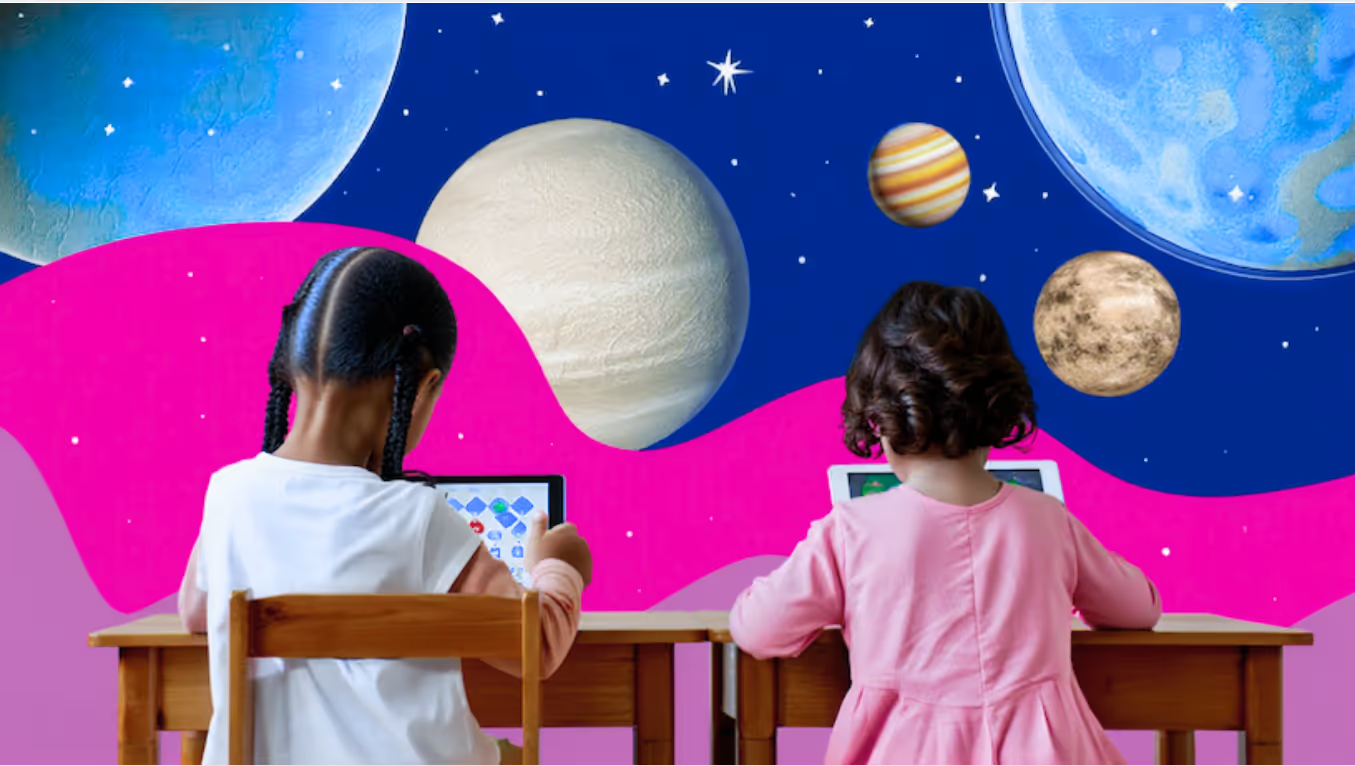
Learning should feel like it fits for every child. Not too hard, not too easy, and never one-size-fits-all. Personalized digital learning aims to do just that.
Today’s online tools are built to help kids learn in more flexible, personalized ways than you’d find in a traditional classroom. Using adaptive technology and ongoing feedback, kiddos benefit from a learning journey that grows with them.
This guide breaks down how personalized digital learning actually works, explores tools that support it, and shows why the best learning experiences still need the human touch.
What is personalized digital learning?
Personalized digital learning, also called personalized e-learning, recognizes that every kiddo learns differently and uses technology to shape lessons around each child’s unique needs.
Digital tools collect information on how your kiddo interacts with learning content, how they perform, and what keeps them engaged. Then, artificial intelligence (AI) and adaptive algorithms analyze this student data to create a custom path. It’s a student-centered approach that constantly evolves with your child’s growth. And when technology is combined with expert teachers, learning becomes supportive, responsive, and tailored to each learner.
What are the benefits of personalized digital learning?
Personalized e-learning turns every child’s learning difference into a strength.
Meets every child where they are
No two children start from the same place, and that’s completely okay — it’s not something to fix. Sarah might grasp new math concepts quickly, while Eli needs a few extra examples to feel confident. Both are learning, just at their own pace.
Personalized digital learning recognizes those differences and adjusts lessons in real time to match each child’s pace and skill level. Because lessons shift to fit the learner, kids don’t feel “behind” or “ahead.”
That shift changes everything. With less comparison between students, learning environments become calmer and more focused. The pressure to keep up disappears, and kids can finally develop skills and knowledge without the fear of falling short.
It gives them the chance to develop confidence and actually enjoy learning. It also boosts engagement. A 2024 review of 69 studies published in the journal Heliyon found that 59% of personalized learning programs improved academic results, and 36% helped students stay engaged.
Offers targeted feedback
Waiting weeks for grades is so 1999; relying on report cards to know how your kiddo is doing is outdated, too. With personalized digital learning, you receive timely feedback throughout the learning process.
Depending on the platform, that feedback might appear instantly after a task, as a weekly summary, or as an updated personalized learning path that adjusts to recent progress. There may also be small reminders, like progress badges or trackers, showing kids how far they’ve come.
Having a steady feedback loop is also beneficial because it helps kids see mistakes as part of learning rather than something to be scared of. Learning stops being only about performance. Instead, the focus changes to growth.
Gives teachers and parents better insight
Personalized digital learning gives teachers a clearer picture of how each child learns. Digital tools identify patterns of effort, focus, and learner engagement, helping them adjust lessons and support students in real-time.
More visibility means better support is possible. A 2025 study published in Digital Experiences in Mathematics Education found that teachers who use data from students’ online math practice can refocus instruction more effectively and respond to learning needs in real time.
For parents, these insights help them stay in the loop about what’s working for their child and what topics need more attention. The learning process becomes a shared effort among teachers, families, and students, built on communication and trust.
Myths about personalized digital learning
Technology in education often comes with mixed feelings, shaped by misconceptions or outdated ideas. Let’s clear the air on some of the most common myths about personalized digital learning:
Myth #1: There’s too much screen time
It’s true that kids today already spend plenty of time in front of screens. But the kind of screen time used in digital learning is very different. It’s intentional, tailored, and purpose-driven. According to a study in the International Journal of Behavioral Nutrition and Physical Activity, educational screen time can strengthen children’s persistence and academic outcomes, showing no harmful effects on well-being.
The goal isn’t more screen time, it’s better screen time: shorter, focused sessions aligned with your child’s pace and interests.
Many online platforms blend virtual time with hands-on projects, outdoor observations, or creative offline work so kids can apply what they’ve learned beyond the screen.
Myth #2: Technology replaces teachers
No algorithm can match a teacher’s empathy, intuition, or skill. While personalized tools handle the data and progress tracking, teachers focus on the human side of learning.
Even with advanced analytics or adaptive learning platforms, students still need educators to interpret those insights and provide the guidance each kiddo needs.
Technology amplifies what great teachers already do: learning apps help them better understand each child and meet them exactly where they are.
Myth #3: Kids lose social and emotional connection online
It’s easy to see where this myth comes from; screens can sometimes feel isolating. But in the right context, digital learning can actually enhance connection instead of replacing it.
Discussion boards and collaborative virtual projects all create space for real conversation and connection. At an online school like bina, which combines digital learning tools with live classes, kids have the opportunity to share ideas, practice active listening, and build meaningful friendships.
Real-time check-ins and reflective prompts from teachers also nurture the emotional awareness kids need to understand themselves and others.
True personalized online learning understands that belongingness is at the heart of how children learn and thrive.
Tools for personalized digital learning
The best digital tools for personalized learning are those that adapt, engage, and connect. Here are a few that make personalized online learning come to life. The following lists include apps that personalize learning content, platforms that let kids tailor their learning to their interests, and resources that help teachers and parents personalize learning for kiddos.
Tools that grow with your child
Adaptive tools make sure each child’s learning path adjusts as they do. This way, your kiddo is always learning at the right pace. They’re not rushed or bored, and they’re never stuck on a problem they can’t tackle.
Here are some tools that keep learning evolving:
- Khan Academy Kids: A play-based learning app that adapts to your child’s responses and offers personalized recommendations.
- IXL: A cross-subject learning platform that tracks progress across subjects.
- ReadTheory: A reading comprehension program that adjusts passages automatically to match each child’s ability.
- epic!: A massive digital library that curates books based on each child’s reading level and interests.
- Newsela: Current events articles rewritten at multiple reading levels.
Tools that spark creativity and curiosity
Give your kiddo the room to explore and innovate. Creative design apps and exploration-based programs encourage curiosity, experimentation, and out-of-the-box thinking. These resources let kiddos follow their interests.
Inspire your kiddo to keep learning with these tools:
- Scratch: A beginner-friendly coding platform where kids can design their own stories and animations.
- Canva Education: An easy design app for creating posters, reports, presentations, and more.
- Google Arts & Culture: A virtual window into different countries, museums, and ecosystems around the world.
- Makey Makey: A hands-on STEM kit that lets kids turn everyday objects into something fantastic.
Tools that keep families and teachers connected
Communication and trust are the foundation of any education. Collaborative platforms, online chats, or learning management systems help families and teachers understand progress in real time and celebrate growth together.
These tools turn learning into a collaborative experience between home and school:
- Seesaw: A digital portfolio where kids can upload work, teachers give voice notes, and parents view progress.
- Flip: A creative space for students to record short video reflections, share ideas, and respond to prompts.
- Padlet: Shared digital boards for group brainstorming, project sharing, and more.
Why the best digital learning is still deeply human
Even with adaptive learning technology and smart tools, learning is ultimately a human experience. UNESCO’s Global Education Monitoring Report 2023 found that while technology can improve access and personalization, the most successful learning models pair adaptive tools with strong teacher guidance.
Algorithms can gather insights and track progress, but teachers give meaning to that data. A digital learning experience works best when it’s part of a teacher-led curriculum. When digital personalization tools make space for real conversations, curiosity, and care, education becomes more about connection and more effective.
How bina uses technology for student-centered learning
Learning at bina starts with precision education, a process of gaining continuous insights into how each kiddo learns and using that knowledge to shape learning. Our teachers gather and analyze learning data to understand when and how each child learns best.
In a micro-class of no more than eight students, bina students engage in project-based learning through thematic biomes that connect subjects to the real world. Small class sizes allow teachers to truly get to know every child and respond to their needs and learning preferences.
Also, progress isn’t defined by grades alone. Formative assessments and daily check-ins give a holistic picture of how your kiddo is thriving academically, emotionally, and socially. Behind the scenes, a dedicated family support team keeps you in the loop, guides your child’s learning, and manages the day-to-day details.
At bina, we use technology to make learning feel more connected, so every young learner feels seen, heard, and supported every step of the way.
Accredited, full-time school for grades K-12
Bring the best of the classroom to your home
See if we're a fit
More to read

What personalized learning paths mean for your child
Explore the benefits of personalized learning paths, the signs your child may need one, and how online schools like bina bring them to life every day.

Why Is Personalized Learning Important?
Discover the benefits of personalized learning and how it can empower your kiddo. Learn how customizing lessons to students’ needs is crucial for academic success.
How Personalized Learning Works: Examples & Benefits
Learn how personalized learning supports your child’s pace, interests, and growth with practical examples and parent-friendly insight.