How Personalized Learning Works: Examples & Benefits
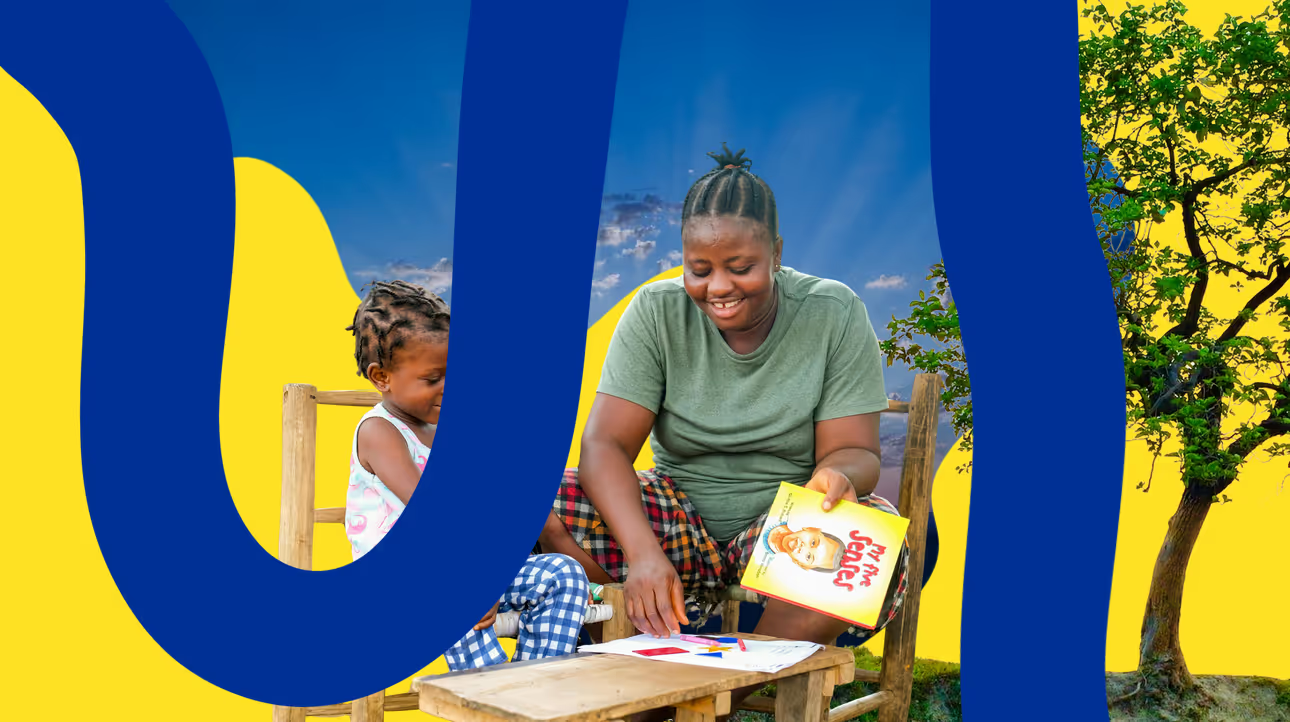
Your child is bright. Curious. Creative.
But school? It’s a struggle.
Maybe they’re bored in class because the material is too easy, or anxious because they’re always playing catch-up. Maybe they feel invisible in a crowded classroom. Or maybe they’ve started saying things like, “I’m just not good at school.”
And as a parent, that’s tough to hear. You know your child is capable, but they just don’t seem to fit in a system that expects every kid to learn the same way, at the same speed, using the same methods. It could be time to rethink the one-size-fits-all classroom and explore a new approach: personalized learning.
In this guide, we break down what personalized learning looks like in different educational settings, how it compares to traditional education, and why it’s becoming a go-to for families seeking more meaningful schooling.
What is personalized learning?
Personalized learning means shaping education around your child — their pace, interests, strengths, and challenges. Instead of squeezing every student into the same box, it adjusts the lessons, the timing, and even the teaching style to fit who they are.
In a personalized classroom, not every child is doing the same worksheet or reading the same chapter. One student might be diving into a space project, while another is writing a story about dragons. But both are learning math, literacy, and critical thinking along the way.
It’s not about making school easier. It’s about making it make sense. Because when learning clicks, kids thrive. That’s true whether they need extra time, a faster pace, or a whole new way of looking at things.
Personalized learning isn’t just for “gifted” kids or those with specific learning needs. It’s for any child who would benefit from a little more freedom and a lot more attention.
Key features of a personalized approach to learning
So what makes learning “personalized”? Here’s what to look for:
-
It’s student-centered: Learning starts with the child, not the curriculum. Their interests, goals, and pace shape the journey.
-
Lots of choice: Kids get options in what they learn, how they learn it, and how they show what they know.
-
Real-time feedback: Teachers use data, check-ins, and observations to guide the learning path so kids get support exactly when they need it.
-
Encourages independence: Students learn to set goals, reflect on progress, and take more ownership of their learning (with a little help, of course).
Why is personalized education so important?
Kids aren’t robots. They don’t come off an assembly line with identical parts and pre-installed math skills. They’re all wired differently, and that’s a beautiful thing.
Personalized learning respects those differences. It helps kids:
-
Stay engaged – When lessons reflect what they’re curious about, they want to show up. At bina, classes are built around real-world themes like biomes or global challenges, so your animal-obsessed kid might explore science through the eyes of a wildlife conservationist — instead of just reading a dry textbook chapter on habitats.
-
Build confidence – Learning at the right level helps kids feel capable and seen. At bina, students are grouped by ability, not just age. So if your eight-year-old is ready for more challenging math but needs a bit more support in reading, they’ll get both — without feeling “behind” or out of place.
-
Become more independent – Personalized learning encourages kids to set goals, make choices, and reflect on what’s working (and what’s not).
-
Close learning gaps – Instead of waiting for report card day to notice something’s off, bina uses ongoing teacher feedback and assessment tools to catch challenges early. Whether it’s a tricky grammar rule or a missed math concept, support comes in right when it’s needed, not months later.
Personalized education is about helping each kid thrive, not just survive school. And when done right, it doesn’t just improve academics. It builds confidence, independence, and a lifelong love of learning.
What does personalized learning look like?
Picture a classroom where not every child is working on the same worksheet, at the same pace, in the same chair. In a personalized learning environment, things look a little more flexible and a lot more human.
Here’s what you might see:
-
Flexible groups – Instead of grouping kids strictly by age, they’re placed based on learning level or style. So one group might be building a volcano to explore cause and effect, while another is getting direct instruction on sequencing. At bina, this means your child learns alongside peers who are right there with them, not miles ahead or behind.
-
Choice-based learning – Students can choose how they want to learn and how they show what they’ve learned. Whether it’s a slideshow, a hand-drawn comic strip, a homemade diorama, or a recorded video explainer — it all counts.
-
Project-based learning – Lessons often start with something your child already cares about. For instance, if your kid loves animals, a science project might involve designing an animal shelter, tying in math (budgeting supplies), literacy (writing a persuasive pitch), and science (studying habitats).
-
Personal learning paths – Kids move through subjects at their own speed, with teachers checking in, guiding, re-routing, and cheering them on. If a student flies through multiplication but needs more time decoding tricky words, that’s exactly what they get.
-
Integrated social-emotional learning (SEL): In a personalized setting, emotional growth matters as much as academic progress. Kids learn how to manage emotions, work through frustration, and celebrate effort, all skills that help them far beyond the classroom.
-
Tech that makes learning click: In personalized learning, technology plays a big role. Not as a gimmick, but as a way to tailor the experience to each child.
At bina, we don’t just use tech to deliver learning. We teach it too. Digital technology is a core subject, helping kids build real skills like coding, design, and digital communication. It’s all part of a vibrant online school built for Gen Alpha, the first fully digital generation, with precision education that prepares them for life tomorrow, not just school today.
No matter the format, personalized learning puts the focus on how your child learns best, not just what they’re supposed to know by a certain age. And when done right, it doesn’t just boost academic results. It builds confidence, independence, and a love of learning that sticks.
Is online school a good way to personalize learning?
It can be. But only if the school is designed for it.
Personalized learning sounds great in theory, but not every online school delivers it. Some programs are just traditional classrooms, digitized. Same curriculum, same pacing, same one-size-fits-all mindset, just with more screen time.
But when done well, online learning can be one of the most powerful ways to personalize a child’s education. Why? Because digital tools allow for ongoing feedback, flexible pacing, and a mix of content that can be tailored to how and what a student needs to learn.
And the research backs this up.
A US Department of Education meta-analysis found that when combined with strong teaching practices, students in online learning environments performed modestly better than those in face-to-face settings. The key? Programs that allowed for individualization and active student engagement. Not just passive video lessons and multiple-choice quizzes.
More recently, a 2021 study compared adaptive, feedback-driven learning platforms with traditional, lecture-style ones. And the results were clear: Students in the personalized setups had higher learning gains and better metacognition (that’s the ability to understand how you learn and make adjustments).
Even big-picture studies of deeper learning models, which include personalization, project-based learning, and mastery over memorization, show long-term benefits: improved test scores, stronger engagement, and higher college attendance rates.
Many public virtual schools still follow rigid state standards, limiting how much personalization is truly possible. But newer, innovative models are shifting the landscape, putting personalization at the heart of the experience. This gives families real alternatives to the factory-model classroom.
When you find a program that does it right, online learning isn’t just convenient. It becomes a tailored, flexible, and deeply supportive way to help your child grow.
bina: a personalized approach to learning that meets kids where they are
If your child is bored, anxious, or needs a more flexible, human-centered way to learn, a personalized approach to education might be exactly what they need.
At bina, personalization isn’t just a buzzword. It’s built into the day-to-day experience through a framework called precision education. Instead of assuming all kids learn the same way, precision education combines real-time data, ongoing teacher observations, and regular one-on-one interactions to understand where each child is and where they need to go next.
This approach allows bina teachers to tailor instruction more meaningfully. Not by creating 20 different lesson plans, but by understanding each learner's pace, strengths, and challenges, and adapting accordingly. It’s a practical, research-backed way to bring the best of personalized learning into a real-world online classroom.
Here’s what that looks like in action:
-
Small, live classes grouped by learning level – So, your child learns alongside peers who are on a similar path, not just the same age.
-
Interest-driven projects – From animal shelters to global climate challenges, projects are built around themes that spark curiosity.
-
Global peer collaboration – Kids work with classmates from around the world, building perspective, empathy, and communication skills.
-
Built-in social-emotional learning – Daily check-ins, breathwork, and open conversations help kids name their feelings, increase self-understanding, and develop a strong, resilient mindset.
-
Exciting tools over passive tech – bina blends movement, gamified learning, hands-on projects, and short screen bursts so your child stays engaged, not bored.
bina is more than just “online school.” It’s a dynamic, flexible approach to learning that puts kids at the center and gives them the tools to grow confidently at their own pace.
FAQs
Can personalized learning help kids with learning differences?
Yes, it can. It’s especially helpful for students with ADHD, dyslexia, or anxiety, because it adapts to their needs rather than forcing them to adapt to the system. But it’s still beneficial for all kiddos.
Is personalized learning the same as self-paced learning?
Not exactly. Self-paced is one aspect of personalization. A truly personalized approach also adjusts content, method, and environment to suit the learner.
What are the challenges of personalized learning for parents?
It can be hard to find a program that personalizes learning without putting more on your plate. Some options expect parents to be the teacher, planner, and tech support all in one. But with the right setup (like bina), the school handles the teaching and tailoring.
Do I have to teach if I choose a program with a personalized approach to learning like bina?
Nope. bina has real teachers leading live, small-group classes. You stay involved in your child’s education, but you don’t have to be the full-time teacher to provide a highly tailored learning experience.
What are some examples of personalized learning in elementary school?
Some examples of personalized learning for elementary learners are:
-
Flexible seating options – Letting kids choose where they learn best, whether it’s a beanbag, a standing desk, or the floor with a clipboard.
-
Choice boards – Giving students a menu of activity options for a topic, for example, to draw, write, build, or present.
-
Personalized playlists – A curated mix of videos, interactive tools, books, and assignments tailored to a student’s goals or level.
-
Differentiated instruction – Teachers adjust the same lesson for varied reading levels or math abilities.
Accredited, full-time school for grades K-12
Bring the best of the classroom to your home
See if we're a fit
More to read
Eight social-emotional learning worksheets to nurture growth
Empower your child’s emotional growth with eight practical SEL worksheets. Learn how to cultivate empathy, manage emotions, and build life skills.

What is a microschool? How small schools make a big impact
Learn what a microschool is, how it works, and why families are turning to this modern, personalized education model for flexible, high-quality learning.
What is personalized digital learning: Benefits, myths, and tools
Discover how personalized digital learning supports every learner, with adaptive tools, meaningful feedback, and human guidance.