What is an online alternative school, and is it right for your child?
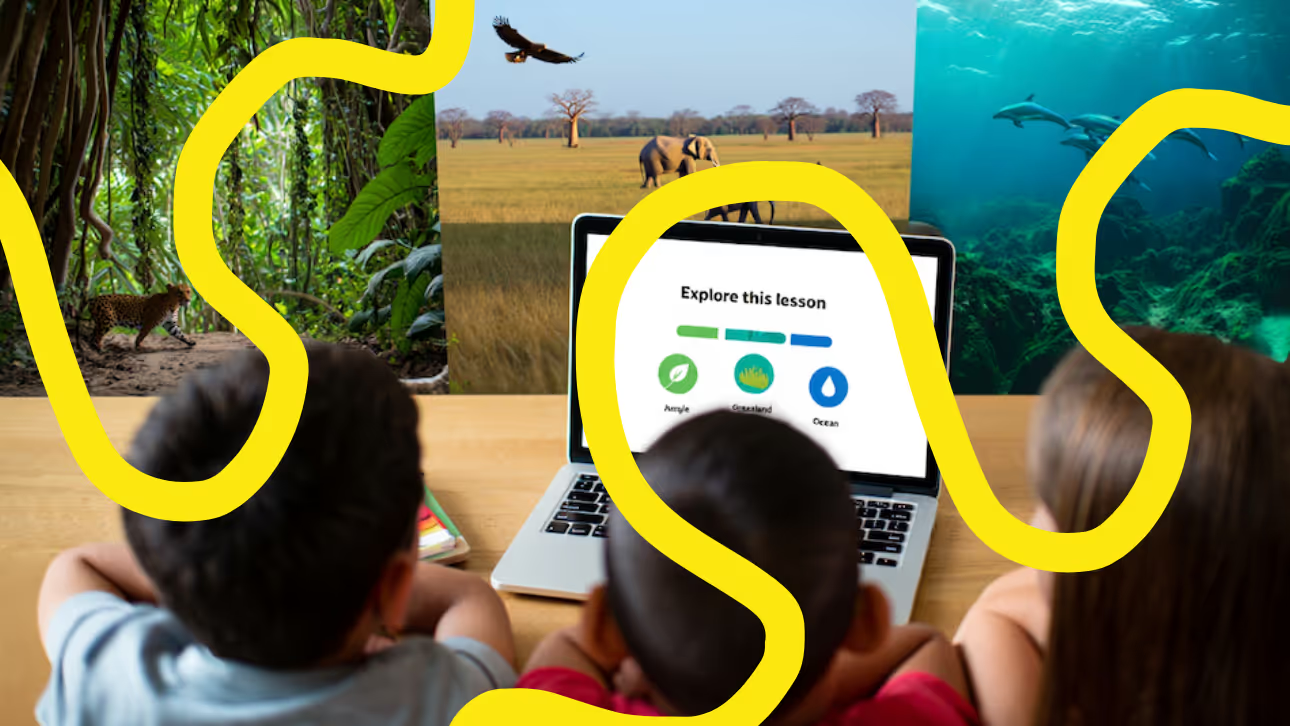
Your kid’s smart, creative, and full of ideas. The kind of ideas that involve cardboard boxes, duct tape, and a mission to build a rocket in the backyard.
But in a traditional classroom, that spark can start to fade. School can feel more like it’s dimming their light than helping it shine.
Online alternative schools offer a fresh take for kiddos. They ditch the rigid schedules and test-heavy routines for something more flexible, more personalized, and dare we say, more human.
Whether you need a free public option, a credit recovery plan, or a virtual classroom built for hands-on learners, there’s an online alternative school that fits. Here’s how they all work.
What are online alternative schools, and how do they work?
Online alternative schools are virtual programs designed for students who are looking for something different from the traditional classroom.
These programs offer full-time education online, but they’re not just digital versions of what wasn’t working before. They’re built differently, with flexible routines, smaller class sizes, real teachers, and space for your child to learn in a way that makes sense for them.
Some use live classes, others offer more self-paced work. Many blend academic learning with real-world skills, creativity, and connection. And all of them have one thing in common: they put the student first.
Online alternative school vs. traditional school vs. homeschool
So how are online alternative schools different? And what does “alternative” really mean?
To really understand the difference, it helps to see how they compare to both traditional classrooms and full-on homeschooling.
Online alternative school
This model blends the structure of school with the flexibility of learning from home. Kids log in from a computer and follow a purposefully designed learning path, guided by real teachers, not parents.
An online alternative school is ideal for students who need a different pace or learning style. These schools can be public (tuition-free) or private (paid), depending on what you’re looking for.
Traditional school
This is the classic setup: students attend a physical school, follow a fixed schedule, and move through a standardized curriculum with 20 to 30 classmates. Social interaction happens every day, and lessons are led in real time by teachers.
While it works well for many kids, it can be too limiting, especially for students who learn differently, get bored because they’re ahead for their age, or need more flexibility.
Homeschool
With homeschooling, the parent takes the lead. They’re often responsible for designing the curriculum, managing the schedule, and doing the actual teaching.
Homeschooling offers the most customization, whether you want a relaxed, play-based approach or a structured academic plan. But it also requires time, planning, and a lot of involvement from the parent. Social time depends on meetups, co-ops, or extracurriculars outside the home.
Types of online alternative schools
Whether you’re after a free public program or something more progressive and personalized, there’s an online alternative school that fits. Here’s a closer look at the main types and how to figure out which one fits your kiddo best.
Public online alternative schools
These are tuition-free online programs funded by the government. But unlike traditional public schools, they’re designed to offer more flexibility and support for students who need something different.
They’re best for families who want to stay in the public school system but need a learning environment that works better for their child’s pace, interests, or life circumstances. These programs often combine live online classes with independent study, and many offer personalized learning plans.
Examples of public online alternative schools:
-
Primavera Online School (US): A flexible public charter school that lets students learn on their own schedule. It meets the needs of teens balancing part-time jobs, family responsibilities, medical needs, or demanding extracurriculars. It’s built for real life, not just the school bell.
-
Sydney Distance Education High School (Australia): A government-run school for students who can’t attend traditional high school due to personal, medical, or social reasons. It offers a fully online model with strong teacher support and flexible coursework.
Private online alternative schools
Private online alternative schools are where things get personal — and a little bit unconventional. These paid programs aren’t tied to rigid state requirements, so they’re free to build a learning model that fits the student, not the other way around.
Some are project-based, letting students dive into hands-on work like designing a video game, researching climate change solutions, or running a small business. Others use mentor-led learning instead of traditional grading, or mix in mindfulness, global awareness, or arts-heavy curricula.
While many of these online schools are accredited, some aren’t, so check carefully if your child will need transcripts for college or transferring to a traditional school later.
Examples of private online alternative schools:
-
Clonlara School (US and global): Built around “Full Circle Learning”, students co-create their learning plans. So if your kid wants to explore ancient mythology, start a podcast, or tackle a hands-on science project, it’s not just allowed, it’s encouraged.
-
Learnlife (Spain + global): An accredited, learner‑centered program for ages six to 18, where students follow self‑determined, purpose‑inspired learning paths. Supported by a global community, students at Learnlife build a personalized “Learning Vitae” to showcase their skills, projects, and socio-emotional growth.
Credit recovery programs
These online programs help high school students regain lost credits in specific classes without repeating an entire grade. They’re ideal for teens who fell behind due to an illness or family responsibilities, or for those who simply didn’t connect with certain subjects the first time around.
Online credit recovery programs are usually self-paced, with flexible hours, even evenings and weekends. They should include one-on-one support from teachers or mentors so students can focus on what they need, on their own terms.
Example of an online credit recovery program:
- Student Choice High School (US): A tuition-free charter school with an online credit recovery program for students facing real-life challenges like working to support their family, living in unstable housing, or parenting their child. With flexible scheduling and one-on-one support, it helps students aged 16 to 21 earn credits in a way that fits their reality.
Career prep programs
Career prep programs combine high school education with practical job training. Alongside core subjects like math and English, students can learn real-world skills in areas like healthcare, tech, business, or trade programs, sometimes earning certifications before they even graduate.
These programs are ideal for teens or young adults who want more than just a diploma. Whether your child plans to enter the workforce straight after school, explore a specific career path, or simply wants learning that feels more useful, career prep schools offer a head start.
Example of an online career prep program:
- US Career Institute Online High School (US): A flexible, fully online high school that combines academics with hands-on, job-ready skills. Students can earn their diploma while training for a real-world career in healthcare, business, or veterinary studies.
Progressive online school
Progressive online schools are designed for curious, creative learners who want more than memorization and multiple choice. These schools move away from test-driven models and instead focus on hands-on projects, real-world challenges, and critical thinking.
They’re perfect for families who value connection, flexibility, and education that feels meaningful.
Examples of progressive online alternative schools:
-
bina (Global): A full-time, accredited online school for kids aged four to 12, with no more than eight students per class and experienced, hands-on teachers. Live lessons are interactive and themed around real-world topics, from ocean conservation to climate change, all explored through global biomes. Kids build academic skills, emotional smarts, and real friendships in a connected learning space that moves with your family, wherever life takes you.
-
School of Humanity (Global): An accredited online high school reimagining education for teens aged 11 to 18. Instead of exams, students tackle real-world challenges like designing space habitats or addressing climate change denial through interdisciplinary projects. With mentorship from global experts, weekly “human flourishing” sessions, and micro-internships built in, learners graduate with a portfolio, a purpose, and a plan.
Special education / SEND support
Some online alternative schools are designed specifically for students with special educational needs and disabilities (SEND). These programs offer the flexibility, individual attention, and emotional safety that neurodivergent learners or those with chronic health issues need to thrive.
Support can include one-on-one teaching, adaptive pacing, therapy access, and personalized learning plans. And because everything happens at home, students avoid the overstimulation, social pressure, and physical demands that can come with traditional classrooms.
Example of a support-focused online school:
- Minerva Virtual Academy: An accredited online school for ages 11 to 18 that supports neurodiverse students through one-on-one mentoring, small live classes, and a flexible, low-pressure learning environment. It’s a great option for learners balancing mental health, SEND needs, or creative passions.
Who are online alternative schools best for?
Wondering if your kiddo would benefit from an online alternative school? If any of these sound familiar, it might be worth exploring different options.
-
Kids who learn differently: Children with ADHD, dyslexia, or other learning differences often do better with quieter environments, flexible pacing, and one-on-one support that adapts to their needs.
-
Gifted or curious kids who need more: If your child is constantly asking big questions or bored by surface-level lessons, they’ll benefit from programs that let them explore topics more deeply.
-
Children who struggle with anxiety or social pressure: Sensitive or anxious kids often feel safer and more focused in calmer, smaller learning environments where they don’t have to navigate crowded classrooms or rigid routines.
-
Teens who’ve fallen behind: If your child has missed credits or had a rough school year, credit recovery programs give them a second chance without the stigma or stress of repeating a grade.
-
Learners with a clear sense of direction: Some teens already know they want to work in tech, healthcare, design, or business. Career-focused programs let them gain real skills (and even certifications) while finishing school.
-
Kids on the move: Whether your child is growing up abroad, traveling with family, or relocating often, online learning offers consistency, connection, and continuity, no matter the timezone.
-
Independent thinkers: If your child craves more say in what and how they learn, online alternative schools offer freedom and flexibility that’s hard to find in traditional classrooms.
Benefits and challenges of an online alternative school
Online alternative schools come with a lot of perks, but they’re not without trade-offs. Here’s a breakdown of the benefits and challenges.
Benefits
-
Flexible schedule and pacing: Some programs allow kids to learn when they’re most focused — whether that’s early morning or after lunch — and move through material at their own speed.
-
More personalized learning: Lessons can be adapted to fit your child’s interests, strengths, and goals.
-
Supportive learning environment: Smaller class sizes, calm settings, and reduced distractions help many kids feel more comfortable and confident.
-
Better fit for different learning styles: Whether your child is hands-on, visual, or needs more time to process, alternative models are built to accommodate.
-
Access to niche programs: From space science to activism and art, many progressive schools offer unique subjects and career pathways that traditional schools don’t.
-
Continuity for mobile families: Online schools move with you, which is ideal for families who travel often or relocate regularly.
Challenges
-
Requires self-motivation: Managing time and staying on top of assignments without daily supervision can be tough.
-
Less in-person social time: Kids may miss out on traditional school social life unless you build it in elsewhere. That said, bina puts a strong focus on social-emotional learning, turning classrooms into “life labs” where kids practice empathy, responsibility, and authentic connection every day.
-
Tech and internet access are a must: A stable connection, working device, and quiet space are essential, which isn’t always easy to guarantee.
-
Quality and accreditation vary: Not all online schools meet the same academic standards, so it’s important to check if a program is accredited. For example, bina is internationally accredited and follows a curriculum that aligns with UK, Australian, and US standards, making it easy for students to transition in and out of top schools around the world.
-
Younger learners need more support: Little ones often need a parent or caregiver nearby to help with transitions, tech, and focus, especially in the early days.
Modern alternatives that go beyond the basics
If you’ve been searching for something that truly supports your child’s growth, and not just keeps them busy, today’s online alternative schools might be exactly what your family needs. The best of them aren’t just replacing the classroom; they’re rethinking what school can be.
And for younger learners who need more personal attention, hands-on learning, and real connection, bina delivers all of that. And more.
bina is a next-gen, full-time online school for kids aged four to 12. It’s not self-paced or DIY. Students follow a full school day with live instruction from experienced teachers, blending precision education with project-based learning and a global classroom community.
With tiny class sizes and a focus on both emotional growth and academic strength, bina offers a real alternative to traditional remote learning or basic credit-recovery models. It’s built for curious, creative kids who crave connection, not just content.
Accredited, full-time school for grades K-12
Bring the best of the classroom to your home
See if we're a fit
More to read
10 alternative elementary school options for kids who learn differently
Curious about alternative elementary schools? Compare 10 options for creative, sensitive, or advanced learners and find the best fit for your child.

Alternative school program options for every kind of learner
Explore alternative school programs like Montessori, Waldorf, online schools, and more. Find the right fit for your child’s needs and learning style.
What personalized learning paths mean for your child
Explore the benefits of personalized learning paths, the signs your child may need one, and how online schools like bina bring them to life every day.