What personalized learning paths mean for your child
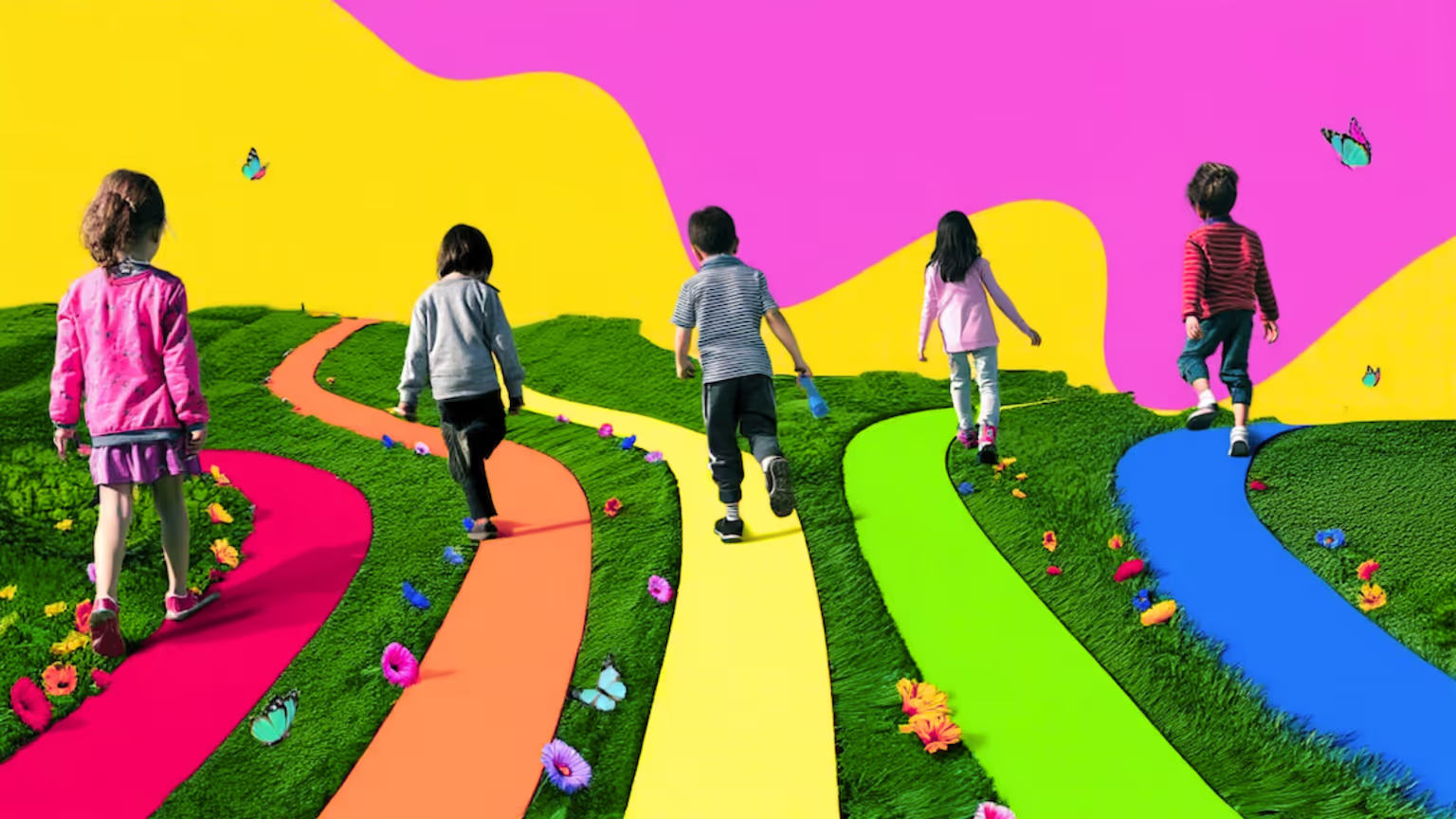
Some kiddos read under the covers with a flashlight, others take things apart just to see how they work, and some can’t sit still unless their hands are busy.
Every child learns differently. However, traditional classrooms can’t match every child’s uniqueness. There are too many kiddos and not enough hours in the school day. Combine that with the pressure on educators to teach to tests and follow a curriculum that’s been set in stone for years, if not decades, and you have a recipe for fostering uniformity.
Personalized learning paths honor kids’ differences. By shaping school around your kiddo’s strengths, quirks, and interests, learning becomes more meaningful, motivating, and joyful.
Whether you’re personalizing in a homeschool environment or looking for an alternative school option that takes a personalized approach and offers small class sizes, knowing how to make a personalized path work is key to helping your kiddo thrive.
Signs your kiddo may need a personalized learning path
The traditional classroom does its best to support many learners at once, but not all kids are wired the same way. If the brick-and-mortar approach isn’t the right fit for your child, they may need a different type of classroom, whether that means looking for a school that’s online and project-based, a nature-based curriculum, or something else.
Here are some signs to watch for:
- Feeling bored or unchallenged in class
- Struggling to keep up with classmates
- Showing big gaps between subjects
- Learning best through non-traditional ways (visuals, stories, hands-on exploration)
- Doing better in small group or one-on-one settings
- Struggling to do homework on a regular basis
- Feeling anxious about tests or grades
If a few of these sound familiar, it might be time to explore a personalized learning path that brings joy to learning and helps your kiddo absorb information in the ways that work for them. The right environment will meet them where they are and help them grow into confident and curious learners.
How personalized learning paths help bring out kids’ inner genius
There’s a spark in every kiddo that comes alive when they feel seen, supported, and understood. Personalized learning paths nurture that spark. Here’s how:
Boosts confidence and self-esteem
Your child is more than just test scores and report cards. Personalized approaches highlight their strengths and celebrate their uniqueness.
When kids feel seen for who they are, it builds an important foundation for self-love and self-acceptance. Instead of measuring success against others, they learn to focus on their own growth and improvement.
A supportive learning environment builds courage to try new things and normalizes mistakes as a natural part of learning. Kids learn that confidence doesn’t come from perfection, but from showing up, trying again, and believing in one’s own potential.
Keeps kids engaged and curious
Curiosity is a child’s natural fuel for learning. It’s what makes them ask “why” a hundred times a day. Personalized learning paths tap into that curiosity by connecting lessons to your child’s passions and interests. Kids get more chances to explore, build, and create, rather than just memorize. There’s less pushback and fatigue while learning because lessons feel fun and purposeful.
That means higher motivation to stay curious, keep exploring, and take pride in what they learn. In fact, a 2025 study on the benefits of personalized learning in secondary education found 78% of students reported higher engagement in personalized learning environments, and 65% even improved academically.
Supports different learning preferences and paces
Whether your kiddo is hands-on, a budding artist, or only tunes into learning when their favorite subjects are tied in, personalized learning paths support how they learn best.
When kids need more time to master a concept, they’re encouraged to pause, revisit, and ask questions until it clicks. When they’re ready to move ahead, they can explore deeper material without waiting for the rest of the class. The barrier to learning disappears because it’s no longer about fitting into a mold, but about meeting individual needs.
Addresses challenges early on
It’s easy for small struggles to turn into long-term setbacks when a child doesn’t get the support they need. But tailored support can make a lasting difference. The Journal of Education and Educational Research found that personalized learning pathways reduce anxiety and increase motivation when lessons address individual needs. By tracking individual progress, teachers or parents can spot learning gaps sooner, address them, and adjust lessons quickly.
Why personalized learning doesn't happen in traditional schools
Many schools are exploring ways to make learning more personal, but structural limits often make it challenging to fully personalize lessons. In a class of 25 to 30 students, how can one teacher adjust every lesson to fit each child’s needs?
As much as teachers want to meet every student where they are, most classrooms still move as a group, with the same pacing and sequence for everyone. It’s difficult to provide the kind of flexibility and responsiveness that personalized paths call for.
Some schools talk about “individualized instruction” or “differentiated learning,” but that usually means adjusting assignments slightly, grouping kids by level, or offering extra help in certain subjects. But true personalization requires a children-centric approach, continuous adjustments, and close collaboration with families.
While traditional systems make that hard to achieve, there are online programs or live virtual schools, such as bina, that are reimagining what personalized education can look like.
What are examples of personalized approaches to learning?
There’s a range of ways to personalize education. Here are a few approaches that make learning more flexible and responsive:
Adaptive
Adaptive learning adjusts to your child in real time. Using technology and digital tools, teachers gain insights into how your child understands and interacts with lessons. These tools help identify strengths, challenges, and areas where extra support may be needed.
Although technology guides the process, teachers still interpret the results, fine-tune lessons, and offer feedback. This approach helps keep lessons at the right level of difficulty because learning evolves with your child.
Competency-based
Competency-based programs measure progress by mastery, rather than by age or the time spent in class. This approach allows students to take the time to understand a subject thoroughly before moving forward.
Mastery isn’t only measured by grades or tests. It’s reflected through projects, presentations, reflections, or practical application. It encourages independence and ownership, as children learn to set goals and track their own growth.
Precision learning
Precision learning uses a blend of learning analytics and observation to help teachers see the whole picture. Through conversations, projects, and reflection activities, teachers gain a deeper understanding of each child’s needs and adjust goals and methods in real time to support them.
Precision education at bina isn’t just about making sure school is not too easy and not too hard. The goal is also to keep learning joyful with the right blend of activities, projects, and social-emotional development.
How to personalize your kiddo's education
Personalized learning starts with understanding your kiddo: how they process information, what motivates them, and where they shine.
Use these tips to start shaping a personalized learning journey at home:
Encourage curiosity every day
Curiosity is a child’s superpower. Harness that superpower by encouraging your kiddo to ask why, take things apart, and look for their own answers.
Open-ended questions, such as “What made you curious today?” or “Why do you think that happened?” spark deeper thinking and reflection. Model curiosity for yourself by sharing something new you learned or exploring a new topic together.
If your kiddo loves space, spend an evening stargazing. If they love to cook, try out a new recipe together at home. Little moments like these turn daily life into learning opportunities that can happen anywhere, anytime.
Build lessons around strengths and interests
Map out what your kiddo naturally enjoys and does well. These strengths will become anchors for lesson plans, woven into core lessons.
For example, a child who loves animals might study habitats in science, write stories about wildlife in language arts, or practice math by tracking feeding schedules.
As their interests grow, let lessons evolve too, so learning feels fresh, connected, and relevant to their lives.
Include regular check-ins and adjustments
Keep checking in and adjusting lessons as your kiddo grows. Regular check-ins give teachers and families a chance to see what’s working and what’s not.
Feedback should be a two-way conversation. Observe how your child responds to challenges and successes, and encourage them to share what they’re excited about or struggling with. Help your kiddo understand that growth isn’t linear. It’s a process of trying, reflecting, and finding the best ways forward.
Set clear goals and milestones
Personalized learning paths focus on meaningful learning outcomes, not just grades. Having clear goals helps kids understand where they’re headed and why their learning matters. It gives purpose to every lesson and helps them take pride in their progress.
Goal setting also helps children practice autonomy and build accountability. It gives them the chance to celebrate effort, track progress, and learn that growth takes time.
While grade-level benchmarks can set expectations, it’s important to tailor goals to your kiddo’s level so they can grow at their own speed.
Explore schools that truly personalize learning
If you’re looking for a school that fits your child, focus on how it supports individual growth. Choose a school that is child-centric and invested in understanding your kiddo. Small class sizes show teachers have time to connect deeply with students. Ongoing check-ins and real-time adjustments signal that learning evolves with your child.
Ask these questions before you make a decision:
- Do teachers take time to understand each child’s strengths, challenges, and interests?
- How is growth measured beyond test scores?
- Is there enough structure to stay on track, as well as room for self-exploration?
bina’s personalized approach to learning
bina believes that education should honor the whole child, nurturing academic, social, emotional, and creative growth.
Through precision education, our teachers combine data and observation to adjust lessons to match each child’s learning needs and interests. Our small classes of up to eight students (with two educators per class) ensure that teachers can actually spend the time and effort getting to know each child individually.
Learning is always connected to real life through thematic biomes and project-based learning, so your kiddo can see how their ideas and actions impact the world they live in. Daily social-emotional check-ins and ongoing feedback give teachers a full picture of each child’s progress.
At bina, every child’s learning path is different, and that’s how it should be.
FAQs
Does following a personalized path mean my child won’t learn the basics?
Not at all, personalized learning builds on the basics rather than skipping them. Core skills like reading, writing, and math are still taught, but your kid may approach them in unique ways that help learning stick.
For example, your child might practice math by cutting fruit for a snack, doubling a cookie recipe, or sharing pizza slices with friends.
How do schools measure progress if everyone is learning in different ways?
Instead of measuring children against other kids or grade-wide benchmarks, schools measure growth against personal learning goals. Many schools use a learning management system to help teachers record progress, gather feedback, and track growth.
There are multiple ways to show mastery, such as through projects, presentations, or portfolios, not just tests. These assessments show deeper understanding, not just rote memorization. Check-ins also play a big role in assessing progress. They help teachers understand how a child is thinking, applying skills, and growing over time.
Can personalized learning paths work for both gifted kids and kids who need extra support?
Some parents worry that personalization is only for struggling learners or only for high-achievers who need extra challenges. But it can absolutely be for both.
Since personalized learning is designed to serve every child, it naturally adjusts to each student’s pace, strengths, and needs. The power of personalization is that it can adapt lessons in both directions.
Children gifted in a specific area can dive deeper into advanced material or enrichment projects, while those who need extra support can spend more time building confidence and mastering the basics. The goal of personalized learning doesn’t change: to keep every child engaged, challenged, and supported at their own level.
Accredited, full-time school for grades K-12
Bring the best of the classroom to your home
See if we're a fit
More to read
Alternative school program options for every kind of learner
Explore alternative school programs like Montessori, Waldorf, online schools, and more. Find the right fit for your child’s needs and learning style.

The myth of learning styles and what truly works in a modern school
Explore why the popular learning‑styles theory is considered outdated, and discover how modern, evidence‑based methods like personalized and project‑based learning at bina offer real results.
Why kids need elementary school social emotional learning
Learn why elementary school social emotional learning is important and how innovative schools like bina deliver what traditional schools can’t.