Growing life learners: 7 benefits of project-based learning
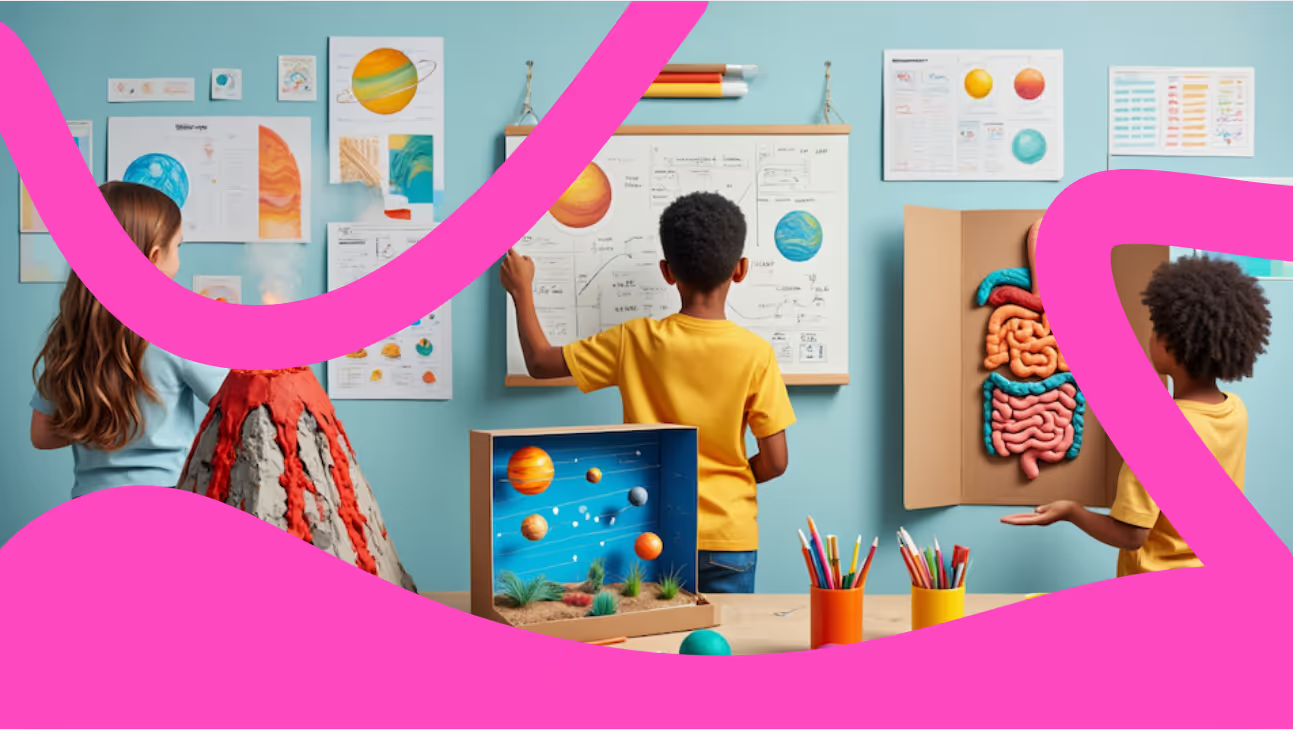
Traditional curricula separate subjects. Math in math class, writing in English class, science in science class.
But the real world doesn’t work like that. In your career, family life, and relationships, you’re expected to combine skills to solve problems and reach your goals.
So why do we silo learning? Kids need to connect the dots between knowledge and how the world actually works.
Project-based learning (PBL) helps them do just that.
Instead of memorizing content for a test, students build projects to solve problems.
This approach develops more rounded, capable, and curious learners who understand why what they’re learning matters.
Let’s explore what PBL looks like, how it benefits learners, and how to choose a program that does it well.
What does project-based learning look like?
Project-based learning (PBL) is a student-centered teaching method. Kids learn through doing rather than drilling. Instead of memorizing facts, learners explore big, authentic questions or problems to find a tangible solution, just as you’d approach a problem in the real world.
Through research, planning, problem-solving, feedback, and revision, learners use an inquiry-based process that mirrors how adults tackle challenges at work or in life.
It’s a form of experiential learning where learners blend critical thinking, collaboration, and communication skills to stay engaged and invested in the outcomes.
Imagine it like this.
Say, a local park is losing wildlife. Students design a community garden to restore biodiversity. In the process, they study ecosystems in science, measure garden plots using math, and write persuasive letters to gain support from local leaders.
The benefits of project-based learning: How PBL helps kids thrive
Project-based learning doesn’t just make school feel more engaging. It also helps kids become curious learners, lateral thinkers, and creative collaborators.
Through hands-on experience in a real-world context, kids build academic and personal skills grounded in meaningful challenges.
Let’s look at how the PBL approach supports deeper learning and why it works so well across diverse classrooms.
1. Boosts academic achievement
Academic growth is important, and PBL helps to support it. Research shows that students in PBL settings not only do well on standardized tests but also outperform their peers.
This is because project-based learning turns abstract concepts into understandable actions. Rather than learning facts by rote, students apply concepts to real-world challenges. By seeing the impacts and outcomes, students deepen their understanding and retain the information better.
Picture a class studying natural disasters.
If students have to design emergency preparedness kits tailored to different regions, they have to use:
- Science to understand weather patterns, tectonic activity, and climate-related risks
- Math to budget for supplies, calculate weights, and measure quantities
- Geography to study the physical features and population needs of different regions
- History to learn from past disasters and understand how different communities responded
- Social studies to consider government roles, infrastructure, and how culture shapes disaster response
- Literacy and arts to write persuasive proposals, create public awareness posters, and present plans clearly
- Languages to create multilingual labels or translation tools in their kits
The result?
A cross-curricular project that brings together a variety of academic subjects in a context that makes it memorable.
But this kind of multidisciplinary learning doesn’t just help children remember. It gives academic content a purpose, so they can apply and explain what they’ve learned with confidence.
2. Builds critical thinking and problem-solving skills
Nowadays, there’s information everywhere. Kids don’t just need to know things. They need to know how to critically analyze the information they have.
This is where PBL shines.
Problem-solving skills and high-order thinking skills are at the heart of PBL. Students need to define problems, explore solutions, test ideas, and reflect.
Studies show that this process improves both critical thinking and decision-making.
For example, a class might redesign their school’s learning space to be more inclusive. They research accessibility needs, apply geometry to map new layouts, and prototype tools or routes.
This mimics how engineers solve real-world design challenges.
3. Fosters collaboration and communication
Teamwork and communication skills are integral to success in school, work, and personal relationships.
Project-based learning teaches students how to work with others so they can share ideas and solve problems together.
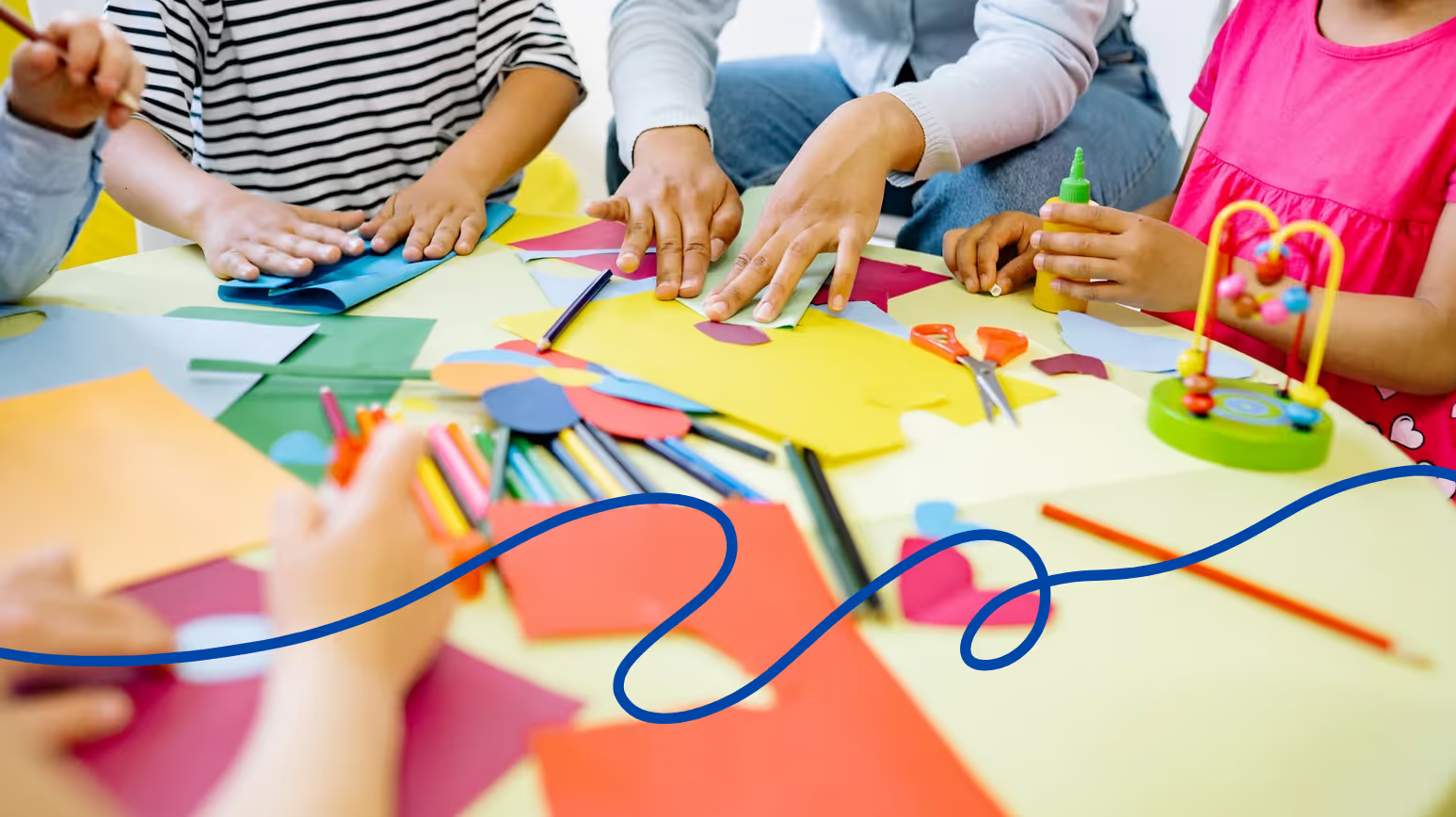
In a PBL classroom, kids don’t work in isolation. They assign roles, actively listen, give and receive feedback, and co-create to achieve their outcomes.
It’s not always a smooth ride — but that’s the point. Since social-emotional learning is embedded in PBL, kids learn to navigate disagreements, delegate fairly, communicate their thoughts and ideas, and take responsibility for group results.
And the results are clear. PBL strengthens teamwork, shared ownership, and the confidence to communicate ideas clearly and effectively.
4. Strengthens motivation and engagement
Kids care more and try harder when they understand why they’re learning something.
PBL powers classroom engagement because it gives kids a sense of purpose, progress, and pride.
They’re not just ticking off assignments. They get to explore subjects they care about and take the lead on work that feels meaningful. According to the research mentioned earlier, PBL increases both motivation and long-term learning outcomes.
Let’s say your child is fascinated by marine life. That interest acts as a springboard to a project where they design an ocean habitat simulation.
They get to utilize academic and problem-solving skills while working on something that sparks their interest.
5. Supports different learning styles
No two kids learn in the same way. This is why many traditional methods leave students behind — they struggle to learn in a one-size-fits-all format.
PBL improves inclusivity because it allows students to access and demonstrate knowledge in a variety of ways.
That’s why it works so well in neurodiverse classrooms and among students with varied strengths.
For example:
- Kinesthetic learners might build hands-on prototypes
- Visual learners could draw maps or storyboards
- Auditory learners might record podcast episodes or conduct interviews
- Social learners can collaborate on group presentations or co-write scripts
By offering adaptable learning paths, PBL makes more students feel seen and successful.
6. Improves self-awareness and reflection
Reflection shows students where they’re growing. In PBL, kids are invited to consider what they’ve learned, how it made them feel, and how they’ve progressed, both academically and personally.
This improves metacognitive awareness in students, as they become more thoughtful about their own thinking processes. Not only does this support academic achievement, but it also builds emotional resilience.
In PBL classrooms, reflective activities are part of the process. You might see kids:
- Journal after a group presentation
- Fill out a “two strengths, one challenge” worksheet
- Swap peer feedback forms
- Create before-and-after self-assessments
This process helps learners identify their strengths, understand their setbacks, and take better ownership of their learning journey.
7. Builds 21st-century skills for future success
The world is changing rapidly, and PBL helps students keep up. It doesn’t just teach skills for school. It teaches skills for life in the future.
From digital literacy to critical research skills, studies show that PBL lays the foundation for future-ready learning.
In a single project, learners might:
- Use technology tools to plan, create, and present their ideas
- Practice informational reading and writing
- Work in teams to manage tasks and feedback
- Tackle real problems with imaginative solutions — like videos, design prototypes, or campaigns
These skills prepare children for their future as they’re the very same 21st-century skills that employers, universities, and communities actively look for.
Why isn’t project-based learning common in traditional schools?
Project-based learning has clear academic and personal benefits. So why isn’t it everywhere?
In many traditional schools, the barriers often come down to outdated systems, a lack of support, and lingering misconceptions.
Let’s explore why.
Time constraints make it feel unmanageable
Lots of teachers believe in PBL, but they struggle to fit it into a packed school day where conventional academic testing is the standard benchmark.
Rigid pacing and standardized testing make teachers feel like they can’t find time to fit in full projects.
In fact, research shows that poor time management is one of the top reasons PBL isn’t widely adopted, as educators feel pressured to cover content quickly, not deeply.
Teachers aren’t trained to teach this way
PBL requires a shift in teaching methods, from lesson delivery to guided inquiry.
Lots of teachers struggle to understand how to adapt lessons to a PBL model, and they’re not sure when to use it anyway.
This is because conventional teacher training doesn’t include hands-on strategies for things like:
- Facilitating group projects
- Managing open-ended tasks
- Assessing learning through reflection
Without that foundation, PBL can feel overwhelming or unclear, especially in large classrooms.
It’s seen as ‘extra’ — not essential
Some schools treat PBL as an enrichment activity rather than a core teaching method.
This mindset often evolves out of the false idea that “real” learning looks like worksheets and test prep.
Because it doesn't look like traditional schoolwork, parents and teachers don't understand the essence of it and don't see the link between PBL and academic growth.
Grading feels unclear or too subjective
When every project looks different, it’s hard to work out how to assess it fairly.
Teachers worry about being inconsistent or subjective without clear rubrics to guide grading. Others worry that stronger students carry the group, so weaker students get better grades than they should.
But these issues are a result of poor training. It’s not a flaw in the PBL method — teachers just need to understand how to grade differently.
Facilities and tech can hold schools back
Even if teachers are ready for PBL, lots of schools don’t have the facilities. PBL often needs space, supplies, and digital tools. Not every school has access to resources or funding to cover this.
In fact, having inadequate facilities is one of the top reasons schools shy away from project-based learning.
Without the right resources, even the most creative teachers find it hard to get meaningful projects off the ground.
How bina fosters deeper learning through project-based learning
At bina, project-based learning is at the core of our everyday curriculum. Through immersive biome-themed units, global collaboration, and hands-on learning, students gain the skills, confidence, and academic prowess to succeed in school and beyond.
Here’s how.
Teaching thematically with biomes
bina organizes learning into six-week biome units. Studying real-world environments — from jungles to deserts — gives learners real-world relevance.
Every student leads one project per biome, exploring science, geography, math, social studies, writing, and more.
Through a multi-disciplinary approach, students connect knowledge and skills across subjects and apply them in a relevant way.
Teachers are trained to guide, not instruct
bina educators don’t just stand in front of a classroom and lecture. They act as inquiry facilitators.
They scaffold research, coach critical thinking, and guide through reflection and feedback. Assessment doesn’t come down to a scorecard — it’s a conversation.
As a result, students learn at their own pace, supported by educators who tailor project goals to each child’s interests and capabilities.
Small, global classrooms spark collaboration and perspective
While bina has small class sizes of six to eight students, we have kids from over 35 countries. This makes every project a global conversation in a setting where everyone feels heard.
For example, in the desert biome, a team might tackle water shortages by sharing how communities in different countries approach droughts.
With small class sizes and cultural diversity, every child can play a key role while expressing their identity, building communication skills, and exploring different perspectives.
Precision learning crafts personalized feedback
bina’s precision learning model tracks student progress through daily observation and assessment. Results don’t rely on standardized testing.
Instead, kids “level up” when they’re ready, revisiting biomes each year to deepen their understanding.
Each project mirrors a real project management cycle: set a goal, research deeply, create, receive feedback, and improve. Educators monitor personal progress and align goals and expectations based on each child’s needs.
Tackling global problems to add real-world purpose
Every PBL project connects to a UN Sustainable Development Goal. Whether it’s clean water, climate action, or gender equality, students tackle global issues that resonate with their personal interests.
This builds motivation and fosters long-term engagement within a meaningful, global context.
SEL and academics are celebrated together
bina doesn’t separate social-emotional learning (SEL) from academics. It’s baked into every project so students can develop confidence, self-awareness, and empathy as they collaborate, reflect, and handle challenges.
We celebrate social and emotional growth alongside academic achievement, with each project ending in a showcase of learning and growth.
And because parents are part of the journey, PBL at bina feels holistic and personal, not abstract or separate like in many traditional school settings.
Project-based learning as a mindset for real-world growth
PBL isn’t just a teaching method — it’s a mindset.
When students connect learning to real life, they engage more deeply, think more critically, and care more about what they’re doing.
At bina, PBL is how learning happens every day, helping kids build skills that matter — not just for tests, but for life.
If you’re looking for a learning environment that grows with your child and prepares them for the real world, book a call with bina today.
Accredited, full-time school for grades K-12
Bring the best of the classroom to your home
See if we're a fit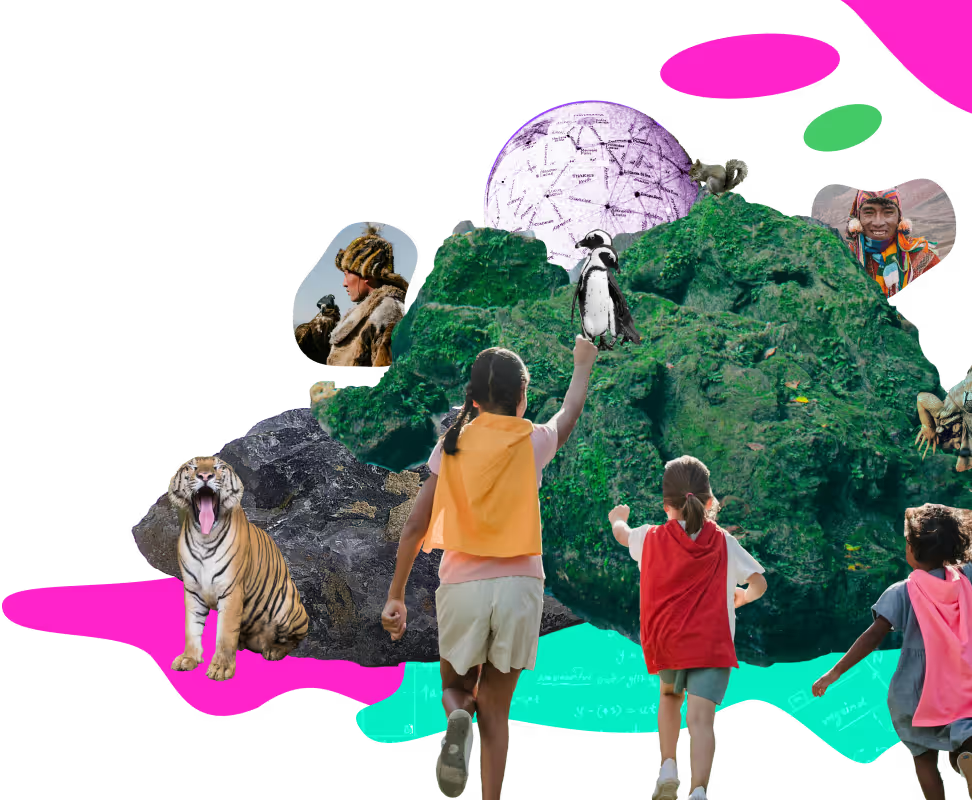
More to read
Project-based learning in elementary school: Why it works
Discover how project-based learning helps elementary kids thrive with real-world projects, hands-on lessons, and deeper engagement.

Project-based learning in kindergarten: The benefits of student-led learning
Learn about project-based learning in kindergarten. Discover the key skills that come with this teaching method and why bina stands out.
7 project-based learning examples for inspiring young minds
Inspire young learners with project-based learning examples. Learn how these hands-on activities foster critical thinking and real-world skills.