Online school vs. public school: Which is best for your child?
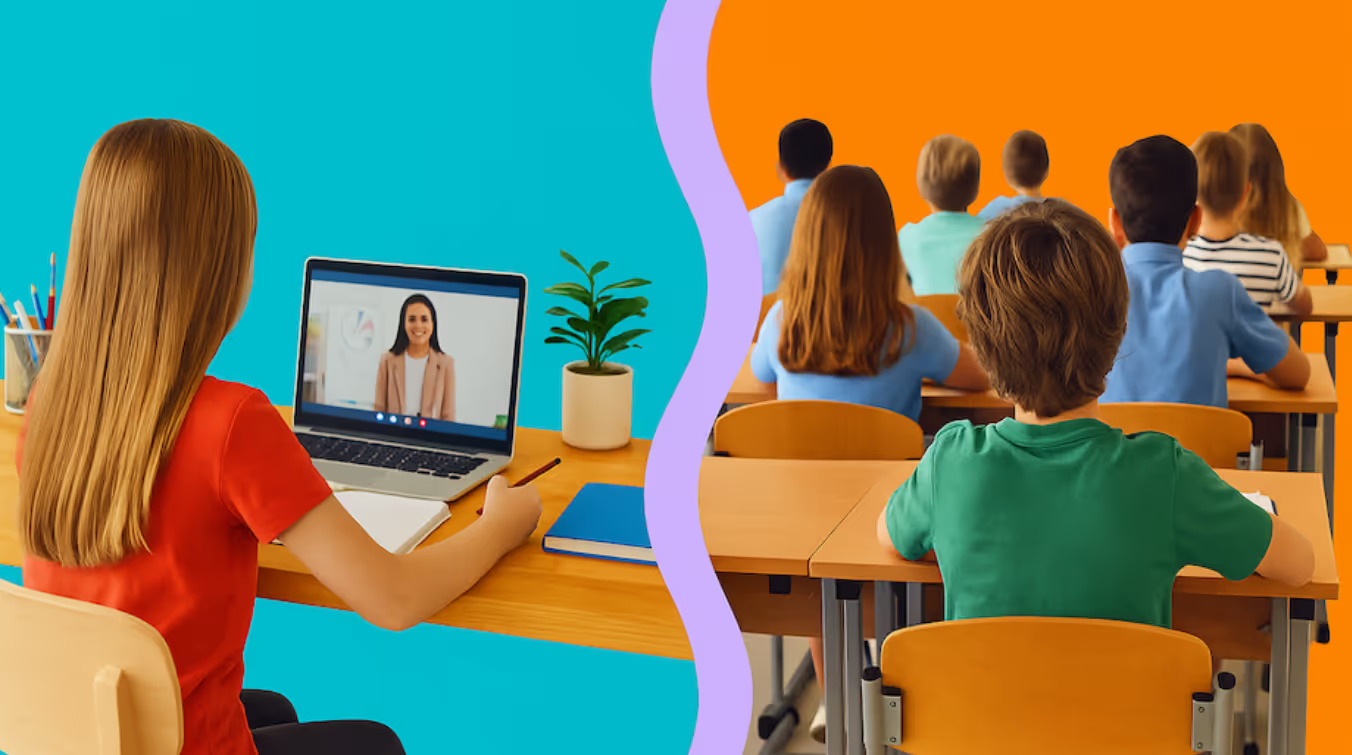
Lots of families are reconsidering the way they educate their kids.
Public schools work well for academically focused children with strong social skills. But their standardized curricula and packed classrooms often leave quieter children or those with additional needs feeling overlooked.
This drives parents to turn to home learning so they can offer their kids a more personalized approach to education. Unfortunately, not all parents have the time or means to fully homeschool their children. That’s where online schools step in. With certified teachers, smaller classes, and global connections, online learning offers enough structure to help kids grow but also the flexibility and support that can bring out their inner genius.
In this article, we explore how online schools and public schools compare, and how bina can offer a unique option that combines the best of both.
Online school vs. public school: How they differ
When families weigh online schools against public schools, they’re really asking a bigger question: “Can online schools be as effective as traditional schools?”
Both models offer a formal education. However, each delivers it in different ways, while offering distinct opportunities.
Here’s a comparison of the key differences.
Curriculum
Both online schools and public schools follow structured learning plans that cover core subjects, such as math, literacy, science, and social studies. However, the way they deliver content and the extra enrichment they provide vary.
In online schools, the curriculum depends on the provider. Some accredited online schools align closely with national standards, such as the US Common Core, UK National Curriculum, Australian Curriculum, or Canadian frameworks. Others design their own international programs that bring together different systems.
Certified teachers usually lead daily lessons in a virtual classroom, offering live sessions, interactive projects, and digital platforms that support engagement.
bina goes further by weaving social-emotional learning and life skills into core academics. This creates an interdisciplinary, cross-curricular experience. The goal isn’t to simply pass standardized tests but to raise thriving, confident learners.
Many online schools also experiment with project-based and experiential learning. This way, students can explore subjects like STEM in creative, real-world ways.
In public schools, though, the curriculum is state-mandated and generally consistent across school districts. As a result, parents and students don’t tend to have a say in what or how their children learn.
Equally, teachers often face pressure to meet state standards and prepare students for standardized testing. This reduces the time teachers can dedicate to curiosity-driven projects.
And while lots of public schools offer extras, like band practice, languages, and STEM classes, extracurricular availability depends heavily on district funding. While one school may offer robotics clubs, another may struggle to stock the library.
Flexibility
Online learning is built for flexibility. Families can log in from anywhere with an internet connection, whether at home, traveling, or while relocating abroad. Some virtual schools even offer self-paced study options to support different individual learning styles.
Public schools, however, run on a fixed schedule tied to bells, school calendars, and attendance policies. This structure works well for families who thrive on a rigid routine.
But what happens if you plan on traveling during the school year? Some states start sending truancy letters after as few as 10 absences that aren’t excused by a doctor. This inflexibility simply doesn’t work for families who travel the world.
Teaching and support
Often in online schools, certified educators teach live sessions using distance learning tools to connect with students. At bina, every class has two educators: one leading instruction and another focused on student engagement. This isn’t common for virtual schools, though. Many have lots of students in big online classrooms. And while they might break down into smaller breakout rooms for activities, the teacher-to-student ratio can still be quite high.
What’s more, parents with kids in online schools often need to provide support alongside the official lessons. To aid with this, bina matches parents with a dedicated Learning Success team. This team partners with families to answer questions, track progress, and provide guidance. That way, parents always feel supported without having to embody a teaching role. Parents receive regular updates and practical strategies that connect them to their child’s learning journey, while letting educators lead the classroom.
In comparison, a public school setting typically sees one teacher manage 20 to 30 students (or more, depending on the average student-teacher ratio in the district). Support staff such as counselors, aides, or special education services might be available, but the counselor-to-student ratio in many areas is stretched thin.
Accreditation and recognition
It’s important to look for online schools that are accredited, and remember that not all programs offer this recognition.
Many accredited online schools are recognized internationally. This makes it easier for students to transition into higher education or between systems. For families who move between countries, online school offers the continuity they need without children missing important topics or repeating the same lessons.
Comparatively, public schools receive accreditation at the district or state level. This works well for static families, as colleges and employers in that country automatically recognize these diplomas and transcripts.
However, if your family moves abroad, you might need extra proof to show that those qualifications match the new country’s system.
Social interaction
In virtual learning environments, social interaction comes via live video classes, breakout rooms, online clubs, and collaborative projects.
In this setting, students form online friendships. Families often supplement these virtual relationships with offline sports or local activities to build in-person connections.
In conventional schools, socialization is part of the experience. Kids spend the school day with peers, join sports teams, and attend community events.
This can foster belonging, but it also exposes kids to risks like bullying or peer pressure.
Location
With online distance education, geography doesn’t matter.
Online students can continue their schooling consistently, even while moving countries or living in areas with limited school options. And, because there’s no commute, children have more balance in their day as they don’t spend lots of time getting to and from school. Instead, they can spend this time doing extracurricular activities or resting.
Public school systems tie enrollment to home addresses and district boundaries. This is so acute that many families move house to access better-rated schools. That’s how much location dictates opportunity in traditional schooling models!
Diversity and community
In online education, classrooms are often globally diverse. Children meet peers from different countries, languages, and cultures, which gives them a sense of cross-cultural awareness that prepares them for a connected world. At bina, for example, each classroom has kids from up to seven different countries.
In public school classrooms, however, the level of diversity is a direct reflection of the surrounding community. On the one hand, this is great for building local identity and shared culture. But if your region isn’t diverse, the school won’t be either.
Cost
Some online charter schools and public-funded options are free, but many private online schools charge. While you have to pay, these fees often bring added benefits such as smaller classes, international curricula, or advanced digital platforms.
Public schools are tuition-free and government-funded, as taxes cover the core cost of education. But bear in mind that families still have to pay for extras, like supplies, field trips, and organized activities.
Benefits and drawbacks of online school vs. public school
Both online schools and public schools have their pros and cons. What’s best depends on your child’s needs and your family’s lifestyle.
Here are the benefits and drawbacks of each approach to learning.
Online school advantages
Flexibility is one of the strongest benefits of online schooling. With no commute and adaptable schedules, students reclaim hours every week for rest, hobbies, or family time.
Imagine a child who travels often or a kid balancing demanding extracurriculars, like competitive sports or performing arts. For these children, online school makes it possible to learn consistently without falling behind.
Here’s another benefit: access to a global curriculum. Online schools can pull from US, UK, Australian, and IB standards. By drawing from various learning models, your little one gets exposure to a richer mix of ideas. This is especially useful if you want to prepare your kiddo for international moves or future study abroad.
And then there’s the digital edge. Kids use technology daily in online schools. They collaborate in shared docs, present on video, and work in online labs. A 2024 study by Aarush Kandukoori, Aditya Kandukoori, and Faizan Wajid showed that when students use digital tools for math, their scores improved by nearly 25%.
But it’s not just the increase in test scores that matters. Digital literacy isn’t just a skill for school. It prepares your children to use technology in their future jobs.
What’s more, online learning can lead to better attendance. According to Time magazine, in some districts, rates jumped by 20% once students moved online. Perhaps it’s the comfort of learning at home or the lower exposure to bullying. Either way, kids learning online turn up and turn out in ways they might not in a traditional school.
Online school disadvantages
While online schools are flexible, they also require self-motivation — especially if you’ve chosen a self-paced learning style. Some kids will need help to stay focused at home, and you might need to balance screen time with offline activities.
Beyond the school day, parents also need to think about extra socialization. This takes planning. While students connect online through projects and clubs, parents usually supplement with local activities to give kids in-person friendships.
Online school also depends on stable internet and up-to-date devices, which isn’t a given in every home. And while some programs are tuition-free, many accredited international schools charge tuition.
Public school advantages
Public schools follow a standardized pathway. They’re government-funded, tuition-free, and consistent across districts. Parents feel safe in the knowledge that their little one gets the same accredited curriculum as their peers nationwide. On top of that, colleges and employers accept conventional qualifications without question.
When looking at the school day, kids start and end at the same time each day. This continuity helps them build good study habits and time-management skills. They also benefit from built-in socialization as classmates, playgrounds, and group projects provide daily chances to bond.
Additionally, public schools usually offer extracurricular activities like sports teams, school plays, chorus, and band. They also provide specialist rooms and teachers, such as science labs, art studios, or special education support. That can be tough to replicate outside a physical school campus.
Public school disadvantages
Children don’t usually have as much personalized attention in public schools. This is because class sizes tend to be quite large, with only one teacher (and maybe a classroom aide). It’s not easy for these educators to adapt lessons to each student. Plus, testing pressures can narrow learning to “teaching the test.”
What’s worse is that district funding creates inequality. Some schools offer advanced courses and arts programs. But others find it hard to provide the basics.
And when it comes to flexibility, fixed schedules simply won’t work for families who travel often or need more wiggle room.
Similarities between online school and public school
Even though online schools and public schools look different day-to-day, they share some important foundations.
Both formats give kiddos access to certified teachers who guide them through a structured learning journey. Both setups also create space for extracurricular activities, whether that’s a virtual coding club or an after-school soccer team.
Plus, no matter the format, students in both settings build key skills they’ll carry into life: reading and math, sure, but also collaboration, problem-solving, and resilience.
And whether a child learns in a bustling classroom or a virtual one, the aim is the same. Educators want to prepare young people for high school, higher education, and eventually their future careers.
In other words, the path may differ, but the goal is the same.
How bina offers the best of both worlds
At bina, we’ve reimagined how school looks. Families don’t have to choose between structure and flexibility, global opportunities and personal support. We bring it all together.
Our accredited, international curriculum is rooted in UK standards and enriched with elements from the US Common Core, Australian, Canadian, and IB frameworks. That means your children can transition smoothly anywhere in the world and still enjoy a vibrant, well-rounded education.
With small class sizes, educators have the space to truly know each learner and personalize their learning path accordingly — all while keeping lessons engaging and joyful.
For families who travel, relocate, or juggle busy schedules, you maintain consistency without sacrificing educational quality. And our students aren’t limited to local peers either. They connect globally, learning alongside classmates from dozens of countries and cultures.
Beyond academics, we focus on what matters most to today’s generation: strong social-emotional learning, life skills, and the confidence to thrive.
And with precision education, real-time feedback, and a dedicated Learning Success team, bina creates a learning environment that supports children and families every step of the way.
Online school vs. public school — Which is right for your family?
The choice of schooling comes down to what’s right for your child and family.
Public schools follow standardized curricula and bring together large groups of students. This gives kids a sense of routine and shared experience. Online schools, on the other hand, provide smaller classes, flexible schedules, and a more personalized approach to learning.
If you’re looking for an option that combines academic excellence with global connections and real flexibility, bina might be just right for your kiddo.
Accredited, full-time school for grades K-12
Bring the best of the classroom to your home
See if we're a fit
More to read

The best 8 online accredited homeschool programs in Kentucky
Traditional in-person school is not the right fit for every child. Maybe your kiddo doesn’t like the overwhelm of a crowded public school, or your…



The best 7 online accredited homeschool programs in Georgia
You're sold on the idea of having your kiddo learn at home for the flexibility, the personalization, and the fact that your child doesn't have to fit a…
Your guide to the best online elementary schools
Discover the perfect online elementary school where your child can shine! Learn what makes schools stand out and find the right fit for your family.
