Your guide to the best online elementary schools
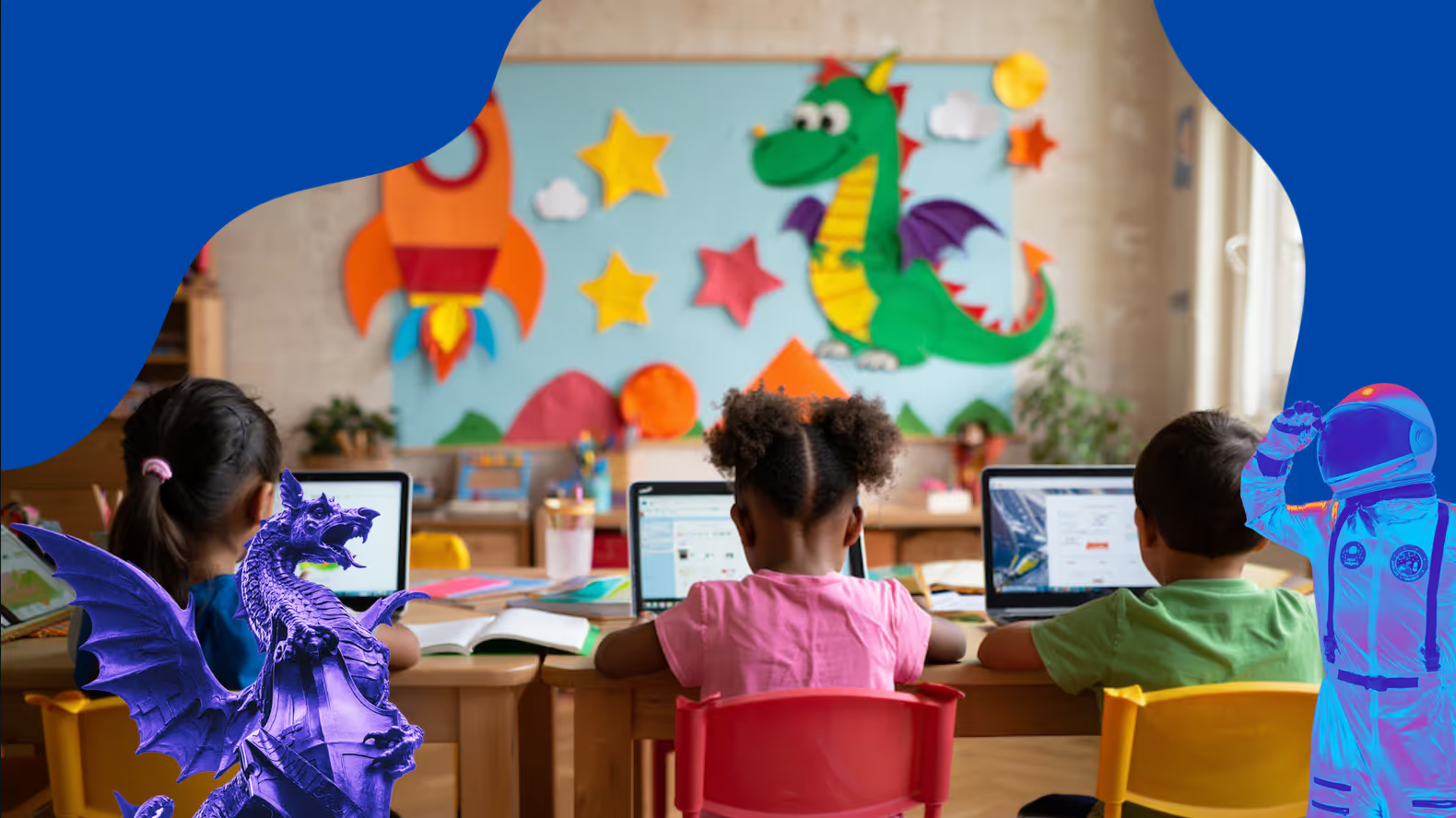
Sometimes, traditional schools just don’t cut it. Maybe your kid needs more time to explore concepts, but the public school can’t adapt to those needs. Perhaps your family is planning an international move but is worried about disrupting your kiddo’s learning journey. Or, maybe you’ve tried homeschooling, but you realize you want a bit more structure and help to keep things on track.
The good news is, there’s an alternative option that meets the needs of families wherever they are. Online elementary schools offer a structured yet flexible learning environment that prioritizes your kiddo’s educational experience.
Let’s explore six of the best online elementary schools so you know what types of virtual options are out there.
What is an online elementary school?
An online elementary school functions similarly to a traditional school, except it’s online. There’s a structured educational framework and a set curriculum. Typically, most lessons, assignments, and assessments are delivered online, so students can learn at home.
Unlike homeschooling, which is parent-led, the online lessons are led by qualified teachers who provide feedback and support. Many online elementary schools offer live classes, so there is real-time interaction with teachers and other students.
There are more opportunities for socialization with group projects, games, and class discussions in an online school. So your child gets the chance to connect, collaborate, and build wonderful friendships, just like they would in a traditional setting.
What can an online elementary school offer today’s kids?
Online education no longer means staring at the screen for hours watching videos or completing digital worksheets alone. Now, it’s more engaging and interactive than ever before. Students can access experienced teachers and dynamic lessons and activities from anywhere in the world with an internet connection.
Without the physical constraints, education can be more adaptable and personalized for both your child and your family.
Many online schooling options are designed with the understanding that kids today need 21st-century skills. So, programs and curricula are often built around nurturing critical thinking, creativity, social-emotional skills, and digital literacy. This holistic approach helps prepare your kiddo for the future.
What makes an online elementary school stand out?
What truly makes an online elementary school exceptional among a sea of options? Here’s what you should be looking for:
Personalized approach to learning
A good online elementary school will work with you to create a learning plan that reflects your child's specific needs, learning style, and family lifestyle.
This could include matching your child’s learning pace, tailoring curriculum to interests, or setting personalized academic goals and holistic goals, like social-emotional development or time management skills.
A personalized approach to learning helps your kiddo become a more well-rounded and confident individual.
Rich and engaging curriculum
There are so many great ways to learn online now — videos, simulations, interactive activities, virtual field trips, and more. Look for an online elementary school that offers a blend of teaching methods that cater to different learning styles.
And just because learning is done online, doesn't mean it's all on screens. The best online school experience integrates offline, hands-on activities that complement the digital lessons. This helps connect learning to the real-world and shows kids how their actions can impact the world.
Strong sense of community and connection
Online schools that offer live lessons, class discussions and collaborative projects provide plenty of opportunities for students to interact with their teachers and peers. They aim to create a supportive and inclusive environment for every child.
For international online schools especially, your kiddo gets the chance to meet and learn from children from diverse backgrounds since distance is no longer a barrier. Students develop cultural awareness and learn to appreciate different perspectives.
Qualified educators and school accreditation
Your kiddo should be able to learn from certified and experienced educators, even from the comfort of your home. Choose virtual schools with accreditation from reputable organizations. It’s a stamp of approval that the school meets rigorous standards for education and curriculum.
Smaller class sizes are also a big advantage. Teachers can provide more individualized attention to your kid and tailor their teaching methods to best suit each unique learner.
Six popular online elementary school options
To help you navigate the big, exciting task of choosing an online elementary school for your kiddo, here are six virtual schools that offer a unique approach to learning:
1. bina
bina is a global online school for kids aged four to 12 that is reimagining elementary education. Our new form of schooling is globally connected, child-centric, and future-forward — you’ll be signing your kiddo up for a world of endless possibilities.
Precision education
We balance standardization with personalization through precision education. This allows us to create a structured, yet highly tailored learning experience that evolves with your kiddo.
Our certified teachers look at patterns to understand how and when our students do best and are most happy, and divide them into micro-learning groups based on their skills, knowledge, and needs.
Small class sizes of up to eight students make it possible for teachers to focus on each child individually and adapt to their progress and goals. Your kiddo will feel appropriately challenged and supported when they need help.
Project-based learning biomes
At bina, we are firm believers that children learn best by doing, exploring, and creating. How we built our curriculum reflects that belief.
Our students learn in biomes, like deserts and oceans, for six-week periods. During each biome, they explore STEAM subjects integratively. Afterward, they design a project connected to what they learned.
They are challenged to apply learned skills to solve a global issue linked to the UN's Sustainable Development Goals (SDGs). By connecting lessons to real-world themes and letting them take ownership of their learning, students see first-hand how they can shape the world.
Early introduction to project-based learning in elementary helps nurture future thinkers who actively question, explore, and find creative solutions.
Daily social-emotional learning
Social-emotional learning is a big part of bina. It helps children understand and manage their feelings, learn to respect themselves, build healthy relationships, and make responsible choices.
That’s why it’s carefully integrated into bina’s entire learning process — 25% of our curriculum is dedicated to teaching SEL themes. Every day begins with an emotional check-in to foster connection and gauge student well-being, allowing our teachers to adapt lessons in real time.
We also support our teachers and parents so they can consistently model and reinforce these important skills. Our goal is to equip our kiddos with a personal SEL toolbox that can carry through to adulthood.
Internationally accredited
bina is accredited by Cognia, a recognized global accreditation organization. This means we meet the rigorous standards for quality education worldwide.
Being an internationally accredited school doesn't just ensure quality, it also brings a global perspective to education. Your child will learn alongside students from different countries, broadening their world view.
Accreditation also helps students with continuing education. Cognia accreditation is a widely recognized standard. You have peace of mind knowing your kiddo can smoothly transition back to a traditional school if desired or easily enroll in a new school during an international move.
2. Miacademy
Miacademy offers a customizable online learning experience for students in grades K-12. They have a wide array of interactive lessons, videos, games, and activities across core subjects, like math, science, and social studies.
Lessons are designed to be self-paced. This means kids can learn at their own speed, spending more time where they need it and zipping ahead when a topic clicks. Parents also have options to customize the curriculum to better fit their kiddo's interests.
Strengths
- Flexible curriculum and pacing
- Engaging multimedia lessons
- Cost-effective option
Weaknesses
- Not teacher-led, requires heavy parental involvement
- Supplemental accreditation (not a full school accreditation)
- Lessons may need supplementation for depth
3. American Montessori Academy @Home programs
Montessori-based American Montessori Academy (AMA), is a virtual school that brings the Montessori philosophy into your home with their @Home Programs.
At its heart is a child-led, hands-on, and individualized educational approach. Your kiddo will learn at their own pace, guided by their natural curiosity. They will explore concepts through video lessons, materials, and activities alongside certified Montessori educators.
Strengths
- Empowers children and supports holistic development
- Features certified Montessori educators
- Blended learning with self-paced, 1-on-1, and group sessions
Weaknesses
- More costly option that still requires a lot of parental involvement
- Montessori philosophy may not appeal to all families
4. Lotus and Ivy
Lotus and Ivy brings Waldorf-inspired classes and curriculum online. Their method emphasizes a holistic approach that nurtures the intellectual, emotional, and social well-being of children.
The curriculum caters to students aged four to 15, centering around the early elementary years. Through live, interactive classes, students can explore experiential learning and connection to nature and arts right at home.
Strengths
- Unique educational philosophy focused on holistic growth
- Live classes with teachers and students
- A la carte virtual classes for curriculum customization
Weaknesses
- Waldorf philosophy may not suit every family
- Not explicitly accredited
- Less emphasis on standard academics
5. Haileybury Pangea
Haileybury Pangea is the online campus of Haileybury, a leading independent school in Australia. It upholds the high academic standards that Haileybury is known for.
Live lessons follow the Australian Curriculum, and they are complemented by interactive resources. The school also champions personalized learning pathways, grouping students based on their skill level and not age.
Strengths
- Backed by an established and reputable school
- Utilizes a "stage not age" philosophy for tailored online learning
- Strong focus on student well-being and community
Weaknesses
- Requires a high level of self-discipline and time management from students
- Primarily designed for students within the Australian education framework
6. Wildlings Forest School
If you’re looking for a nature-based online learning program, Wildings Forest School has a strong focus on outdoor exploration, skill-building, and fostering a deep connection with nature.
While their core experience is in-person, they offer online lessons focusing on Forest School Skills and provide digital learning materials for homeschooling families who want to integrate nature-based activities into their child's education.
Strengths
- Experiential hands-on learning
- Supports physical, social, emotional, and cognitive growth through nature
- Highly stimulating for children
Weaknesses
- Not a comprehensive online academic curriculum
- Limited scope for traditional academic subjects
- Requires significant parental involvement
How to get the most out of an online elementary school?
These tips will help you set the stage for successful online learning:
Define your family goals for elementary education
What does your family hope to achieve through your kiddo’s elementary education? Is it to foster a deep love for language arts, build strong foundational math skills, or develop social-emotional intelligence?
Figure out what is most important to your family in an education. For some families, a rigorous, standards-based curriculum is key, while others prefer a more personalized, interest-led approach. Either way, set short-term and long-term goals to guide your educational choices and track your child’s progress.
Provide the best online learning environment
Designate a consistent, comfortable, and distraction-free (as much as possible) area for school. This special space signals to your child that it's "learning time" and helps them focus.
A stable internet connection and functional device make a big difference in online learning. So, make sure your technology is reliable and ready before class every day.
Remember to schedule breaks away from the screen, too. Some virtual schools, like bina, have built-in breaks that include movement, mindfulness, or creative play. These short pauses help students refresh their minds and engage in class.
Build a supportive learning hub
Be an active partner in your kiddo’s learning journey. Younger kids, especially, may need help with staying organized, managing their time, or understanding online tools. Your role is to guide them in navigating this new learning environment.
It’s beneficial to develop a collaborative relationship with your child’s online teachers. Ask questions, check in on your child’s progress, and openly communicate so that everyone can work better together.
Find resources to supplement their academic and social growth. For example, Outschool is a marketplace of live online courses that allow your kiddo to dive into topics they’re curious about. Or look into local sports teams or community clubs to ensure they get in-person social time and physical activity.
Reimagine elementary education with bina
Every child deserves an education that is as unique as they are. At bina, elementary is global, personalized, engaging, and seriously fun. From precision education to PBL projects and daily SEL, reimagine elementary education with us.
Accredited, full-time school for grades K-12
Bring the best of the classroom to your home
See if we're a fit

More to read
10 alternative elementary school options for kids who learn differently
Curious about alternative elementary schools? Compare 10 options for creative, sensitive, or advanced learners and find the best fit for your child.

What is the best online homeschool curriculum for your child?
Discover the best online homeschool curricula for 2026, from live teacher-led options to self-paced programs. Find the right fit for your family.
How to choose the best online homeschool for your elementary-aged kiddo
Looking for a high-quality elementary education at home? Learn what to consider, compare popular programs, and find the right fit for your kiddo.