Homeschool music curriculum: Choices, resources, and challenges
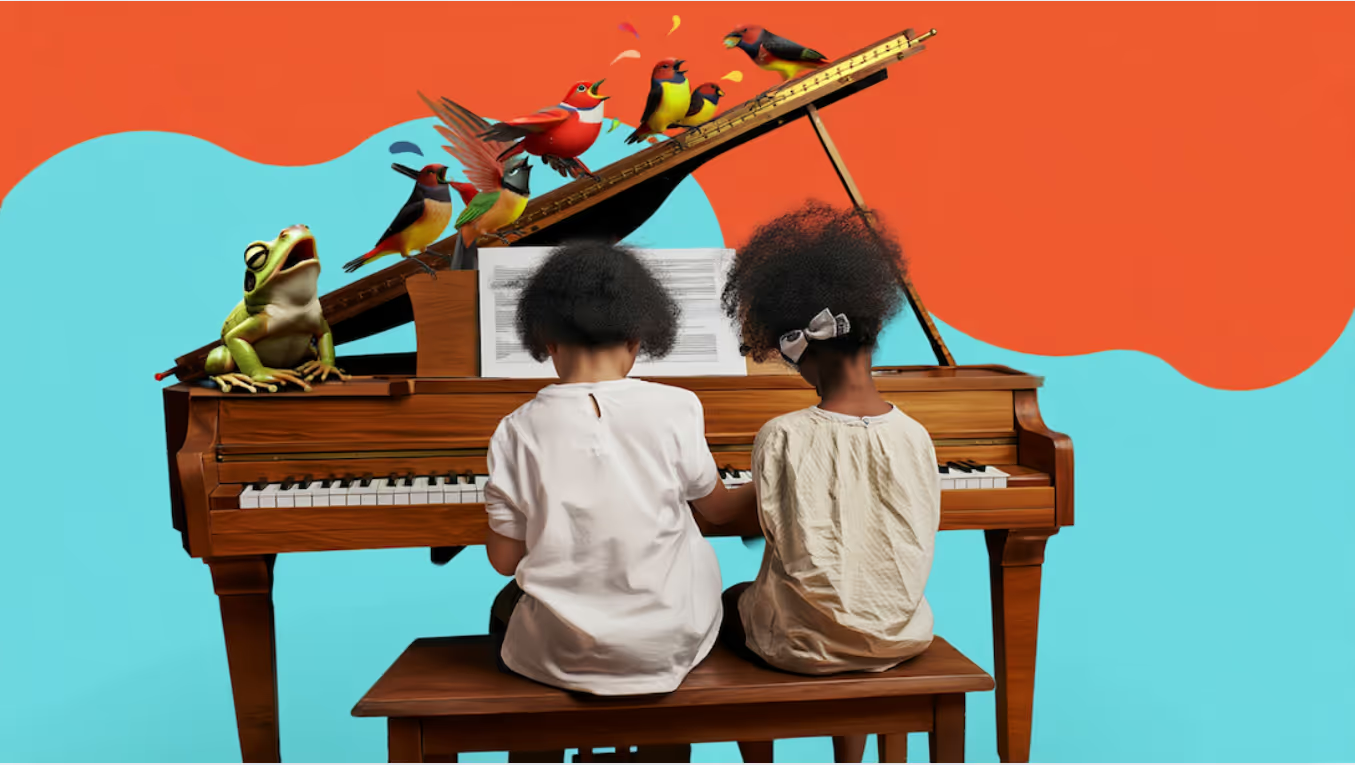
Many families choose homeschooling to personalize their child’s education and nurture creativity. But when it comes to music, you might worry about matching the structured lessons, ensemble experiences, and performance opportunities schools provide. As a parent, you simply don’t have access to a variety of school instruments, formal music theory instruction, or group practice, so lessons can feel inconsistent when teaching at home.
But with the right homeschool music curriculum, you can bring rhythm, melody, and harmony into your lessons in ways that are both engaging and achievable. Let’s take a closer look at the different types of homeschool music curricula, which programs are available, and how bina helps you overcome the challenges of bringing learning into the home in a way that makes school feel joyful.
Different types of homeschool music curricula
Music isn’t a one-size-fits-all subject. Some children thrive on structure, others need hands-on practice, and some light up when they get to create and perform. A good homeschool music curriculum gives you the freedom to lean into your child’s learning preferences while still covering the key elements of music education.
Let’s take a closer look at the main approaches you’ll see in a homeschool music curriculum and how they work at home.
Textbook-based music
Textbook-based music curricula offer a structured route to music education.
This approach moves step by step through musical notation, music theory, and history, using textbooks, workbooks, listening assignments, and quick theory quizzes. These programs tend to align with standards like the National Core Arts Standards.
Textbook-based musical studies often include activities like:
- Reading a page on time signatures and then clapping 2/4, 3/4, and 4/4
- Completing a short worksheet on note values
- Keeping a “Listening Log” after hearing a piece and jotting down what you notice
Families like this approach because it helps kids master the basics of music theory and gives them a clear structure to learn key musical concepts. It also offers an easy way to review skills until they feel confident.
The downside is that these types of programs lack hands-on creativity, with very little focus on practice and performance. This makes them feel a little dry. They’re also not easy to personalize and rely on parents having enough knowledge to teach musical theory comfortably.
Instrument-based music
This approach focuses on learning an instrument through private lessons, method books, or video lessons. Sessions include scales, simple pieces, and practice performances.
The biggest strength of this method is that you can see the tangible progress your child makes. Ultimately, they get better at playing an instrument and feel good about it. On top of that, according to research published in the National Psychological Journal, regular practice builds discipline and fine motor skills, supporting coordination and motor development.
The flip side is that both the instrument and the lessons can be costly. To overcome this, parents rent instruments until their child is sure it’s the instrument for them. Be aware, though, that not all instruments work in small or noise-sensitive homes. You may want to look for electronic instruments with headphones if you have close neighbors.
Project-based music
Project-based programs give children the opportunity to plan and complete longer creative projects, mixing together performance, composition, and research.
A student learning music through a project-based approach might do any of the following:
- Compose an original song and perform it for their family
- Explore the history of jazz and present their findings as a slideshow
- Create a themed playlist with thoughtful commentary
This style of learning fosters creativity, problem-solving, and independent research skills while showing how music connects to the real world.
To keep projects on track, try to set clear goals, break work into steps, and provide feedback at each milestone. This guides progress without stifling independence.
Digital/virtual music
Digital music programs deliver lessons through online platforms and apps. With online access to music lessons, students can learn from almost anywhere.
Children can practice theory drills, ear training, and instrument tutorials through interactive quizzes, video lessons, or even virtual ensemble recordings.
It’s a flexible format that allows families to access high-quality instruction at an affordable price, while its gamified features keep kids motivated.
The only real issue comes down to variable quality — not all programs are made equal. Look for reviews and research the program to make sure it covers core musical theory.
Performance and ensemble-focused music
Performance and ensemble-focused music places collaboration at the heart of learning. Students join a homeschool co-op choir, a youth orchestra, a community concert band, or an online recording project to learn alongside others.
Research on the impact of music indicates that, by playing and singing with others, students learn teamwork, listening, and social skills while building confidence around public performance. Playing music together also strengthens cognitive skills, such as critical thinking and self-awareness.
The real challenge with this approach revolves around access. Parents need to find local opportunities and coordinate schedules, which can be tough in smaller communities. And for children with performance anxiety, parents need to be conscious of starting with small performances rather than big public spectacles.
Five homeschool music curriculum choices
There’s no shortage of homeschool music programs out there, but the best fit depends on your child’s age, interests, and the kind of support you want as a parent. Some programs focus on theory, others on playing right away, and some mix creativity with structure.
To help you sort through the options, here are five popular homeschool music curricula, along with the pros and cons of each.
1. Alfred’s Essentials of Music Theory
If you’re looking for a strong, structured foundation, Alfred’s is a classic. It’s for kids aged 10 and up, and it walks students through notation, scales, chords, intervals, and rhythm in three progressive levels.
The program blends workbooks with CDs/MP3s and online exercises so children don’t just read the concepts; they also hear them in action.
Pros:
- Combines drills with listening for a well-rounded approach
- Offers an affordable alternative to full online courses
- Adapts easily for piano, guitar, or band instruments
Cons:
- Focuses heavily on theory without performance or creativity
- Repeats workbook exercises, which can feel monotonous
2. Simply Music: Music & Creativity Program
This self-study online piano/keyboard curriculum works for all ages and takes a “playing first” approach. From the first lesson, kids play blues, classical, and pop-style pieces with the help of video instruction and backing tracks.
Formal music reading and theory come later, after students already have dozens of songs under their belt. This helps inspire creativity without kids drowning in stuffy musical studies.
Pros:
- Builds excitement and confidence as kids play music straight away
- Encourages improvisation and creativity from the first lesson
- Offers flexible pacing to help parents who don’t read music
Cons:
- Focuses mainly on piano and keyboard
- Provides a limited explanation of notation early on, which may not work for families seeking traditional theory upfront
3. Hoffman Academy
Ideal for children as young as five, Hoffman Academy is a structured online piano program with over 300 video lessons. Founder Joseph Hoffman guides kids through ear training, rhythm, sight reading, and improvisation. All piano lessons come with games, worksheets, and practice tracks to keep sessions fun and interactive.
Pros:
- Uses gamified lessons and multimedia tools to keep kids motivated
- Delivers clear, engaging instruction with helpful visuals
- Allows students to progress at their own pace
Cons:
- Focuses solely on piano and keyboard
- Requires consistent internet access
4. Prodigies Music
Prodigies is a colorful, play-based curriculum designed for ages three to 12.
Using simple, color-coded instruments like colored bells and xylophones, kids learn pitch, rhythm, and early theory through hundreds of videos, songs, and printable activities. Lessons emphasize singing, movement, and hands-on music-making before introducing notation.
Pros:
- Engages younger learners with colorful, playful activities
- Emphasize singing and listening skills before notation
- Gives families the flexibility to follow a sequence or pick relevant lessons
Cons:
- Suits beginners better than advanced students
- Requires families to purchase instruments for full participation
5. Berklee Online: Music Foundations
Berklee’s beginner-level online course works for older children, offering a serious introduction to music theory, ear training, rhythm, and songwriting.
Berklee-trained instructors teach the program, which blends technical skills with creative projects, weekly assignments, and direct feedback.
Pros:
- Offers high academic credibility from a world-renowned music school
- Balances theory with creative skills like songwriting
- Provides direct feedback from expert instructors
Cons:
- Charges higher tuition than most online programs
- Too difficult for young beginners
Additional resources for homeschool music
A homeschool music curriculum doesn’t have to come down to one program alone. With the right extras, you can give your child more variety, support, and opportunities to shine.
Here are a few resources families often use to round out their music education at home.
Local music schools and community programs
Local music schools and community programs bring in structure and expertise from trained teachers.
Whether it’s private lessons, group classes, or youth ensembles, these programs give kids the chance to learn alongside peers and perform in recitals or workshops.
UK examples include local council music hubs and the Royal Academy’s junior programs. In the US, families turn to community arts centers or the National Conservatory of Arts. Globally, Yamaha Music Schools offer well-known options.
Online platforms and apps
Online platforms and apps make music learning flexible. They provide interactive lessons that help kids practice theory, performance, and ear training. You’ll find both free tools and subscription-based programs that range in price, so you can find something that fits your budget.
Kids can practice with Yousician’s gamified lessons, dive into MusicTheory.net for free drills, or track progress through MakeMusic. These tools make it easy to learn anytime and anywhere, while keeping practice engaging.
Instrument rental programs
Instrument rental schemes save families from buying pricey instruments up front.
Stores like Music & Arts in the US or Dawsons in the UK let you rent, try, and even switch instruments until your child finds the right fit. That way, kids can try out a variety of instruments without the huge cost.
Sheet music libraries
There are lots of sheet music libraries, like IMSLP, 8notes, or Sheet Music Plus, that offer musical scores. These databases help to keep practice fresh by adding new pieces beyond the standard method books.
Recording and mixing software
Recording and mixing software such as GarageBand or Audacity opens the door to a different type of musical creativity. Focusing on music production, arranging, and editing, these tools help to develop musical skills that feel exciting and modern.
Challenges of homeschool music lessons
Even with a great homeschool music curriculum, families often bump into a few challenges. The good news? Most of them have creative workarounds.
Access to instruments
A quality piano or drum kit takes both money and space. And how do you know if your child will actually stick with it once you’ve taken the plunge?
Instead of investing right away, many families try before they buy by:
- Testing the waters with rentals
- Borrowing an instrument from family or friends
- Choosing smaller-scale instruments, like travel guitars
There’s also the option to start learning with virtual instruments. Digital keyboards and music apps are affordable, flexible ways to explore sound without filling your living room.
Balancing theory and practice
It’s tempting to rely on theory books, especially if you don’t feel confident in teaching performance. But kids learn best by doing.
Keep music lessons interactive with activities that combine theory and hands-on music, such as:
- Pairing clapping exercises with rhythm lessons
- Singing through scales instead of just reading them
- Asking your child to write a short melody to reinforce notation
Little bursts of hands-on activity keep the spark alive and encourage creativity without missing out on core concepts.
Lack of ensemble opportunities
Lots of homeschool parents feel the ensemble gap. Traditional schools often provide choirs, bands, and orchestras. These settings teach listening, teamwork, and performance.
But homeschoolers often work independently, making it harder to access performance opportunities. To combat this, look for local youth groups or set up your own small jam circles with other families. If you can’t find anyone to do this with in person, try finding groups to collaborate with online.
How bina teaches your child music
At bina, music offers a route to expression, connection, and discovery for all our students. Our curriculum weaves theory, performance, and creativity into a single, evolving journey. Students learn to read music, play, compose, and collaborate through meaningful project-based learning.
Through the exploration of global music traditions, children explore genres, rhythms, and instruments from every corner of the world within a diverse classroom of international students. Music becomes not just notes on a page, but a living story shaped by culture, history, and community.
And thanks to our small classes (maximum eight students) with two educators per class, kiddos get focused feedback, personalized support, and the confidence to try new things.
Music is not isolated in our curriculum. Projects connect music to other subjects — scoring short films, creating math-inspired rhythms, or composing pieces that reflect science topics — proving that music is a bridge between disciplines.
With bina, music becomes a lifelong passion that grows alongside your child and helps bring creativity to other academic subjects. Fill out the form below to learn more about our live, full-day online school and how we bring the arts, technology, social-emotional learning, and core subjects together with engaging, biome-themed units.
Accredited, full-time school for grades K-12
Bring the best of the classroom to your home
See if we're a fit

More to read
Nature-based homeschool curriculum: Choices, resources, and challenges
Discover the types of nature-based learning, which nature based homeschool curriculum options exist, and how bina helps kids understand the world.

Homeschool geometry curriculum: Choices, resources, and challenges
Explore the best homeschool geometry curriculum options, plus resources, challenges, and how bina brings geometry to life.

Homeschool history curriculum: Choices, resources, and challenges
Explore your options for homeschool history curriculum. Learn about different programs, find helpful resources, and explore precision learning with bina.