The myth of learning styles and what truly works in a modern school
You’ve probably heard it before, maybe from a teacher, a parenting blog, or even your child’s report card. “Sammie is a visual learner,” or “Christine can hardly sit still; she must be more of a kinesthetic learner.” Sure, the idea sounds intuitive. If we can just figure out how a child prefers to learn, we can teach them better.
For decades, the theory of “learning styles” shaped how parents and educators thought about learning. It promised a shortcut to supporting a child’s education. But today, most cognitive scientists agree that there’s no strong evidence that matching teaching to a specific “style” improves learning. In fact, studies show it can oversimplify how children grow. This doesn’t mean your child’s learning preferences don’t matter. They absolutely do. But there’s a difference between noticing how your child learns in a moment, and labeling them in a way that shapes every experience that follows.
In this article, we’ll walk you through what the learning styles theory is, why it became so popular, and why it no longer stands as reliable practice. Then we’ll look at what does - from personalized instruction to project-based learning, we’ll explore the evidence-based approaches that actually help children learn more deeply, confidently, and joyfully.
How a once‑popular idea lost its credibility
The concept of learning styles essentially classifies students as visual, auditory, kinesthetic, or reading/writing learners, and became widely accepted in the 1970s. The VARK or VAK models were everywhere. But deep down, the evidence was shaky.
A landmark review by the Association for Psychological Science concluded that there is “no adequate evidence base” to justify using learning styles in education. Researchers found that even when students were taught in the way that matched their self-identified style, there was no consistent improvement in how well they learned. The theory simply didn’t hold up under scrutiny. This was echoed by a number of reputable academic institutions, which upheld the idea that while students may have preferences in how they learn, these don’t predict learning outcomes. It was concluded that students often performed just as well, or better, when challenged to engage in multiple ways, rather than relying on a single “style”.
Yale’s Poorvu Center also points to how this theory oversimplifies what we know about cognition. Learning is dynamic. It involves memory, attention, emotion, prior knowledge, and context. Reducing a child’s learning to one mode and shaping their education around it, misses the bigger picture. And there’s more than just a missed opportunity. Some psychologists now warn that learning styles can actually be harmful. Children may begin to internalize limits. A child told they’re a “kinesthetic learner” might avoid reading or writing, assuming they’re simply not wired for it. That kind of labeling can narrow a child’s confidence, curiosity, and willingness to explore.
In short, what began as a hopeful framework has become a cautionary tale. Learning preferences are real and worth noticing. But rigid categories aren’t how brains grow.
Beyond labels: the real tools helping kids learn deeply today
So where does that leave us? If learning styles aren’t the answer, what is? What actually helps children learn in a way that feels natural and effective?
At bina, we turn to methods rooted in research and shaped by what we see working every day in our classrooms. These approaches don’t put kids in boxes. They invite them in—into deeper learning, real curiosity, and genuine growth. Here’s how.
Leveraging project-based learning to make it stick
At bina, we believe real learning starts with real questions. That’s why project-based learning is at the heart of how we teach. It’s a mindset that treats children as capable thinkers and doers from day one.
How does it work? Project-based learning (PBL) asks children to investigate authentic questions and solve real problems. Instead of memorizing content for a test, learners lead their own inquiries, applying what they discover and creating something meaningful in the process. It’s hands-on, relevant, and backed by research. Studies show that this approach increases motivation, deepens understanding, and fosters long-term retention of skills, especially when learners are trusted to drive the process.
At bina, we bring this to life in a way that’s both imaginative and rigorous. Every six weeks, learners dive into a new biome - a thematic world that acts as a springboard for learning. Think oceans, jungles, deserts, or grasslands, used as living, connected environments where science, literacy, art, math, and social studies come together through story, exploration, and big ideas.
In practice, what that looks like is that each learner chooses a problem to solve within that biome, one that connects to a United Nations Sustainable Development Goal. That might mean designing a solution for deforestation, proposing a clean water system, or imagining a new approach to marine conservation. The key is relevance. The project matters because it’s rooted in the world around them.
But here’s what makes the bina approach different: each project is designed to reflect everything the child is learning in class. If they’re working on data analysis, their project might include graphs or surveys. If they’re practicing persuasive writing, they’ll need to present their ideas convincingly. The project becomes the canvas for growing their learning. Educators are hands-on throughout the process. They observe, guide, and challenge learners by asking the right questions and offering timely feedback. This allows them to understand each child’s progress in action, and to spot where support or stretch is needed next.
Project-based learning at bina helps children see themselves as powerful learners. When a child builds a solution to a problem they care about, and when they get to lead the learning, they feel trusted. That trust builds confidence, independence, and a lifelong sense of agency.
Personalizing learning to meet each child where they are
The second pillar of our teaching approach focuses on personalized learning. This means that we shape education around your child’s pace, interests, and growth. It’s not about making things easier, but about making them make sense. When the learning path feels aligned with who your child is, everything shifts: confidence grows, curiosity leads, and school becomes something they look forward to.
So how do we make it happen? At bina, personalization starts with real human connection. We keep our live classes small, just 3 to 8 learners, so our educators can truly get to know each child. That means they’re not just teaching to a curriculum. They’re watching, listening, and responding in real time, adjusting instruction to fit what each learner needs that day. This is what we call precision education - a blend of real-time data, observation, and ongoing conversation that helps us map each learner’s progress and potential. If a child is flying ahead in math but needs more support in writing, we notice.
Learning at bina also bends to fit a child’s interests. A learner who’s fascinated by animals might explore measurement through tracking wildlife. A budding designer might practice fractions by planning a floor layout. This choice-based approach gives children a voice in how they learn and how they show what they know.
Personalized learning also supports emotional growth. Every day includes space for check-ins, reflection, and community. We want our learners to build not just skills, but self-understanding. That includes knowing when they need help, how to advocate for themselves, and how to recognize their own progress. And because we’re an online school, we use technology intentionally to deepen connection and tailor learning paths. Our educators use insights from each class to adapt and support on the spot, not weeks later. That kind of responsiveness helps us catch challenges early and celebrate growth in real time.
When learning is personal, children feel seen. When it’s paced for them, they stay engaged. And when it’s connected to what they care about, they remember it. That’s what we mean by personalized learning at bina. It’s the way we honor who your child is and help them become who they’re meant to be.
Why children thrive with learning in different ways
What all this really means is that children aren't made for labels. Their curiosity flows across drawing, singing, building, and storytelling, sometimes all within the same hour. That natural flexibility is a strength, not a puzzle to simplify.
Science now shows that learning through multiple modes like seeing, hearing, and doing actually helps the human brain connect more deeply. When ideas are delivered in different ways, learning doesn’t just linger; it starts to stick. As neuroscientist Brian Mathias explains, “When students learn through multiple senses, their brains create stronger, more integrated memories.” Imagine a child sketching the parts of a flower while also labeling each part aloud. That combination builds memory and creates a richer web of understanding.
In environments where information arrives through multiple channels like pictures, words, movement, sound, children process and associate ideas more naturally. It mirrors how the brain naturally makes sense of new information. When children engage more than one sense, their understanding deepens and connections between concepts grow stronger. Real-world evidence backs this theory up. In a strong quasi-experimental study, students who learned through multimodal methods clearly outperformed students taught through conventional, single-mode instruction. The difference in learning outcomes wasn’t small; it was statistically significant.
Beyond better memory, multimodal learning is more engaging. It invites excitement, movement, and interaction. It speaks to different parts of a child’s creativity, creating a real joy in learning, not just performance.
Try it at home: a parent’s guide to multimodal learning
The best part is, you don’t need fancy materials or a teaching degree to support your child’s learning at home. What matters most is variety, curiosity, and noticing what lights them up. Here’s how to encourage multimodal learning right from your kitchen table.
1. Mix the methods
Introduce ideas using more than one format:
- Read a short article on a particular subject and watch a related video.
- Sketch out vocabulary words while saying them aloud.
- Build a model of something you just read about, using blocks or recyclables.
2. Let movement in
Some kids think better when their bodies are engaged.
- Quiz while tossing a ball back and forth.
- Use sidewalk chalk for spelling or math practice.
- Let them pace, wiggle, or stretch while brainstorming.
3. Encourage reflection
After trying different approaches, ask:
- “What’s the most interesting thing you learned today?”
- “Which part felt fun or interesting?”
- “Want to try it a different way next time?”
4. Offer choice
Give your child options in how they show what they’ve learned:
- Draw it, build it, explain it out loud, or write a mini-book.
- Keep tools like markers, craft supplies, and audio recording apps handy.
5. Stay curious together
Try learning something new side-by-side, like a simple recipe or nature fact, and talk through how you process it. Modeling is powerful.
Multimodal learning isn’t about doing everything all at once. It’s about creating space for exploration. The more your child gets to try, the more likely they are to discover what truly helps them learn and enjoy the process along the way.
Letting go of labels, leaning into possibility
Letting go of outdated ideas like learning styles makes space for something better to replace it. It opens up the door to learning that’s dynamic, human, and rooted in what each child truly needs to grow.
At bina, we see every learner as whole and full of potential, not as a type to be boxed in. That’s why we’ve built a model that trusts children to lead, supports them through real connection, and adapts with them every step of the way. Through project-based learning and personalized pathways, we meet kids where they are, and help them discover what they’re capable of.
If you’re searching for a learning environment that feels both joyful and rigorous, imaginative and grounded, you’re not alone. Parents around the world are asking better questions. We’re here to offer thoughtful answers—and a school built for this moment.
Accredited, full-time school for grades K-12
Bring the best of the classroom to your home
See if we're a fit
More to read
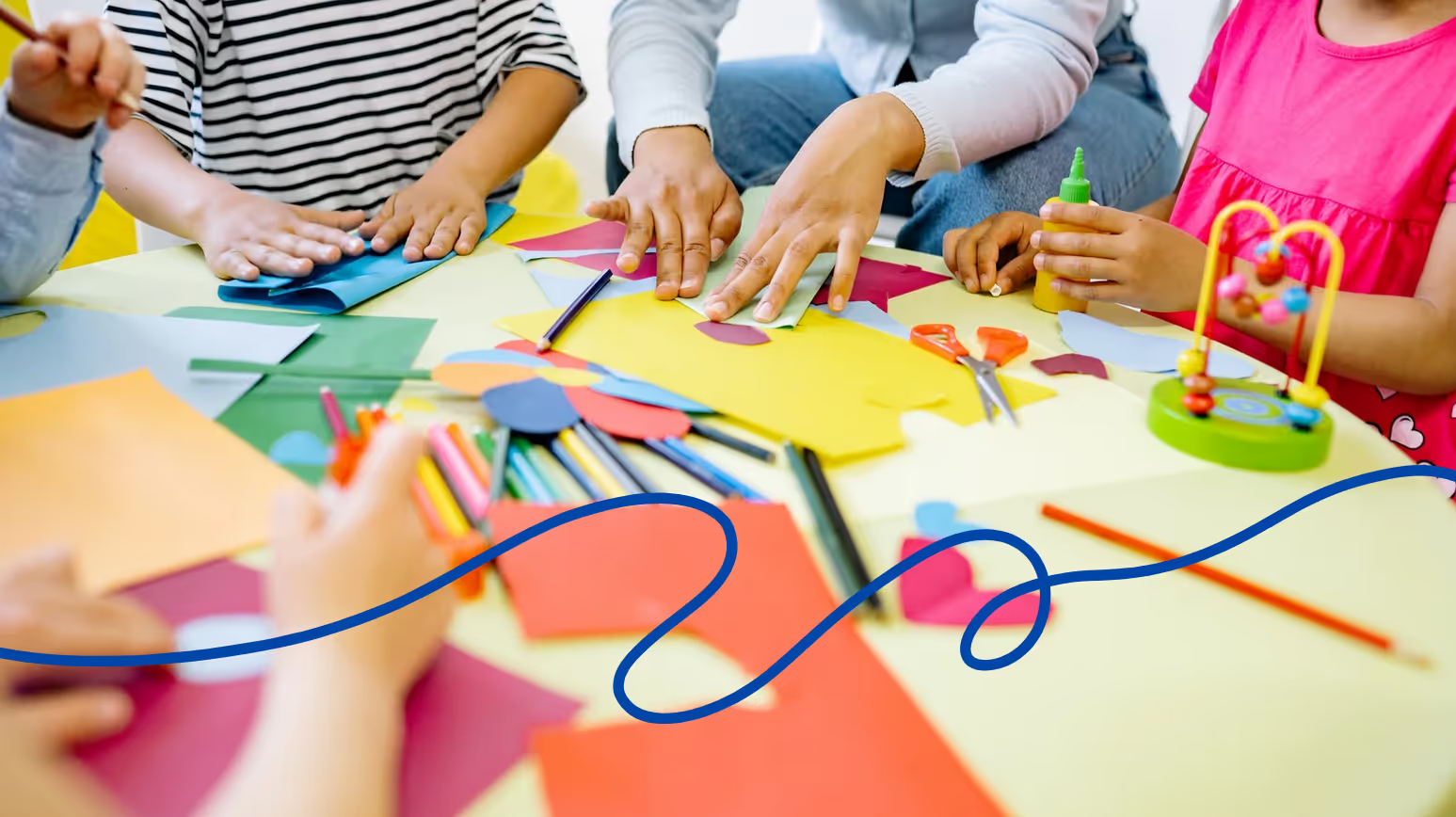
Project-based learning in elementary school: Why it works
Discover how project-based learning helps elementary kids thrive with real-world projects, hands-on lessons, and deeper engagement.

What is a microschool? How small schools make a big impact
Learn what a microschool is, how it works, and why families are turning to this modern, personalized education model for flexible, high-quality learning.
What personalized learning paths mean for your child
Explore the benefits of personalized learning paths, the signs your child may need one, and how online schools like bina bring them to life every day.