Project-based learning in elementary school: Why it works
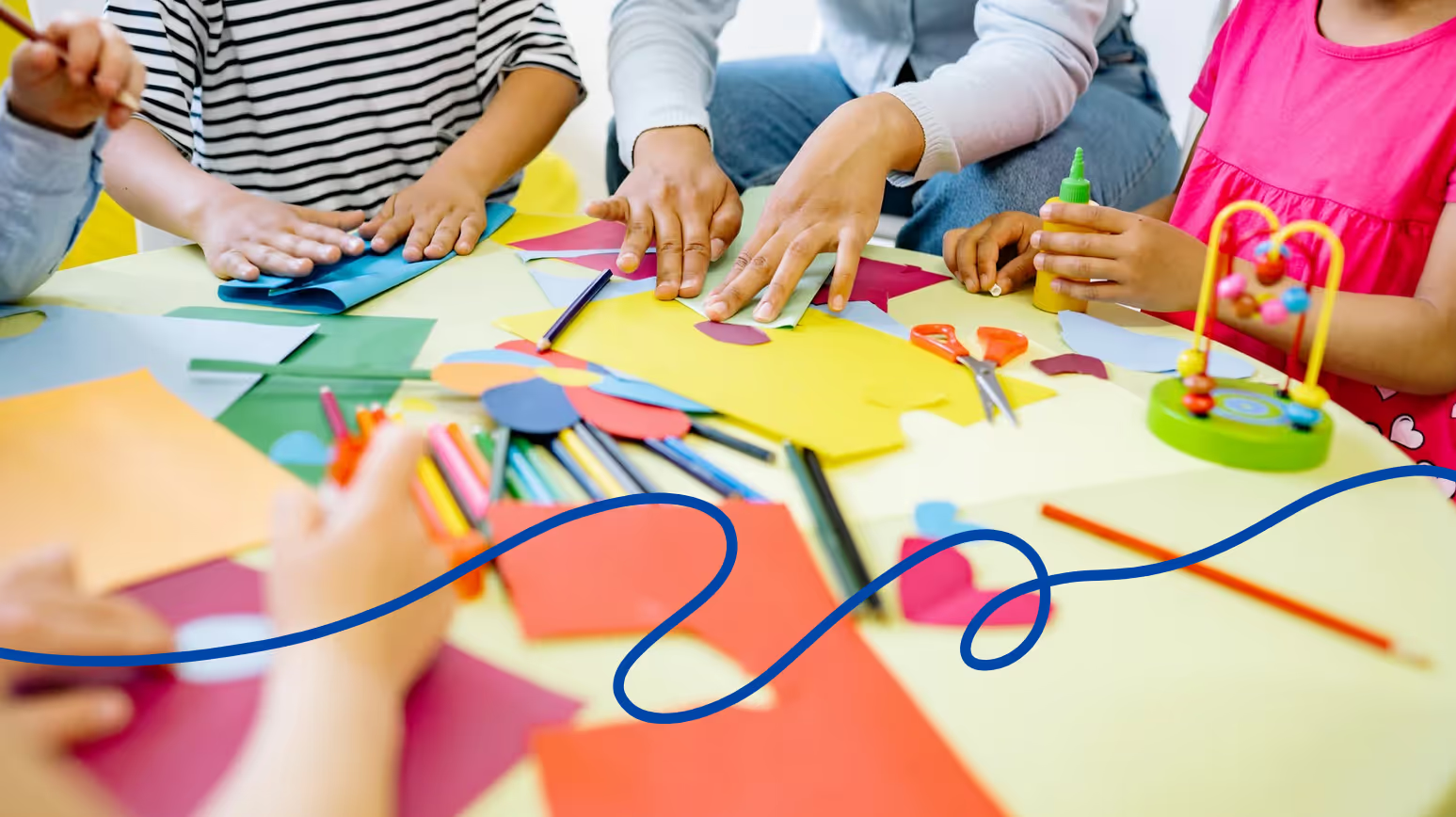
Imagine picking your child up from school and they’re buzzing with excitement. Their eyes light up as they talk about the volcano they built, the tectonic plates they researched, and the big presentation coming up for a “real audience” (spoiler: it’s just the third-grade parents, but to them, it’s everything).
That’s project-based learning (PBL) in action.
Instead of memorizing facts for a test, kids explore real-world questions by creating something meaningful. They might build a model, design a solution, or even launch a mini-campaign — all while incorporating skills from math, reading, science, and beyond.
This article unpacks what project-based learning looks like in elementary school, why it works so well for younger learners, and what you, as a parent, should know if your kid’s school is using this approach.
What is project-based learning?
Project-based learning (PBL) is exactly what it sounds like — students learn through projects. But not just any projects. We’re not talking about a papier mâché solar system slapped together the night before it's due. In true PBL, kids explore a big question or problem over time, working together to research, create, and present a solution.
Here’s the key difference: kids dive into the project from the start instead of learning something and then doing a project to show what they know. The learning happens through doing.
What does project-based learning look like?
Project-based learning in elementary classrooms doesn’t follow a rigid formula, but it does follow a clear framework. Whether your child is researching rainforests or building a model city, most PBL experiences share the same core elements.
Here’s what defines project-based learning:
It starts with a real question or challenge
Projects begin with a driving question that’s big, open-ended, and worth exploring. Think: “How can we reduce waste at our school?” or “What would it take to survive in the Arctic?” These aren’t textbook questions. They’re authentic and inspired by the real world.
It’s inquiry-driven
With this teaching method, students aren’t handed answers; they investigate. They research, interview, observe, test, and reflect. Teachers serve more as guides than lecturers, helping kids dig deeper and make sense of what they discover.
It emphasizes the process as much as the final product
The final presentation or project is important, but so is the journey. Students plan, revise, experiment, collaborate, and get feedback throughout. That process is where the most powerful learning happens.
It integrates multiple subjects
Instead of separating math, science, and literacy into neat little blocks, PBL blends them. A single project might involve:
- Researching (reading)
- Writing reports or letters (language arts)
- Building models (science/engineering)
- Creating graphs (math)
It’s learning in context.
It’s aligned with clear learning goals
PBL isn’t just a free-for-all. Every project is tied to specific learning outcomes, often ones from your child’s curriculum. For example, bina students showcase their new skills through their projects, whether it’s persuasive writing, coding, or data interpretation.
It encourages collaboration and communication
Kids often work in pairs or groups, sharing ideas, dividing tasks, and presenting together. They learn to listen, adapt, and explain their thinking. These collaborative and communication skills matter just as much as content knowledge.
It promotes ownership and reflection
PBL puts kids in the driver’s seat. They choose what topic to focus on within the lesson they’re learning, plan their work, and reflect on what they’ve learned and how they’ve grown. That sense of agency builds confidence and a real sense of pride.
It’s grounded in purpose
The best PBL connects learning to something bigger. At bina, projects are rooted in real-world biomes and aligned with the UN’s Sustainable Development Goals. This approach helps kids connect their classroom learning to global challenges like climate change, conservation, and clean energy.
Benefits of PBL for elementary students (and parents)
Elementary kids are naturally curious. They ask a million questions, love to tinker, and light up when they create something on their own. And project-based learning taps into that energy in the best way.
Here’s what your child gains (and why you’ll love it too).
Kids stay engaged because it feels meaningful
Instead of dragging their feet through worksheets, PBL makes students want to learn. Kids are engaged in class because they feel like what they’re doing matters, and that spark shows. It shows in their curiosity, energy, and conversations around the dinner table.
They understand more by doing, not memorizing
PBL helps kids digest what they’re learning. It sticks because they’re applying knowledge in real-world contexts, not just memorizing facts. They connect ideas across subjects, ask better questions, and apply what they’ve learned in new ways.
For example, instead of reading about ecosystems, kids might build a mini-biome at home using a terrarium. As they track plant growth and environmental conditions over time, they’re practicing observation, data collection, and problem-solving all at once.
They build confidence by learning to express themselves
Whether your child is presenting their solution to classmates, building a model, or explaining their thinking, they’re learning how to express themselves clearly. That self-assurance builds with every project and carries into real life, so your kiddo speaks up confidently and feels proud of their thinking.
They develop social skills through collaboration
Working with others, even when it’s tricky, is part of the PBL process. Kids learn to share ideas, give feedback, and solve problems as a team. At global programs like bina, students collaborate with peers from around the world, building cultural awareness and diverse perspectives along the way.
It suits how kids learn best
Younger kids are sensory learners and learn best by doing. They’re hands-on, curious, and full of creative energy. And PBL meets them there. Since not every child thrives in a test-based environment, PBL creates space for different learning styles to shine. And that’s exactly what you’ll see in bina’s biome-based projects.
bina gives students real-world ways to engage with what they’re learning by weaving in different forms of expression. For one biome showcase, students designed 3D models, invented recipes based on their research, and even composed soundtracks to bring their learning to life. In another, they created comics, stop-motion films, and digital art.
Whether your child is a builder, an artist, a storyteller, or a music lover, PBL gives kids space to shine in their own way.
Life skills that last
PBL lays the groundwork for life beyond school by building real-world skills: critical thinking, collaboration, and creative problem-solving. These future-ready tools help kids grow into flexible, thoughtful problem-solvers ready for the modern world.
Less pressure, more joy
You might be wondering, “Will my child still learn the basics?” The answer is yes.
Reading, writing, math, and science are all woven into the projects, just in ways that feel relevant and exciting. And because kids are more invested, the learning goes deeper.
As a parent, you’ll see your child light up with new ideas and discover what they’re capable of.
Project-based learning example — how bina brings PBL to life
To get a true sense of what elementary PBL looks like, let’s look at bina, a full-time online primary school for kids aged four to 12. With small classes (between six and eight students per group) and a curriculum built around thematic, hands-on learning, bina reimagines what school can be.
Live teacher-led lessons make lessons personal, creating the perfect environment for project-based learning to thrive.
At bina, project-based learning isn’t an add-on or a one-off activity. It’s at the heart of how students explore, question, and grow every single day. We build our curriculum around hands-on, interdisciplinary projects that spark curiosity, creativity, and confidence.
Learning through biomes
One of the ways we bring this to life is through our unique biome-based units. Each biome — think oceans, deserts, rainforests, or tundras — ties together science, reading, writing, and math through a real-world theme. These six-week units allow kids to dive deep into a topic and see how all their learning connects.
These units:
- Provide real-world context to classroom concepts
- Encourage big-picture thinking
- Give students space to explore personal interests within a structured theme
Tackling real-world problems
Within each biome, students identify a real-world issue that sparks their interest, anything from plastic pollution to drought, biodiversity loss, or food scarcity. Then, they build a project around it. These aren’t hypothetical tasks. They’re grounded in the UN’s Sustainable Development Goals (SDGs), giving every project a sense of purpose and global relevance.
Some recent projects include:
- Designing a website for a fictional human colony on Mars, combining desert biome research, immigration history, and survival planning
- Creating a multimedia showcase on tundra life, complete with 3D models, traditional recipes, and student-composed soundtracks
- Writing stories and soundtracks inspired by drought and resilience in the grasslands
- Exploring rainforest biodiversity through poetry, conservation strategies, and original slideshows
Applying real skills
As they build their projects, students naturally use and develop academic skills. Lessons are integrated into the project. They’re not just learning what, but why.
For example:
- Math skills → Graphing rainfall patterns or calculating water usage
- Literacy skills → Writing persuasive letters or presenting research
- Science skills → Testing materials or experimenting with prototypes
Supported every step of the way
With no more than eight kiddos per class, our experienced teachers get to know each child on a personal level. They guide students in setting goals, reflecting on their progress, and building confidence as learners. By blending academic feedback with individual support, educators help students stay on track while feeling seen and encouraged.
There’s a real sense of collaboration, without anyone slipping through the cracks.
The outcome: purposeful, confident learners
By the end of each biome, students have created something meaningful and can explain the thinking, learning, and skills behind it. They aren’t simply turning in assignments, but presenting ideas, solving problems, and seeing how their learning fits into the bigger picture.
Turn curiosity into confidence
When done correctly, project-based learning turns school from a place where kids listen and repeat into a space where they explore and create. And that’s pretty powerful.
It turns classrooms into launchpads, where curiosity, creativity, and problem-solving are front and center. And for elementary-aged children, that kind of learning is both effective and empowering.
At bina, we’ve built the ideal environment for PBL to thrive. Our classes are fully live, five days a week, and with real teachers and small groups of kids from around the world.
No self-paced busywork. No bouncing between platforms.
Just meaningful learning, tailored support, and a globally minded curriculum that grows with your child.
Curious to learn more? Book a call with us. We’ll show you how bina makes project-based learning truly work.
FAQs for curious parents
Isn’t PBL just doing arts and crafts?
Nope. While projects can be creative, they’re grounded in real learning goals, like data analysis, writing, and problem-solving. It’s not fluff, but deep learning disguised as fun.
Will my child still learn the basics?
Absolutely. Core skills like reading, writing, math, and science are baked into every project. At schools like bina, educators ensure students apply what they’re learning in meaningful ways, like using math to create graphs or writing persuasive letters tied to their projects.
How is progress tracked?
Instead of just grading the final product, teachers assess the learning process. They look at how your child applies new skills, solves problems, collaborates, and reflects on their work. It’s a much fuller picture of growth than a one-off test score.
What if my child is shy or struggles in groups?
That’s okay. Good PBL environments make space for different personalities. Kids work in teams and individually, and teachers help each student find their voice. At bina, we are especially mindful of this. Our global classrooms encourage respectful collaboration and give every child a chance to contribute.
Do I have to do a lot as a parent?
Not really. Especially in structured programs like bina, everything is planned and guided by experienced educators. You’re not expected to teach, just support and celebrate your child’s learning.
Accredited, full-time school for grades K-12
Bring the best of the classroom to your home
See if we're a fit
More to read

6 project-based learning math ideas for elementary-aged kids
Math can feel abstract when it’s all rules and worksheets, which don’t always help kids connect what they’re learning to the world around them. And…

Interdisciplinary Learning Helps Kids Remember More
Discover how interdisciplinary learning enhances children's memory retention and fosters a love for knowledge. Explore the benefits of this integrated teaching approach that connects subjects for deeper understanding and engagement.

The myth of learning styles and what truly works in a modern school
Explore why the popular learning‑styles theory is considered outdated, and discover how modern, evidence‑based methods like personalized and project‑based learning at bina offer real results.