Nine ways to spot the best social-emotional learning curriculum
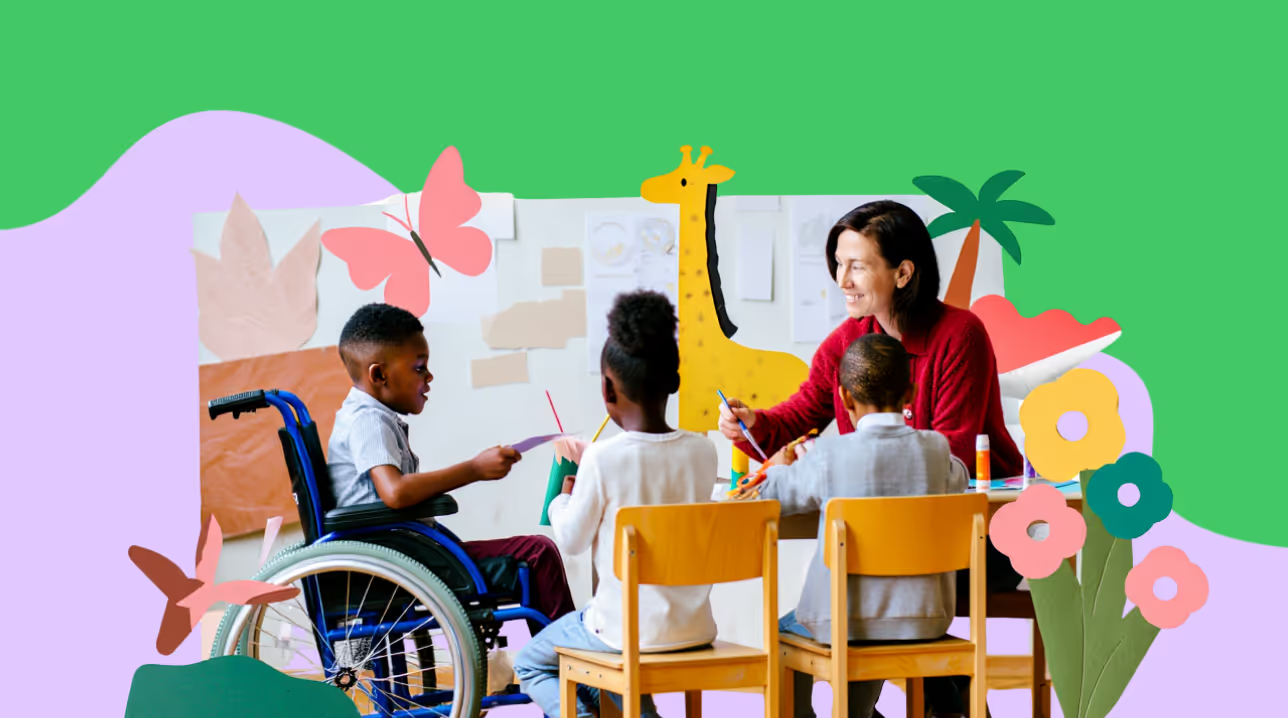
Parents today know that raising a thriving child takes more than academic success. It requires confidence, empathy, self-awareness, and strong relationships — the building blocks of a secure, happy adult.
That’s where social emotional learning (SEL) comes in.
SEL helps kids develop the tools to manage emotions, navigate friendships, bounce back from setbacks, and stay motivated to learn.
But here’s the challenge. Many schools say they do SEL. Lots of them don’t know how to do it well.
The best SEL curricula aren’t one-off workshops or extra worksheets. They’re integrated into the school day. Teachers model what they teach. Classrooms are diverse and inclusive. And children feel safe enough to grow. And not just academically, but as people.
So, how can you tell which schools are really getting it right?
In this article, we break down nine clear signs a school is using the best social emotional learning curriculum, and how innovative schools like bina bring these ideas to life every day.
Why SEL matters: The science-backed benefits
Social and emotional learning (SEL) gives kids the tools to thrive — not just in school, but in life.
Through SEL, children learn to understand and manage their feelings, handle stress, build relationship skills, and make more thoughtful, responsible decisions.
And this isn’t just a feel-good theory. The science supports its value.
Studies show that strong SEL programs lead to higher academic achievement, better focus, and improved classroom behavior.
It’s not just that children behave and perform better, they’re also more interested in learning. What’s more, SEL gives students the tools to form better relationships. Schools with high-quality SEL programs see less bullying and stronger friendships, contributing to a safer school climate.
On top of this, kids feel more confident in themselves as SEL helps to reduce emotional distress, leading to lower anxiety and depression in young people.
In other words, SEL helps children become emotionally healthy humans who feel confident, connected, and capable. They feel more resilient and better able to tackle schooling, which leads to long-term well-being.
And when SEL is woven into a school’s DNA — not tacked on — the result is a school climate where everyone can thrive.
That’s what bina aims for. Healthier, happier humans who feel successful and seen every single day.
Nine signs you’ve found the best social-emotional learning curriculum
While SEL is a powerful contributor to your child’s success, not all SEL curricula are created equal. The strongest programs don’t treat social-emotional skills like a nice extra to tack on to the rest of the curriculum. They live and breathe it.
Here’s what to look for when searching for an evidence-based social-emotional curriculum that truly supports your child’s emotional growth and well-being.
1. SEL is woven into daily learning
The best SEL programs aren’t confined to one-off lessons or separate activities. They’re integrated into every subject, every day.
Why? Because repetition builds mastery, and life doesn’t compartmentalize emotions. When schools incorporate SEL into literacy, math, science, and art, kids learn when and how to apply it in all different situations.
And the research confirms this. Coordinated, integrated SEL results in stronger student outcomes and more emotionally balanced school climates.
Look for educational settings where SEL appears in all subjects. You might see classes building social awareness through historical roleplay, practicing self-management during math challenges, or exploring empathy within group reading.
At bina, SEL is part of every subject — from discussing fairness during classroom voting exercises to exploring ethics through science debates. It’s not a bolt-on — it’s built in.
Whether they’re discussing ecosystems or painting self-portraits, activities are shaped to help kids understand themselves and those around them.
2. Teachers model regulation and empathy
Kids learn best by taking their cues from the adults around them. In strong SEL classrooms, teachers model regulations; they don’t just talk about it.
Children will see their teachers respond calmly to frustration, show kindness, name emotions, and honestly admit mistakes.
You’ll hear teachers say things like, “I’m taking three deep breaths before we restart,” or “That mistake’s no big deal — let’s try again.”
But while many schools boast about teaching SEL, 50% of elementary school teachers in US schools say they lack the training to confidently teach or model social-emotional skills. And if teachers don’t know how to model it, students will struggle to understand what it looks like in action.
In contrast, high-quality SEL programs support, train, and encourage teachers to lead with empathy.
3. Kids build strong, safe friendships
Building relationship skills is a core part of any good social-emotional learning curriculum. It teaches children that other people’s emotions matter as much as their own.
But healthy relationships are about more than getting along with friends. They’re about managing social challenges, setting boundaries, and understanding what positive connections look and feel like.
In SEL-rich classrooms, students learn to notice when a friend is feeling off, to speak up when something feels unkind, and to reflect on how their relationships affect their emotional world.
This might look like any of the following:
- Journaling about peer conflicts
- Role-playing respectful communication
- Practicing how to say “no” kindly during a friendship boundary-setting activity
- Using sentence starters like “I feel…” or “I need…” during conflict resolution games
By teaching kids to build safe friendships, SEL reduces bullying, improves mental health, and helps kids build lasting social-emotional competence.
4. SEL goals are personal, and progress is tracked
Social-emotional learning isn’t a one-size-fits-all model. What feels challenging for one student might come naturally to another. To make sure your child gets the SEL training that’s right for them, look for a school with a personalized approach.
In these settings, educators observe, reflect, and alter support tactics in real time to match the child’s needs. So, a shy child might work on raising their hand once a day, while a perfectionist learns mechanisms to cope with mistakes.
bina educators do this through precision learning. They set tailored SEL goals, track emotional growth in daily moments, and adjust support to meet each child exactly where they are.
By tracking progress and adjusting goals, teachers and families can spot patterns early, celebrate growth, and align support with real-life needs.
5. Small class sizes support emotional safety
Children feel safe in spaces where they’re seen and heard. In small classrooms, that’s the norm rather than the exception.
With a lower student-to-teacher ratio, educators have time to build real relationships. They have the space to understand and reflect on a child’s strengths, social cues, and moods. This makes it easier to notice when something feels off, so they can catch issues early.
Whether it’s a quiet check-in, a moment of redirection, or space to share feelings during circle time, small groups allow for responsive, relationship-based teaching.
6. Children learn tangible coping skills
The best SEL programs don’t just teach kids theories about emotions. They give them coping tools they can actually use.
Practices like:
- Breathing strategies before a test
- Calm corners with fidget tools
- Personal “regulation kits” with items like noise-reducing headphones, stress balls, or calming scents
- Journaling prompts that guide reflection after a tricky moment
- Movement-based activities like wall pushes or stretching during transitions
With tangible social and emotional tools, students find it easier to regulate in real time.
These skills also teach kids to accept emotions and work through them. Instead of learning that emotions are “bad,” kids recognize that they’re signals for how they feel. This allows them to process those feelings in a safe and respectful way.
And that’s exactly what happens at bina. Through mindfulness, movement, and self-regulation activities, kiddos learn how to use real tools to manage emotions in real time.
7. Diversity is reflected, respected, and celebrated
The best SEL programs incorporate and celebrate diversity, whether that’s culture, language, learning style, or family structure. You’ll see classrooms using culturally responsive teaching, where they share stories from many perspectives and create space for children to explore their own identities.
This matters because children who feel seen engage more. And when they learn how to communicate across differences, they grow into empathetic, inclusive humans.
Whether it’s sharing home traditions, reading global stories, or learning new ways to say “welcome,” these moments build bridges and belonging.
8. Daily emotional check-ins are the norm
In schools that prioritize SEL, emotional check-ins are part of the daily rhythm.
You’ll see SEL activities like mood meters, journaling, or emotional “weather reports” of how kids are feeling.
This routine helps children name emotions and regulate themselves before learning and during transitions. It also gives teachers important insights into how everyone is feeling, so they can adjust the pace, tone, or support as needed.
Most importantly, emotional check-ins that happen every day send a valuable message to students: Your feelings matter here.
9. SEL outcomes are valued as highly as academics
In schools that really get SEL, relationships and emotions aren’t afterthoughts. They’re core outcomes.
Look for places that track, celebrate, and share SEL competencies. This might mean that social-emotional progress shows up in reports, during weekly showcases, or in morning meetings that highlight emotional wins with the same pride as academic scores.
These skills help children grow into adults who can navigate the world with less distress, whether that’s in their personal relationships, workplace, or wider community connections.
At bina, SEL and academics go hand-in-hand. We monitor and celebrate emotional growth in our quarterly reports and through group presentations because being kind, brave, and self-aware matters just as much as any academic milestone.
How bina delivers all nine signs of a strong SEL curriculum
At bina, SEL isn’t a side lesson. It’s how we teach, learn, and connect.
From the first morning greeting to the final reflection of the day, social-emotional learning is woven into every interaction and learning exercise. Whether our kids are exploring empathy through stories or learning how ecosystems connect during science, SEL shows up naturally and palpably in every subject.
For example, our biome-themed curriculum and project-based learning help students comprehend the world and their place within it, year after year. As they revisit themes, they build deeper understanding and self-awareness, stronger relationships, and greater global empathy.
To support this, every bina classroom has two educators — a Teacher and a Co-Teacher — trained to model regulation, guide emotional reflection, and respond to kids' changing needs as they evolve. With diverse classrooms of just six to eight students, no one gets lost, and everyone’s voice, culture, and identity matter.
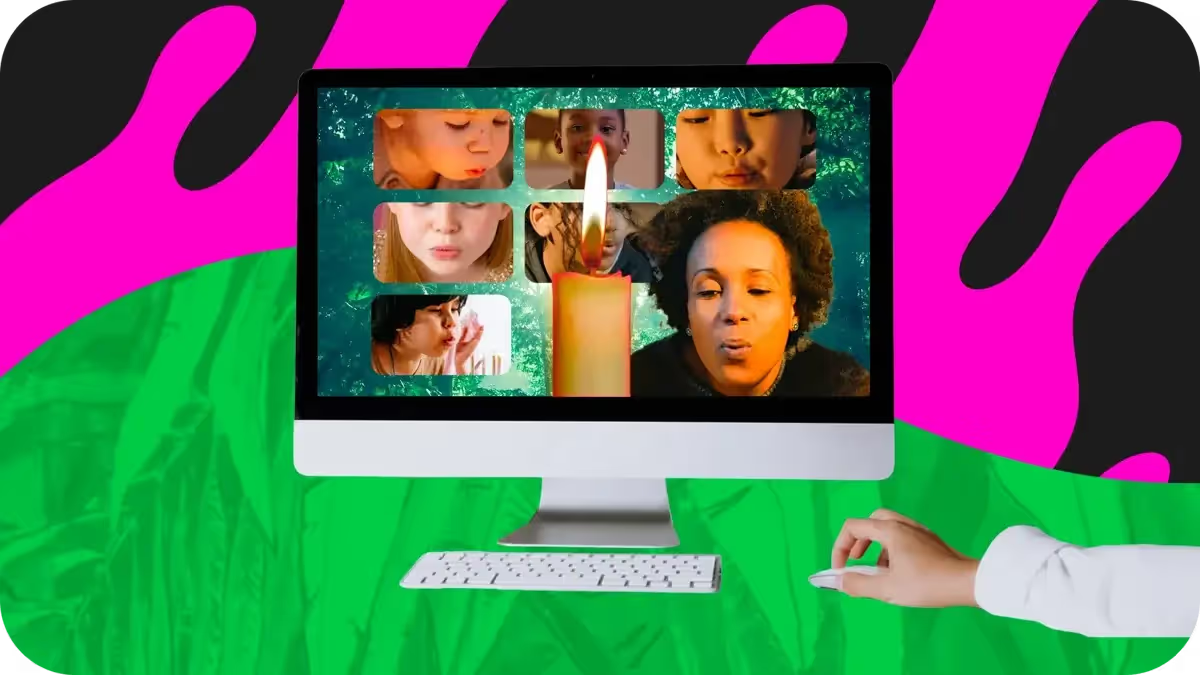
Plus, SEL goals are personal.
We track emotional growth through natural interactions instead of tests. This reduces performance pressure and ensures we can adapt daily rather than waiting for end-of-year tests to show gaps in learning.
And with our Learning Success team partnering with families, we create an open dialogue for parents to express concerns and make sure every child thrives.
Most importantly, we value SEL outcomes just as highly as academics. Kindness, resilience, and confidence are celebrated and shared, encouraging children to develop as holistic humans, rather than test-taking machines.
And that’s what makes bina different. SEL isn’t an extra. It’s our core. And it’s why our learners feel safe, seen, and ready to grow.
Your search for the right SEL curriculum ends here
Picking a school means choosing more than an academic curriculum. It’s about finding a safe, emotionally supportive environment that helps your child grow in every way.
SEL shouldn’t feel like an “extra.” And the SEL curriculum shouldn’t look like a box-checking exercise. It’s foundational to building confidence, resilience, and lifelong learning.
So ask yourself… Do I want a school that offers SEL worksheets or one where SEL is woven into every moment?
At bina, SEL is part of everything we do. From how we greet kiddos in the morning to how we reflect on a group project, we build a learning climate where children feel safe, connected, and empowered.
Book a call with us to learn more about how bina helps your child grow into their whole, brilliant self.
Accredited, full-time school for grades K-12
Bring the best of the classroom to your home
See if we're a fit
More to read
Why kids need elementary school social emotional learning
Learn why elementary school social emotional learning is important and how innovative schools like bina deliver what traditional schools can’t.

Social-emotional learning: Preschool activities and resources
Learn why social-emotional learning at a preschool age is important and discover top activities, resources, and best practices to teach it at home.
What are the best online schools for traveling families?
Find the best online schools for traveling families. Explore 5 programs that offer stability, social connection, and quality education wherever life takes you.