10 social emotional learning books to read with your child
The right stories can help your kiddo learn to navigate big feelings and discover more about themselves. Social-emotional learning (SEL) books have a focus on emotions, self-awareness, empathy, perseverance, and communication, so they’re great for supporting your kiddo’s social-emotional development.
A lot of SEL books help children see the world through the lens of someone else’s eyes. They also address common challenges kids face, like loneliness, frustration, or conflict with friends, showing them that other kids might have a lot of the same feelings they do.
Whether your kiddo is an early reader or a pre-teen, it’s never too early (or too late) for them to benefit from the life lessons that come with SEL books. You can start by reading to them, and as the years go by, they can read to you or on their own.
It can be difficult to know which ones to choose, but we have you covered. In this guide, you’ll find 10 social-emotional learning books that are fun and engaging for kids.
What are social-emotional books?
Social-emotional learning books are stories that invite young readers to look at the world differently, explore their feelings, and think more about how all the characters in a book impact one another. They teach children how to manage emotions and understand the feelings of others while promoting self-awareness and more positive relationships.
These aren’t just books about generic “happy” and “sad” feelings — they are so much more.
Relatable characters often have a conflict that ends in a resolution. Along the way, kiddos will learn about SEL skills such as self-regulation, empathy, and positive relationship building.
The best stories don’t just tell children what to feel; they show characters navigating challenges, making mistakes, and learning from them in ways that reflect real-life experiences. These lessons can help both the character and your child to gain a new perspective.
Here are some qualities you may find in an SEL book:
- An emphasis on self-awareness, emotional regulation, and social skills
- Strategies to deal with feelings and difficult situations
- Imperfect characters that readers can relate to
- Diverse characters that promote empathy, compassion, and understanding
- Storylines that encourage curiosity and open the door to conversations
- Examples of positive relationships despite any differences
You may be familiar with classic stories like The Very Hungry Caterpillar. This one has a lot of gentle SEL lessons inside, including self-acceptance, patience, and how change can be a beautiful thing.
Social-emotional learning is important for education and life beyond school. And, at bina, it’s something we incorporate into our daily lessons to help kiddos nurture their hearts as well as their minds. We understand everyone is different, and there isn’t always one “right way” to handle things. So, when we read an SEL book to kiddos, we make sure it leaves space for curiosity. We reflect with questions such as “What do you like?” and “What don’t you like?” to see how the story helps learners explore not just emotions, but connection and growth.
How can SEL books support your child?
Social-emotional learning books can help kiddos understand themselves as they learn to appreciate their strengths. With relatable stories, they will realise that other people feel the same way as them, which can lead to self-reflection and also an understanding that, despite differences, we are all connected.
The books often offer solutions that can help kids not only cope with difficult situations or emotions but also grow as a result of their experiences. This can help with self-awareness and promote resilience.
SEL starts with self-acceptance and confidence, but these books are also part of the bigger picture. As young readers (and listeners!) connect with the characters and their unique qualities, they will learn to have empathy for others. Books can also be a good way for parents and teachers to start deeper conversations about emotions, self-growth, and self-love.
Of course, there are other benefits of reading, too. Give your child a good book that they can relate to, and it’ll kickstart their literary skills and open up a world of imagination.
10 social-emotional learning books to consider
Here are 10 SEL books to get you started. We’ve broken them down into two age groups so you can find the right fit for your child.
SEL books for junior primary students (Under 8s)
You can read these SEL picture books with younger children during the early years.
1. Enemy Pie by Derek Munson
Ages: 5-8
Enemy Pie by Derek Munson is about a boy who meets someone new to the neighbourhood, and in an instant decides that he’s the number-one enemy.
With the help of Dad and a secret Enemy Pie recipe, the two spend the day together and discover they have lots of things in common. As they get to know each other, the rivals become best friends.
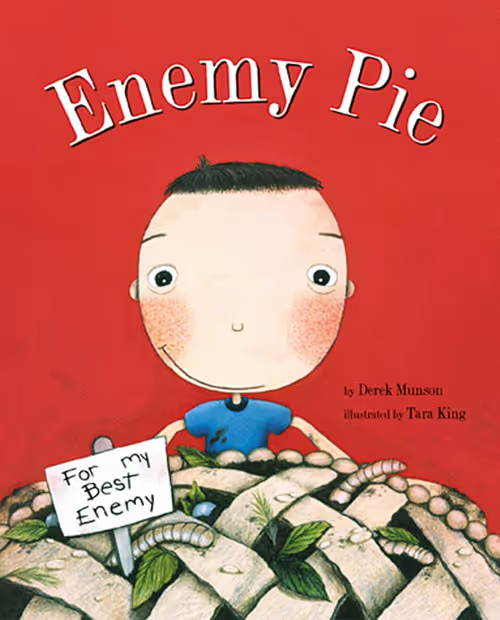
The book explores various topics, including bullying, friendship, and empathy. The message is to give people a chance and not judge them based on first impressions and that being different isn’t a bad thing.
Learn more about Enemy Pie.
2. I Am Enough by Grace Byers
Ages 4-8
I Am Enough by Grace Byers is fun to read, with its rhyming text and beautiful illustrations by artist Keturah A. Bobo.
It’s a bestseller for good reason, with diverse characters and a strong message about self-acceptance and creating a sense of identity. Through reading this book, children will learn to be kind to others, as well as themselves.
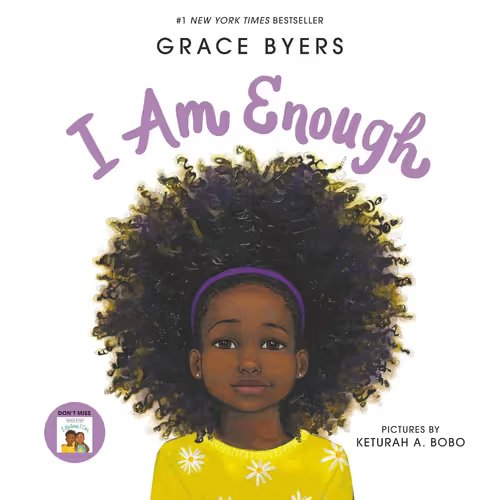
After reading, you can ask your kiddo what they think “I am enough means” or talk about how everyone in the story has differences, but they are all still kind to each other. This can open up important SEL conversations about empathy, inclusion, and self-worth.
Learn more about I Am Enough.
3. The Boy with Big, Big Feelings by Britney Winn Lee
Ages: 4-8 years
The Boy with Big, Big Feelings by Britney Winn Lee is part of a series that explores topics that are relevant to early learners. In this picture book illustrated by Jacob Souva, a range of different feelings are inside.
Whether it’s happiness, anger, sadness, or fear, the lead character experiences it all. As time goes by, he realises that bottling up his feelings isn’t the answer, because they all have a role to play.
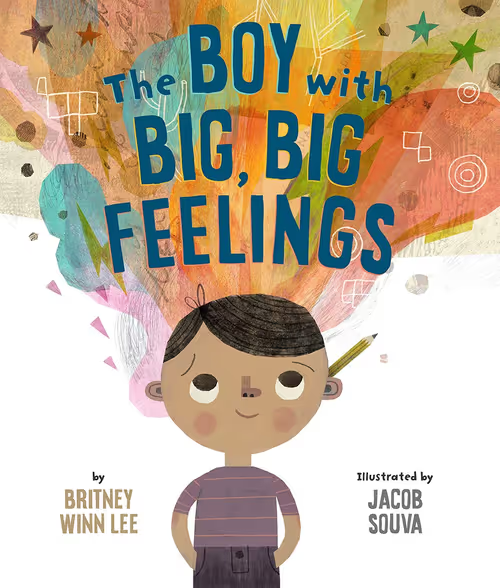
For children who have anxiety or a sensitive temperament, The Boy with Big, Big Feelings can help them navigate their emotions. It is also a good fit for those on the autism spectrum.
Learn more about The Boy with Big, Big Feelings.
4. Beautiful Oops! by Barney Saltzburg
Ages 4-8 years
Beautiful Oops! by Barney Saltzburg is an interactive picture book with pop-ups, liftable flaps, and touches of texture.
The lesson from this story is that we all make mistakes and that a little accident isn’t something to feel bad about. In fact, mistakes can turn into something wonderful.
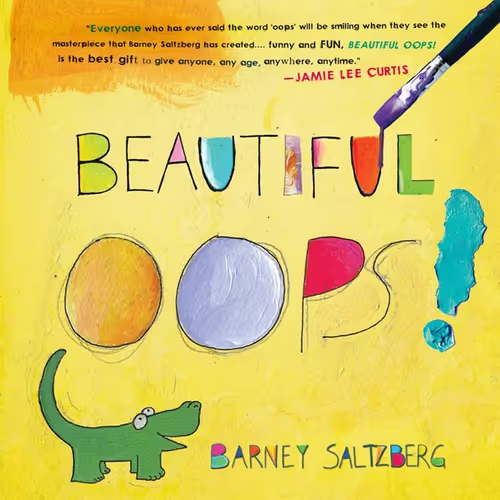
Children will learn to give things a try without fear of failing. It’s a good way to promote resilience and a positive attitude even when things don’t go to plan.
Beautiful Oops! is a bestseller that has been a favourite for families and educators for more than 10 years, and it’s one we know your child will love, too.
Learn more about Beautiful Oops!.
5. The Most Magnificent Thing
Ages: 3-7
The Most Magnificent Thing is part of a picture book series written and digitally illustrated by Ashley Spires. The little girl in this story has an idea to make the most magnificent thing. Unfortunately, this easy project turns out to be harder than she expected.
This leads to disappointment, and she feels so mad that she wants to quit. After some time out with her dog, she comes back and finishes the job.
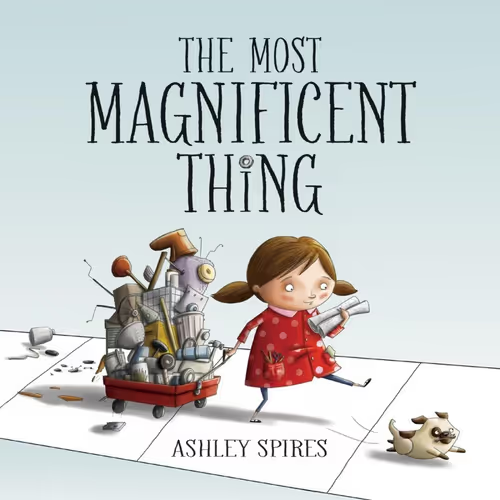
What does this show kiddos? Perseverance can lead to success, and walking away for a few minutes can help you clear your head and give you a fresh point of view.
Besides that SEL message, it also celebrates creativity, science, technology, and engineering.
Learn more about The Most Magnificent Thing.
6. Islandborn by Junot Diaz
Ages: 5-8
Islandborn, by prize-winning author Junot Diaz, is a heartfelt story with a SEL message. The stunning artwork is accompanied by a relatable story.
The main character, Lola, goes to a diverse school where all her friends are immigrants, just like her. But when the students start working on a project about their homelands, Lola can’t remember.
Lola starts to use her imagination and gets stories from her family, which all help to shape the story of the Island.
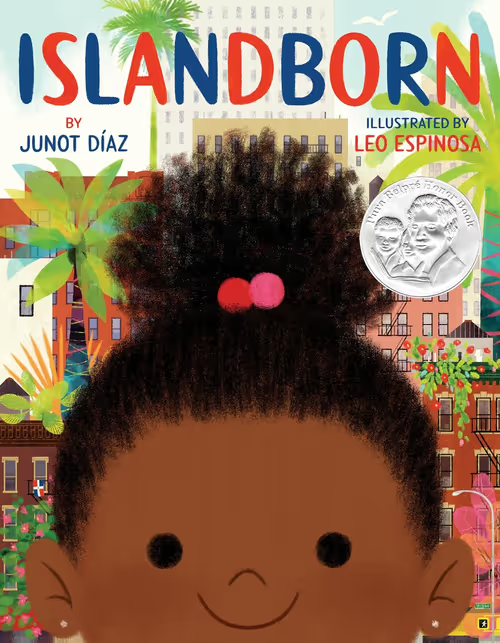
This story gently explores themes such as identity, belonging, and family history. It also tells kiddos that it’s safe to ask questions, use their imagination, and be themselves.
It is a good way to encourage conversations about culture and community and teaches children to have empathy for others.
Learn more about Islandborn.
SEL books for upper primary students (Under 12s)
These SEL titles are both fun and educational for independent readers.
7. The Boy at the Back of the Class by Onjali Q. Raúf
Ages: 8-12
The Boy at the Back of the Class by Onjali Q. Raúf is an award-winning book for young readers. It’s set in a school where a new boy named Ahmet has joined the classroom. He is different from the other students; he doesn’t smile and doesn’t act like a typical nine-year-old.
But as the children get to know Ahmet, they find out there is more to his story. He is a refugee who has fled a war-torn country, and he’s been left with some terrible memories.
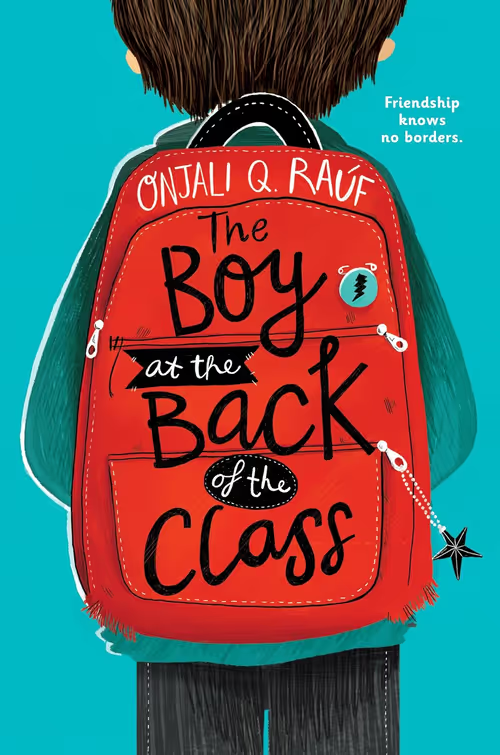
The lead character and his friends want to do something to help Ahmet, which is a good example of empathy and understanding. The book celebrates diversity and shows that culture doesn’t need to be a barrier to connection.
Learn more about The Boy at the Back of the Class.
8. Fish in a Tree by Lynda Mullaly Hunt
Ages: 8-12 years
Fish in a Tree by Lynda Mullaly Hunt is a book that shows kiddos that not everyone is the same, and that’s a good thing. It also has the message that there is more than one way to be smart.
The lead character, Ally, has dyslexia, which has affected her ability to read. She hides it very well because she is embarrassed and ashamed — until a teacher changes everything.
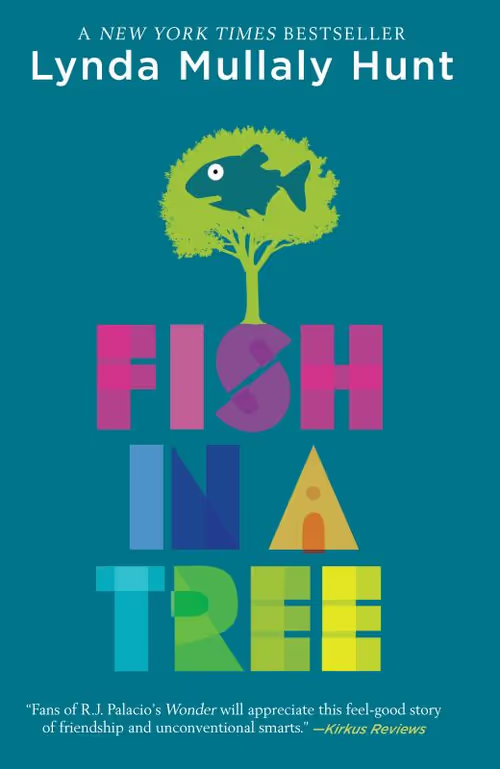
As the book goes on, Ally realises she is more than her dyslexia. As she starts to discover what’s wonderful about herself, her confidence grows.
Readers learn about self-acceptance, and that you don’t need to hide because you’re not like everyone else. Rather, that’s something to be celebrated and embraced.
Learn more about Fish in a Tree.
9. Charlie Changes into a Chicken by Sam Copeland
Ages: 8-12 years
Charlie Changes into a Chicken by Sam Copeland is a book that has everything elementary-aged kids love, including laughs, fun language, and quirky illustrations.
It’s the story of Charlie, a young boy who can change into animals. But he can’t control it because this shape-shifting only happens when he is stressed, worried, or anxious.
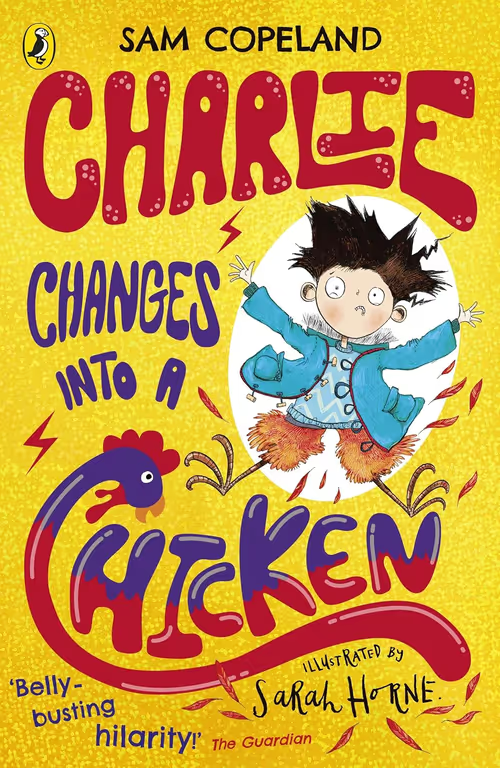
Charlie has a lot on his mind, so his animal antics are frequent. Fortunately, he has some really good friends to help him through it all. The book shows children what different emotions look and feel like, and teaches a range of coping skills.
It also touches on friendship and how important it is to have empathy for others. It’s light enough for kids to relate to, but the hidden messages are good conversation starters for parents.
Learn more about Charlie Changes into a Chicken.
10. Be Your Own Superhero by Dr Laura Meek
Ages: 8-12 years
Be Your Own Superhero: Unlock Your Powers. Unleash Your Awesome is written by psychiatrist Dr Lauren Meek. Aimed at older primary children, this SEL book ties superheroes to emotions in a relatable way.
As an example, we all know Hulk can get mad and “Hulk Smash”, while Superman has his own style of kryptonite, which may be “anxiety” for kiddos.
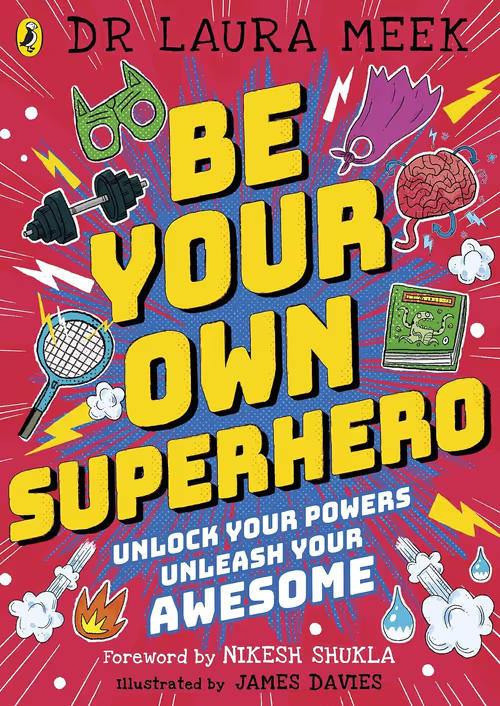
The book teaches readers how to control these different emotions while being empathetic to others. It’s about finding your own superpowers so you can be confident, happy, and in control of your life.
Learn more about Be Your Own Superhero.
Want more? Try these other well-loved SEL books:
1. Be Mindful of Monsters by Lauren Stockly
2. Big Bright Feelings Books by Tom Percival
3. The Questioneers Books by Andrea Beaty
4. Your Fantastic Elastic Brain by JoAnn Deak
5. The Magical Yet by Angela DiTerlizzi
6. The Dot by Peter H Reynolds
7. The Invisible Boy by Trudy Ludwig
10. Each Kindness by Jacqueline Woodson
11. The Rainbow Fish by Marcus Pfister
13. The Juice Box Bully by Bob Sornson
Choosing social-emotional learning books
We all know reading with our children has a range of benefits, including building imagination, concentration, and a lifelong love of learning. But when you choose books with a social-emotional learning message, you open the door to deeper, lasting life lessons.
SEL is more than just learning how to manage your emotions. It’s also about building resilience, understanding yourself, and gaining the skills to face any challenges that come your way.
Social-emotional learning books use relatable characters and situations to show children the importance of empathy, self-awareness, and understanding. As young readers start to reflect on their feelings, they will realise their own unique strengths — and celebrate them.
At bina, SEL topics and activities are woven into everyday learning — about 25% of our day involves social-emotional learning and life skills. This ensures all kiddos develop the skills and self-awareness that can help them thrive.
Accredited, full-time school for grades K-12
Bring the best of the classroom to your home
See if we're a fit
More to read
Every parent's list of social-emotional learning resources
Turn playtime into learning time with social-emotional learning resources that teach kids empathy, resilience, and self-control through fun.

Social-emotional learning: Preschool activities and resources
Learn why social-emotional learning at a preschool age is important and discover top activities, resources, and best practices to teach it at home.
10 social-emotional learning activities to support your child’s education
Discover 10 social-emotional learning activities you can do with your child at home. Get tips to support their education.