Why kids need elementary school social emotional learning
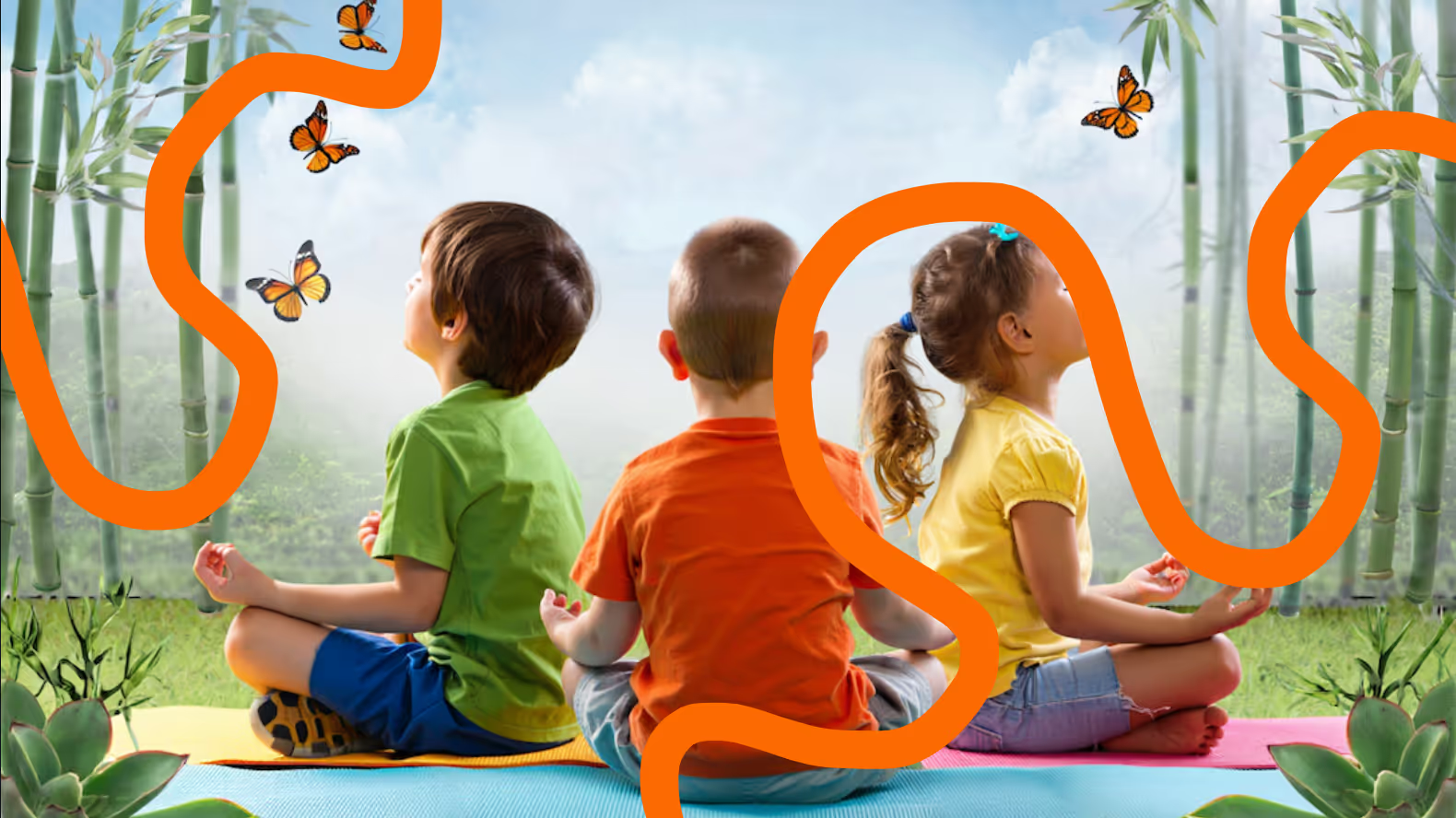
More than ever, parents are thinking beyond test scores.
They want schools that help kids know themselves, connect with others, and handle life’s big feelings with confidence. They’re looking for social-emotional learning (SEL) starting in elementary school because, let’s be honest, math alone won’t build a stable, kind, resilient person.
But traditional schools aren’t always set up for this kind of growth. Between limited funding, overwhelmed teachers, and, in some countries like the US, legislation trying to ban SEL altogether, kids are missing out on developing key social and emotional competencies.
But there’s a new wave of schooling that’s rethinking what it means to truly educate a child.
Schools like bina follow a whole-child model — one that supports not just academics, but emotional and social awareness, too. By weaving SEL into the curriculum, we help kids understand themselves and others better, creating more confident, compassionate humans.
Let’s explore what SEL is and why it’s so important for helping kids grow. We’ll also look at why traditional schools often struggle to offer it, and how innovative educators like bina are doing things differently.
How do elementary schools teach social and emotional learning (SEL)?
Social and emotional learning (SEL) is all about helping children develop the emotional skills they need to thrive in all aspects of their lives. SEL helps children to understand and manage emotions, foster healthy relationships, and make responsible decisions.
For elementary school kids, that means learning how to recognize their feelings, name them, and handle big emotions productively. It’s about learning how to make friends, resolve conflict, and navigate the ups and downs of life with confidence.
And this isn’t just feel-good fluff.
One in three children under the age of 14 experiences deep levels of anxiety — and that number keeps growing. But research shows strong SEL programs play a critical role in reducing emotional distress and enhancing kids’ coping skills for improved mental health.
The benefits don’t stop there. Studies around brain science and developmental psychology show that SEL builds the cognitive and emotional foundation for students to become lifelong learners. It helps young people develop the social and emotional skills to do well outside of school and into their work lives.
In this sense, SEL isn’t just an “extra” subject. It’s a core ingredient in helping children become confident, kind, and capable learners.
And when SEL is baked into the school day — like it is at bina — students become more compassionate, resilient, and motivated to learn. They build positive relationships with peers and teachers, and they gain the tangible skills to deal with academic pressure and life’s curveballs.
In short, SEL helps kids grow into brave thinkers, strong teammates, and future-ready students. And that’s exactly the kind of education we believe in.
Why SEL is hard to get right in traditional elementary schools
It’s one thing to agree that SEL matters. It’s another thing entirely to build a consistent and meaningful curriculum.
Even when educators are on board, real obstacles often stand in the way.
Here are some of the reasons traditional elementary schools struggle to deliver an integrated SEL program.
Limited funding and support
A strong SEL curriculum needs more than a handful of worksheets and good intentions. It requires time, training, and infrastructure.
Educators need space in the schedule, SEL resources, and professional development to deliver SEL in a way that generates the positive outcomes that it could.
Unfortunately, many schools already have tight budgets, making it tough to allocate proper funding to SEL. And without the funding they need, schools often default to surface-level strategies or leave it out altogether.
Even when schools do try to deliver SEL in elementary school, limited budgets mean they rarely have the resources to tailor support to each student’s emotional needs. So learners who need more attention or deeper interventions often slip through the cracks.
In fact, a recent survey of elementary teachers in US schools found that 43% of elementary teachers in the US say that a lack of funding is the biggest barrier to SEL.
Lack of educator training
You might be the most passionate teacher in the world. But if you’ve never learned how to deliver an SEL curriculum, you won’t be able to.
Many educators never receive proper training in how to model or teach emotional skills, relationship building, or responsible decision-making.
So even if they do teach SEL, lessons often vary wildly. Well-meaning teachers might misapply strategies or feel unsure of how to handle sensitive topics. This often leads to conflicting messages or a lack of SEL altogether.
Siloed programs and a lack of consistency
Again, while many schools see the value of SEL, lots of them simply tack it on as an extra. They don’t integrate it into the curriculum — it’s a one-off workshop or a biweekly health class.
For example, in England, SEL topics are usually squeezed into PSHE (personal, social, health, and economic) lessons once a week, and depend heavily on teacher interpretation.
Similarly, in Canada, curricula blend different packaged programs, but often treat SEL as an afterthought. Delhi’s Happiness Curriculum is another example. It runs alongside the main curriculum, but it’s not woven into it.
Here’s the issue — when schools don’t incorporate SEL across subjects, it feels separate and disconnected. And since it doesn’t function as a core part of daily learning, it’s hard for children to understand when, where, and how to apply it in real-life moments.
A group of SEL scholars recently warned against this fragmented approach. Instead, they urge schools to use coordinated, developmentally-appropriate programs rather than one-off efforts that feel isolated.
Overworked educators
Most elementary school teachers are already juggling packed schedules, behavioral needs, and endless admin tasks. And without the time or systems in place to support SEL, teachers are defaulting to offering kids worksheets and videos rather than SEL exercises and the mindset shift required to drive home real social-emotional learning benefits for students.
Worse still, stressed teachers may unintentionally model dysregulation instead of co-regulation. They’re projecting a negative perspective or are short with disruptive students rather than guiding them through a meltdown or modeling breathing techniques to handle stress.
Controversy and concerns
In some places, the biggest barrier isn’t time or training. It’s political agendas.
Several US states, such as Alabama, New Hampshire, and Oklahoma, have legislation that limits or bans SEL in public education. These claim SEL is politically driven, even though it’s grounded in well-established developmental science.
That puts teachers in a tight spot. Those who are unsure what they’re allowed to cover may water down or avoid SEL completely — even if they believe it'd help their students. And in the end, it’s the kids who lose out. Without access to emotionally safe spaces and supportive relationships, children miss the chance to build resilience, manage social conflict, and develop the skills needed to grow into kind, confident humans.
How schools that prioritize SEL (like bina) are transforming elementary education
Elementary schools that embed social and emotional learning into their daily routines see powerful results.
Instead of treating SEL as a sideline subject, they see it as the core foundation to help children thrive in everything they do.
Weave SEL into the academic curriculum
In future-ready schools like bina, SEL is built right into the curriculum.
Why? Because when schools connect SEL with academics, students learn to see their emotional skills and learning environments as a whole rather than competing parts of the day.
Integrated SEL teaches kids that they don’t need to compartmentalize feelings. Instead, they learn to regulate emotions, collaborate, and self-motivate, ultimately helping them get more out of learning things like math, language arts, and science. This shift doesn’t just improve classroom dynamics. It also leads to better academic performance and decreases in stress. Weaving SEL into the academic curriculum rather than teaching it as a stand-alone class once a week helps the benefits of SEL really stick.
At bina, about one-quarter of the day is devoted to SEL activities, which are built into and around academics.
You’ll see students learning and applying SEL through activities like:
- Morning emotional check-ins to help students name feelings and get grounded
- Reading lessons that explore empathy through characters’ choices
- Group science work that encourages relationship skills and shared goals
- Math projects that build on collective goals and group dynamics
Teach skills to help kids transition throughout the school day
Transitions can be tough for kids. Moving from recess to math or ending a fun project can spark big emotions.
That’s why bina doesn’t just reserve SEL for lessons. We teach tangible skills to cope with change, and we weave them into transitional moments.
Kids learn and practice real-life tools like mindful breathing, emotional sentence stems, and guided roleplay during key transitions. This helps them reset, refocus, and build emotional resilience.
To further help kids transition, teachers model co-regulation, slow things down when needed, and create space for self-awareness. This turns everyday routines into powerful emotional learning environments where children can apply the SEL skills they learn when they need them most.
Foster intentional relationships and small groups
SEL thrives in classrooms where every child feels like teachers truly see, hear, and support them.
That’s why schools like bina keep classes small and build around both academic goals and emotional competencies.
Small groups make it easier for educators to notice when children need extra care, encouragement, or redirection. They also help kiddos build positive relationships with peers and teachers as they have the time and space to get to know them more intimately.
Choosing a school that supports your child’s whole self
Social-emotional learning is the secret ingredient to raising kind, confident, and resilient kids.
When it’s woven into the fabric of the school day, kids learn better and develop the tools to overcome interpersonal challenges.
As you explore elementary schools for your kiddo, ask yourself how they plan to nurture emotional growth alongside academics. Look for signs that the school is building strong relationship skills, tangible coping mechanisms, and self-awareness.
And make sure that SEL isn’t isolated from the everyday curriculum.
At bina, SEL isn’t just a subject. It’s the foundation of how we learn, grow, and connect as educators and learners.
FAQs
How does social emotional learning affect kids long-term, like in middle or high school?
The impact of SEL doesn’t stop at childhood.
Strong social and emotional learning in schools leads to better emotional intelligence, goal-setting, relationship-building, and decision-making well into teenage years and adulthood.
In fact, longitudinal studies show that SEL contributes to better grades, career success, and stronger personal relationships. As one study put it, “Individual changes in SEL scores over time correlate consistently with real-life improvements in performance, well-being, and career progress.”
At schools like bina, tools like SMART goals, reflection journals, and civic learning projects help kids connect emotional learning to future-forward thinking. Also, with teachers modeling respectful communication and problem-solving, children have lifelong templates for leadership and empathy.
How does integrated SEL create a healthier learning environment?
When SEL operates as a running theme throughout everything in the school environment, kids feel safer, calmer, and more connected. Classrooms become places where emotional safety and supportive relationships thrive.
How does SEL connect with cultural values or diverse family backgrounds?
SEL works best when it feels applicable to every child. Strong SEL programs act through an equity lens, reflecting each learner’s home language, culture, and values.
One-size-fits-all programs that fail to incorporate cultural values and diverse backgrounds miss important context that shapes social and emotional literacy. It doesn’t take into account how different families understand emotions, respect, or communication.
bina recognizes the importance of this diversity, which is why our SEL approach is flexible and inclusive.
Our global classrooms reflect the benefits of a multi-cultural society. Children learn from one another, share their cultures, and explore a wide range of emotional norms. This helps them feel seen, while also building a shared understanding of other perspectives.
How can I tell if my child is actually benefiting from SEL at school?
You can’t always measure SEL improvement with conventional grading systems. But you can see it if you know what you’re looking for.
Kids who grow from SEL have an improved emotional vocabulary, healthier peer relationships, and more confidence during challenges. You might hear fewer outbursts and more sentences like “I feel upset because…” or see better conflict resolution between friends.
At bina, educators conduct an ongoing evaluation of every student. They track SEL growth by setting personalized goals, adjusting support based on progress, and sharing updates with parents regularly.
If you’re unsure about the benefits, ask your school how your child is progressing. Schools with a solid SEL program will have clear steps, real data, and stories of growth to share.
Accredited, full-time school for grades K-12
Bring the best of the classroom to your home
See if we're a fit
More to read
Social-emotional learning: Preschool activities and resources
Learn why social-emotional learning at a preschool age is important and discover top activities, resources, and best practices to teach it at home.

Nine ways to spot the best social-emotional learning curriculum
Discover what the best social emotional learning curriculum looks like and how to find schools that offer SEL in integrated and innovative ways.
The myth of learning styles and what truly works in a modern school
Explore why the popular learning‑styles theory is considered outdated, and discover how modern, evidence‑based methods like personalized and project‑based learning at bina offer real results.