Social-emotional learning: Preschool activities and resources
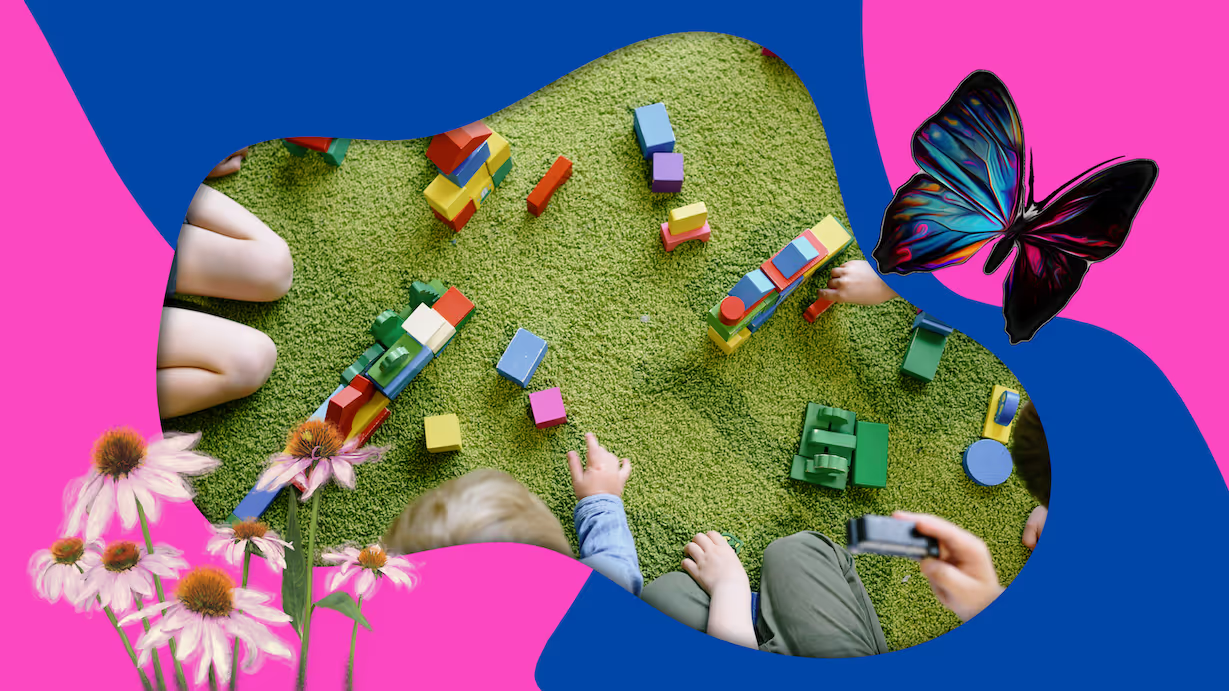
It’s mid-morning. Your preschooler melts down because it’s time to turn off the TV. Move on to the afternoon, and they refuse to share a toy with their sibling. Now it’s bedtime, and another battle of tears and stall tactics.
While these everyday struggles feel exhausting, they’re also powerful opportunities for social-emotional learning (SEL). Every challenge is also a chance to practice SEL skills like naming their feelings, calming their body, and trying again. These simple actions help them become more self-aware, empathetic, and responsible.
Let’s unpack what SEL looks like for preschoolers, why it matters, and how to nurture it every day.
What is social-emotional learning for preschool kids?
Social-emotional learning (SEL) for preschoolers is about helping young kids understand how their feelings and emotions connect to their actions, and how those actions affect others. When they start to see this link, they find it easier to make kind, thoughtful choices in a confident and empathetic way.
And it starts in the everyday moments. Whether it’s circle time, story time, or sharing a snack, preschoolers have the chance to practice five key areas of SEL:
- Self-awareness: Understanding their personal emotions and thoughts, and how they affect their actions
- Self-management: Learning to control impulses, cope with stress, and regulate big feelings in healthy ways
- Social awareness: Recognizing others’ emotions and perspectives to build compassion and respect
- Relationship skills: Sharing, cooperating, and making friends through positive communication
- Responsible decision-making: Choosing fair, kind, and safe actions that consider others’ well-being
The key to preschool SEL lies in weaving it through everyday stories, games, and moments of connection. That way, no matter the situation, your child knows how to apply these social and emotional skills to act in calm, conscious ways.
Why does SEL matter for preschoolers? The benefits
When you teach SEL to preschoolers, you lay the groundwork for how kids deal with frustration, approach challenges, and connect with others.
Here’s what the research says about why SEL is such a big deal.
Emotional regulation
From a tantrum about a broken banana to a meltdown about a grazed knee, preschoolers experience big feelings all day, every day.
According to recent research in the Psychological Bulletin, when kids practice SEL in the right way, they learn how to better cope with their feelings, so they feel less stressed.
Research published in BMC Psychology found that when we help kids rethink their responses to strong emotions, we restructure their cognitive thinking. So when a big feeling comes along, it feels less overwhelming — which means fewer emotional outbursts.
Social skills
SEL gives kids the opportunity to practice kindness and compassion. By teaching children to understand other people’s feelings, it becomes easier for them to see how their actions impact others. And when you teach tangible ways of being empathetic and compassionate, you show them how to build lasting friendships.
And the science proves it. A recent paper in the Child Development journal shows that SEL programs have a positive impact on building peer relationships.
Academic readiness
Little kids don’t come equipped with self-awareness. They have to learn it. That’s why they find it hard to focus and control their behaviors.
SEL teaches kids to think critically and approach problems with curiosity and perseverance. So when something tough comes along, they know how to focus on the task and stick with it until they find a creative solution.
These skills directly translate into school achievement. When kids learn persistence, critical thinking, and self-awareness, the same Child Development study mentioned earlier shows that they perform better in school.
Long-term outcomes
Research published by AERA Open and the Learning Policy Institute shows that SEL supports lifelong success.
Why? Because kids with a good grounding in SEL display fewer behavioral problems, stronger mental health, and greater emotional well-being. And because of this strong foundation of conscious social and emotional behaviors, kids versed in SEL experience good career progress later in life.
Example social-emotional learning activities for preschool kids
Preschool offers the ideal time and place to nurture SEL through play and daily routines. From circle time to feelings charts, every day presents opportunities to strengthen emotional regulation, empathy, and social skills.
Here are simple SEL strategies that build each key social-emotional skill. Use them for your preschooler. These are also great social-emotional learning activities for toddlers.
SEL activities for preschoolers to build self-awareness
Self-awareness helps children understand their own feelings and how those feelings shape their actions.
These play-based activities make emotions easier to notice and express:
- Feelings charts: Let children point to faces that show their current emotion.
- Mirror play: Practice naming emotions while making matching facial expressions.
- Storytime reflections: Read a story and ask how the character feels.
- Mood monsters: Draw or color creatures that represent different feelings.
SEL activities for preschoolers to strengthen self-management
Self-management teaches preschoolers to stay calm, wait, and overcome intense emotions.
Here are some gentle, sensory-based activities that teach self-management skills:
- Calm-down corner: Create a quiet space with soft toys or sensory toys.
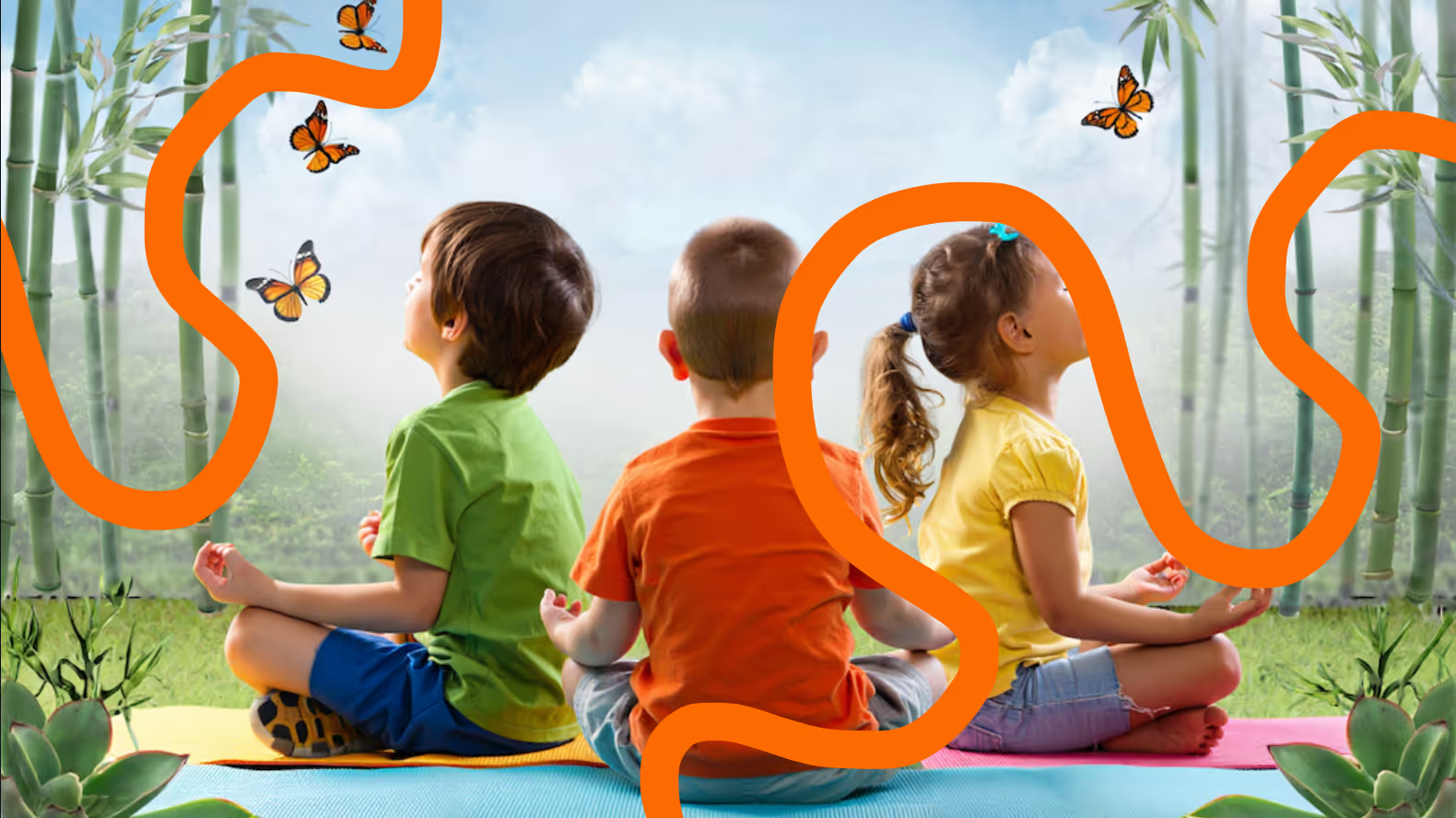
- Belly breathing: Blow bubbles to practice slow, deep breaths.
- Turtle Technique: From Vanderbilt’s CSEFEL model, children imagine “going into their shell” to take a breath, relax their body, and think about what to do before reacting.
- Yoga breaks: Try simple animal poses like “cat” or “cow.”
SEL activities to boost social awareness in young children
Children learn self-awareness by understanding empathy and respect for others’ points of view.
Encourage that understanding with these activities:
- Multicultural storybooks: Share diverse stories that highlight different perspectives.
- Kindness jar: Add a marble every time they help or comfort someone else.
- Partner play: Build or draw something together to practice cooperation.
- Listening games: Play “Simon Says” to build focus and awareness.
SEL activities to build relationship skills in preschool kids
Relationship skills help children share, communicate, and resolve conflicts kindly and quickly.
Try these SEL activities to encourage collaboration:
- Cooperative building: Team up to build block or Lego creations.
- Sharing circle: Pass an object and take turns speaking about a topic.
- Greeting practice: Model friendly handshakes or waves.
- Compliment time: Take turns saying something kind to one another.
Social-emotional learning activities for preschool kiddos to practice decision-making
Decision-making games teach children the skills to choose fairly and consider consequences.
Here are a few ways to teach kids to make good decisions:
- Puppet scenarios: Ask them to decide what a puppet should do next.
- Voting time: Let them decide on the next game or song.
- Sorting games: Classify “safe vs. unsafe” or “helpful vs. hurtful” actions.
- Board games: Practice turn-taking and following simple rules.
SEL programs and resources for preschoolers
If you’re looking for structured SEL support, here are a few of the top programs that combine storytelling, play, and reflection.
1. Second Step Early Learning
Second Step Early Learning is a popular SEL curriculum for preschoolers. It focuses on helping kids recognize emotions, build empathy, make friends, and solve everyday problems.
The program includes tools to bring emotional scenarios to life, engaging preschoolers in visual and auditory ways.
These include:
- Scripted lessons
- Puppets
- Picture cards
- Songs
Lessons follow a consistent rhythm, so kids grasp the concepts through a repetitive process. They listen, watch, discuss, and then practice. That way, even the youngest learners can follow along.
2. PATHS (Promoting Alternative Thinking Strategies) Preschool
The PATHS Preschool curriculum is about strengthening emotional literacy, self-control, and social problem-solving. It comes with a sequence of lessons that encourage young kids to label feelings, calm themselves, and think before acting.
As a program, it stands out for its focus on emotion vocabulary as it teaches kids the exact language they need to describe and manage feelings. Each lesson weaves together puppet stories, group discussions, and cooperative activities so kids can put their skills into action in different scenarios.
This SEL curriculum also has a direct focus on addressing aggressive or impulsive behavior, making it a great choice for preschoolers who find it hard to control their feelings.
3. CSEFEL Pyramid Model
This free program was created by Vanderbilt University and offers a framework rather than a single curriculum.
It supports social-emotional growth through a tiered system:
- Universal strategies for all children
- Targeted support for those who need extra help
- Intensive interventions for those with more significant challenges
It’s not just a model. It also gives you practical tools such as visual routines, emotion charts, and transition strategies that fit seamlessly into everyday life.
4. Kindness Curriculum (UW–Madison Center for Healthy Minds)
Created by researchers at the University of Wisconsin–Madison, this free, evidence-based curriculum homes in on mindfulness, compassion, and gratitude.
Its downloadable lessons combine guided breathing, mindful stories, and cooperative games that teach emotional balance.
It’s different from lots of traditional SEL programs in that it emphasizes inner awareness as the foundation for empathy. Preschoolers focus on taking a pause, noticing emotions, and responding kindly to others.
5. The Incredible Years — Dinosaur Child Program
The Dinosaur Child Program from The Incredible Years uses playful, interactive learning to strengthen social skills, emotional regulation, and problem-solving.
Children learn alongside puppet characters Wally and Molly, who model real-life challenges. For example, they might talk about sharing, apologizing, or staying calm when angry. Each session brings together storytelling, songs, and group discussions to keep learning active and fun.
Backed by a strong evidence base, the Dinosaur Child Program is especially effective for children with challenging behaviors, as it concentrates on developing confidence and empathy.
Best practices for embedding SEL at home with preschoolers
Your child’s home is the first and most important SEL classroom. It’s where they learn how to recognize and manage emotions and challenges, based on how others around them handle theirs.
But that doesn’t mean you need to dive into formal SEL programs for preschoolers. You can nurture these skills naturally using play, routines, and everyday relationships as teaching moments.
Here are some tips to help you get started.
Weave SEL into everyday routines
Everyday routines are powerful SEL teaching tools where responsibility, decision-making, and relationship-building all come together.
Turn these everyday activities into opportunities for social-emotional learning:
- Mealtimes are a chance for your preschooler to lend a hand by setting the table or collecting plates. This helps them build responsibility and social awareness.
- Getting dressed offers a chance to practice decision-making, when little ones can choose their clothing or hairstyle.
- Bedtime becomes a moment of reflection where you chat about how the day has gone and what feelings your child had.
When you build SEL into predictable routines, you teach your child to practice these emotional skills during important tasks and key transitions. This helps them to bring those skills into everything they do, whether it’s work, play, or wind-down time.
Be consistent and model what you want to see
Kids do what they see. And while parenting is challenging and tiring, these tough moments give you the perfect opportunity to model calm language and problem-solving out loud. Try phrases like “I’m feeling frustrated, so I’m going to take a deep breath,” or simple conflict scripts such as “I don’t enjoy that, please stop,” to show respectful communication.
Remember, it’s important to be consistent. When you’re calm and steady, no matter the challenge, your child mirrors you, learning to manage their own emotions with the same confidence.
Create supportive environments
Make emotional expression part of your home by loving loudly and often. When you express compassion and understanding and give your children easy ways to do the same, you teach them that you support their emotional journey.
But what does this look like?
- Cozy calm-down areas with pillows or sensory toys so your child can reset when feelings overwhelm them
- Feelings charts or emotion cards, so they can name emotions without getting stuck on the language
- Dedicated moments for reflection and conversation so children feel seen and heard
- Praise and celebration for SEL wins, such as “You calmed down on your own. That’s amazing self-control.”
Encourage reflection and connection
Reflection time gives you a moment to connect with your child and understand their feelings and struggles. It also gives them a moment to practice voicing those emotions out loud.
Try reflecting at the end of the day by talking about:
- What felt good and/or tricky about a certain task
- How they were kind and/or someone was kind to them
- When they felt proud of themselves, and what made that moment special
These reflective moments reinforce the SEL lessons your kiddo is learning, helping them to consciously carry those behaviors into the next day.
Helping preschoolers grow into lifelong healthy learners with SEL
Social-emotional learning gives preschoolers the foundation to understand themselves and build positive relationships with others, all while learning to handle challenges.
But this is just the beginning. As your child grows, they need a school environment that nurtures those social and emotional skills to keep them building confidence and resilience in every new experience.
That’s exactly what we do at bina.
In our online school, social and emotional learning is woven into every subject, project, and friendship. With small, globally-diverse classes and two dedicated educators per group, we give every child the space and support to grow into thoughtful, confident learners who bring curiosity, empathy, and purpose into everything they do.
Accredited, full-time school for grades K-12
Bring the best of the classroom to your home
See if we're a fit
More to read
Why kids need elementary school social emotional learning
Learn why elementary school social emotional learning is important and how innovative schools like bina deliver what traditional schools can’t.

10 social-emotional learning activities to support your child’s education
Discover 10 social-emotional learning activities you can do with your child at home. Get tips to support their education.
Every parent's list of social-emotional learning resources
Turn playtime into learning time with social-emotional learning resources that teach kids empathy, resilience, and self-control through fun.