How play-based learning nurtures your kiddo’s inner genius
What is play-based learning?
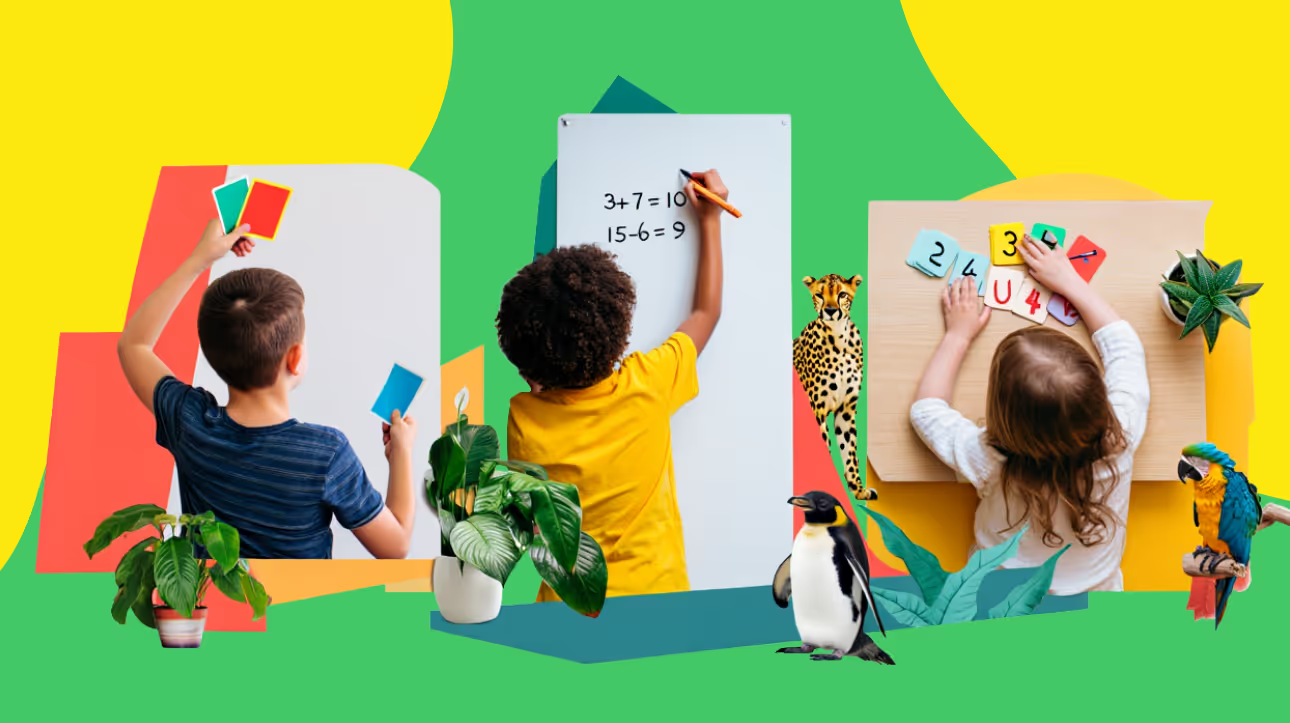
A play-based approach to learning is much more than fun and games. It's central to how kids learn. As children build with blocks, act out stories, or tinker with new materials, they’re learning how the world works.
Play makes learning feel natural because it is natural. Through hands-on exploration, kids develop essential skills like language, problem-solving, confidence, and creativity. They’re discovering how things work, testing ideas, and building knowledge — all while having fun.
Parten’s six stages of play
Play is a crucial part of every stage of your kiddo’s development. As they grow, the way they play changes, too. They need different types of stimulation and guidance.
Mildred Parten, an American sociologist and researcher, studied how young children interact through play. Her research led to the identification of six stages of play, each representing a step forward in a child’s social and emotional growth:
Unoccupied play (Birth – 3 months)
In the earliest stage of play, your baby is simply taking it all in — the lights, the sounds, the movements. You might catch them waving their arms, stretching their legs, or staring off into space (yes, the ceiling fan really is fascinating to them).
It’s how babies begin to discover their own bodies and become aware of their surroundings.
Solitary play (3 months – 2 years)
During solitary play, your little one is completely absorbed in their own world. They may be turning a toy around, flipping through a picture book, or building a block tower all by themselves.
This kind of play strengthens their concentration, develops independence, and gives them the space to explore their interests.
Onlooker play (2 years)
Sometimes, play starts with just watching. Your child might quietly observe other kids playing without jumping in — and that’s totally normal. They’re in the onlooker stage.
They may ask questions or make comments while they watch. But what they’re really doing is learning how social play works and collecting ideas for when they’re ready to join the fun themselves.
Parallel play (2+ years)
You’ll often see toddlers sitting side by side, playing, but not with each other. Your kiddo might be building a sand castle in the sand pit, while another child builds their own just a few feet away. In parallel play, kids may not be talking or sharing yet, but they’re learning to feel comfortable in a shared space and gaining confidence in their own ideas.
Associate play (3 – 4 years)
At this stage, your kiddo starts to dip their toes into social play. They begin to play together, share toys, and chat in that wonderfully spontaneous way kids do.
While there may be no shared goals or rules yet, kids are still connecting and engaging with one another. This kind of play helps them practice sharing, communication, and the early skills of cooperation.
Cooperative play (4+ years)
This is the stage where it all comes together. In cooperative play, kids join forces. You might see them building forts, inventing silly new games, or figuring out who gets to be the wizard in their pretend adventure.
What sets this stage apart from associative play is the shared purpose and organized rules that guide their play. It’s a big leap — and it helps kids develop important social skills like teamwork, negotiation, empathy, and even early leadership.
The benefits of play-based learning
Kids naturally develop important skills that prepare them for the future through play-based learning. They learn to solve problems, express ideas, collaborate with others, and follow their curiosity.
With 80% of brain development happening by age three and 90% by age five, these early years are an important window for growth. That’s why play makes such a big impact.
Develop social-emotional skills
Moments like sharing toys, taking turns, or deciding who gets to use the red shovel next are all forms of social-emotional learning in action.
Kids practice teamwork, empathy, and communication in a way that feels natural and fun. Research even shows that kids can develop strong social skills and understand their emotions through play because it's their most natural activity.
Imaginative play also gives kids space to explore feelings and act out situations they may not yet have words for. It’s where they can “be the grown-up,” comfort a stuffed animal, or process something that felt big or confusing.
Even challenges like losing a game or not getting a favorite toy become teachable moments. Through play-based learning, kids build emotional awareness, develop self-regulation, and gain the social skills they’ll carry into school, friendships, and beyond.
Spark curiosity and cognitive growth
Play is like a workout for the brain. As kids build, imagine, and explore, they’re constantly asking questions like “Why did that fall?” or “How can I make this taller?” This kind of hands-on exploration ignites natural curiosity, making it easier for them to absorb and apply new knowledge.
From figuring out how to balance blocks to inventing new rules for a game, play challenges children to think critically and solve problems in creative ways. In fact, 94% of parents believe that play helps their child learn to solve problems they’ll face in school.
Play also requires planning, focus, and flexible thinking, all of which enhance working memory, cognitive flexibility, and self-control. And because play is rooted in joy, it lowers stress levels and helps the brain stay engaged and ready to learn.
Encourage creativity and imagination
Play gives children the freedom to explore without the fear of being “wrong.” It opens the door to curiosity, experimentation, and endless possibility. Your kiddo might turn a cardboard box into a spaceship, use socks as puppets, or declare that the floor is lava.
Children learn to think broadly and come up with multiple solutions or ideas for a single problem. For example, they might dream up five different ways to rescue a stuffed animal from a tower. This is called divergent thinking, a crucial skill that helps them approach challenges with creativity, flexibility, and an open mind.
They also engage in symbolic thinking, where one object stands in for another, like pretending a spoon is a microphone. As they create their own stories and worlds, your kiddo builds self-confidence and learns to feel comfortable being who they are.
Build a foundation for future learning
Kids naturally practice math when they count blocks, build oral language skills through storytelling, and develop scientific thinking as they sort, test, and compare.
Because play-based learning weaves these subjects into everyday moments, it helps children learn without pressure. Instead of worrying about performance or getting things perfect, kids get to focus on discovery and joy. That’s what helps learning stick.
Studies on play pedagogy and learning outcomes even show that children exposed to play-based education early are more likely to experience positive and successful outcomes in adulthood.
Free play vs. guided play
Two main types of play-based learning practices support learning and growth for your kiddo: free play and guided play.
Free play
Free play is completely child-led. There are no rules from adults, learning goals, or expected outcomes. Kids just follow their curiosity wherever it takes them — nothing is off limits.
It gives children the space and freedom to explore, invent, and imagine entirely on their own. This kind of pure creativity nurtures independence and self-expression. Kids learn to solve problems on their own terms, take the lead, and trust their own ideas.
Guided play
While still fun and child-centered, guided play is assisted by a parent or teacher. Unlike direct instruction, which involves more passive listening, it encourages children to actively explore concepts with support. Adults may offer subtle prompts or questions to steer learning, without taking over.
For example, while playing with toy cars, you might ask your child, “How many are red?” This balanced approach helps spark deeper thinking, build new skills, and strengthen understanding. Play-based instructions can be just as effective, if not more, than direct instruction for certain academic outcomes, especially when it comes to long-term retention and engagement.
How to support play-based learning practices for your kiddo
Join your kiddo’s play as a thoughtful guide and co-explorer. Here are a few simple ways to support their learning through play:
Create a purposeful play environment
A play space doesn’t need to be big or fancy; it just needs to be flexible and inviting. Whether it’s a cozy corner at home or a virtual space, thoughtful environments invite curiosity, exploration, and deeper engagement.
Stock it with materials like blocks, art supplies, props, or digital tools that kids can use in different ways. Keep it flexible so your kiddo can move through, rearrange, and truly make it their own.
Accept the different emotions that can arise in play
Sometimes, big emotions can bubble up during play, and that’s okay. Your kid may experience frustration when a tower falls over or get upset during a disagreement with a friend. These are all valuable learning experiences.
Instead of jumping in to help fix or stop the feelings, try to accept them and create space for your child to work through them. Validating their emotions helps them feel seen and understand what they’re experiencing.
You can step in with a small nudge to help them name what’s going on inside. For example, you might say, “That was really frustrating, huh? You worked so hard on that tower,” or “It’s okay to feel sad when someone doesn’t want to play your game.”
These moments help build emotional awareness. They teach children not to be afraid of uncomfortable feelings, but to identify feelings, brainstorm solutions, and navigate conflicts.
Connect play to real-world concepts
Play becomes more powerful when kids see how it connects to the world around them. Helping them understand the “why” and “how” behind their play bridges exploration to real-life concepts.
Let’s say your kiddo is pretending to run a restaurant. They’ll naturally explore ideas like counting change, reading menus, or working as a team to take orders. You can also use open-ended prompts to guide their thinking, such as “What do you think would happen if you ran out of food?” or “How could you make sure everyone gets a turn?”
These questions encourage kids to reflect, plan, and problem-solve while they play. Over time, this builds deeper understanding and confidence in the world around them.
Play-based learning examples you can try at home
Try these fun activities to blend play into daily life:
Dress up and role-play
From shopkeepers to superheroes, dress-up provides opportunities for imagination and builds social-emotional skills. All you need are old clothes, scarves, or even a cardboard box.
When kids care for a “sick” teddy bear or play doctor with a friend, they’re practicing empathy, communication, and creativity. They learn to walk in someone’s shoes and work through differences.
Scavenger hunt
Scavenger hunts are a playful way to build observation, logic, and problem-solving skills. Whether it’s a “bug hunt” in the backyard or searching for shapes in the playroom, physical activities paired with focused exploration keep kids engaged and curious.
Start simple, and then add challenges: “Find something that smells sweet!” or “Find something crinkly!” At bina, we use scavenger hunts to develop phonological awareness, like finding something that starts with the sound “Y.” It’s a fun, hands-on way to turn learning into an engaging adventure.
Building with blocks
Whether it’s LEGOs, magnetic tiles, or recycled boxes, building activities are full of learning opportunities. Kids explore childhood mathematics and science as they stack, balance, and build. They naturally test out geometry, stability, and cause-and-effect, and develop fine motor skills.
Suggest prompts that encourage teamwork or pose a fun challenge: “Can you build a bridge for your toy car?” Then, watch them plan, problem-solve, and adapt when things don’t go as expected.
How bina ties play into the classroom
At bina, we believe the best learning happens when kids are actively engaged. That’s why play is integrated into our curriculum at every level.
Our kiddos explore real-world ideas through project-based learning. Kids take charge of their own learning and design meaningful projects connected to the UN Sustainability Goals. They have the room and freedom to explore big ideas, ask questions, and create solutions that matter to them.
We also place a strong focus on social-emotional learning. Through fun SEL activities like games, stories, and role play, children learn to recognize their emotions, show empathy, navigate conflict, and make thoughtful decisions. Blending play with purpose helps our students stay focused, motivated, and excited to learn with kids from all around the world.
Big ideas start with little moments of play. Discover the power of play at bina.
Accredited, full-time school for grades K-12
Bring the best of the classroom to your home
See if we're a fit

More to read
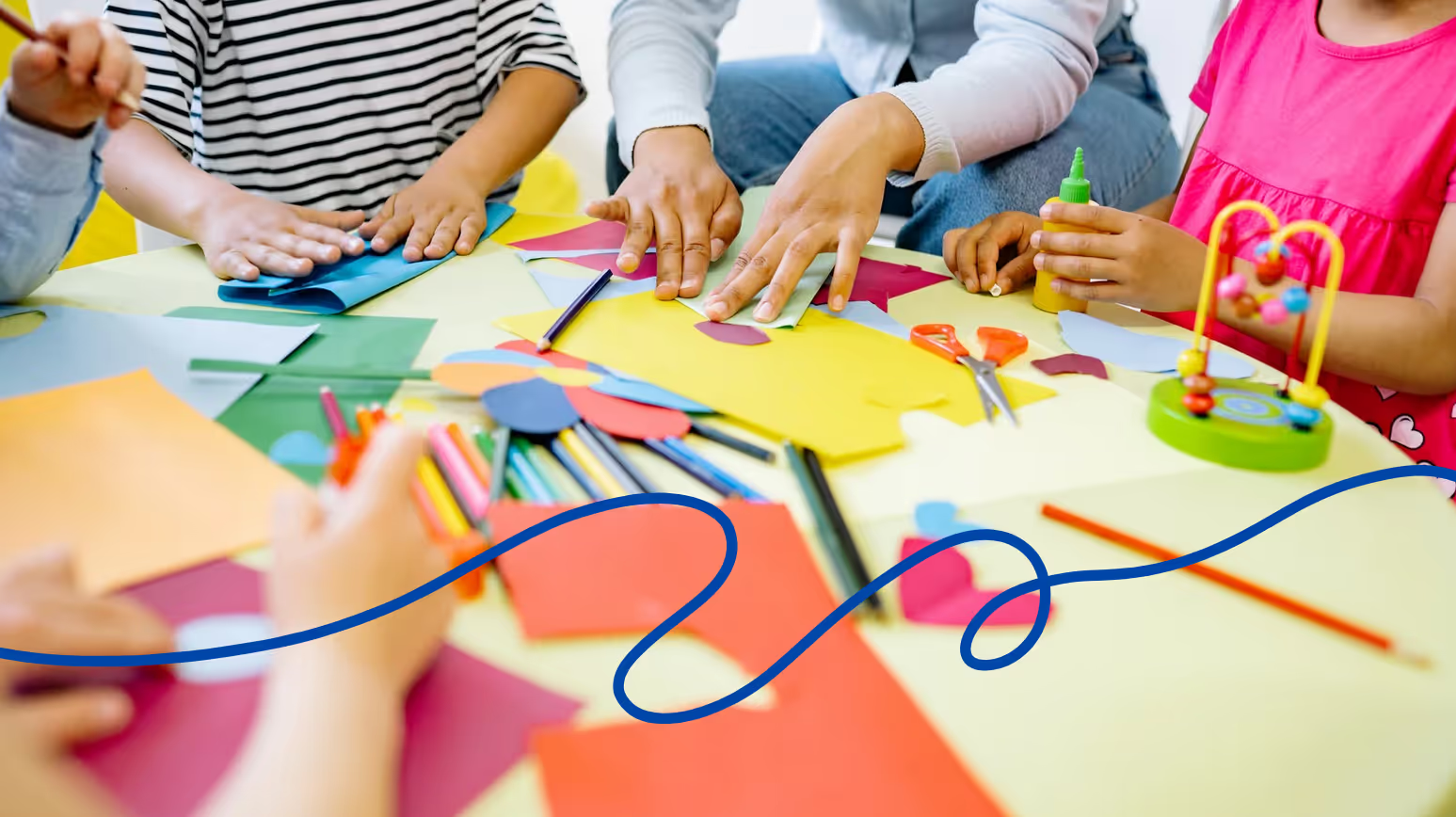
Project-based learning in elementary school: Why it works
Discover how project-based learning helps elementary kids thrive with real-world projects, hands-on lessons, and deeper engagement.

Why social-emotional learning matters
Discover what social-emotional learning is and how it helps your child build confidence, manage emotions, and thrive in both school and life.
Interdisciplinary Learning Helps Kids Remember More
Discover how interdisciplinary learning enhances children's memory retention and fosters a love for knowledge. Explore the benefits of this integrated teaching approach that connects subjects for deeper understanding and engagement.