Project-based learning in kindergarten: The benefits of student-led learning
Project-based learning (PBL) is not a new concept, but for many students, it can be a game changer. Instead of simply being “taught,” kiddos learn by doing. With small groups tackling real-world problems and challenges, students have a sense of ownership and feel invested in the outcomes.
For little ones, project-based learning in kindergarten can set them up for success as they progress through primary school, secondary education, and beyond. It fosters problem-solving skills, enhances creativity, and leads to greater self-awareness. PBL is also ideal for those who prefer an alternative to the traditional classroom environment as it offers a more engaging, hands-on approach to learning.
Want to know more? Keep reading to discover the benefits of a project-based model in kindergarten.
What is project-based learning?
Project-based learning is a highly engaging, personalized method of teaching. Students are placed in small groups and asked to investigate and respond to real-world problems and challenges.
Compared to their peers in traditional classrooms, children who study PBL during early elementary school perform better in reading, social studies, and other subjects. As they make friends, strengthen their imagination, and practice curiosity, they also gain skills they can use throughout their lives.
Unlike direct teaching, PBL is student-centered. Kids work with open-ended questions, encouraging critical thinking. Students can follow their interests, and because it’s group work, this style of learning encourages collaboration, communication, and empathy.
PBL isn’t just about learning one subject like math, science, or art — it can be everything combined. For example, a project may involve making a board game, which can test a child’s counting, art, and literacy skills and give them early exposure to design and engineering. And when the lesson calls for deeper thinking, making a board game can help them learn more about a specific topic, such as microbiomes or geography.
One of the biggest perks for kiddos is that the content is in-depth and relevant, so students are more likely to retain what they have learned.
What does project-based learning look like in kindergarten?
At bina, we teach kiddos as young as four. Each kindergarten class has a maximum of six students, which is perfect for project-based learning. Depending on the project, these students may form even smaller groups.
One project can teach them a range of different skills, including reading, writing, numeracy, design, and technology.
As an example, children can look at food items they have at home and discuss where they came from and how they were made. While an apple is grown on a tree, a processed snack will have a longer journey before it reaches their plate.
This type of project opens up a science-rich discussion that is both relevant and fun. Once they have the information, the next step may be to create a comic or poster and present it to the class.
What skills can children gain from PBL when they study at bina?
When your child studies at bina, you can expect a well-rounded education. With the support of live teachers and a collaborative virtual classroom, little ones will develop important skills right from the start.
When PBL is integrated into classwork, results have shown an improvement in a range of core skills. These include literacy and higher-order thinking when compared to traditional learning models.
So, what other skills can your child gain from PBL? Let’s take a look.
1. Problem-solving skills
Without problem-solving skills, small obstacles can feel like major hurdles. Fortunately, problem-solving, analytical, and critical thinking skills can all be taught in school.
Open-ended questions allow students to come up with answers that are meaningful to them. With PBL, they will learn to follow these problem-solving steps:
- Identify: Think about what the problem is.
- Analyse: Consider “WHY” it’s a problem.
- Brainstorm: Discuss possible solutions.
- Decide: Choose which solution is the best fit.
- Implement: Apply the solution and measure the results.
- Reflection: Discuss what worked and what can be improved.
Of course, the kiddos aren’t left on their own at bina. A live teacher and small group means they can combine their strengths with others to solve problems together.
Tip for caregivers: You can support your child at home by starting conversations and encouraging them to share their ideas. For example, you can ask what the weather is like today and what they should wear outside. Or role-play a scenario to see how they would react, such as, “Jenny forgot to bring her drink bottle to ballet, what would you do if that happened to you?”
2. Creativity
PBL encourages students to think outside of the box, which supports their creativity, and this happens every day at bina. Kiddos can use both their minds and their hands to work on their projects.
Let’s say the students are asked to create a pop-up book. They will have to use their imagination to come up with the book’s characters and storyline.
Then, when it comes to putting the story together, they can use a range of different tools. The book may be created with whatever materials they have available at home, such as pencils, cardboard, and paint. And they can use tech to share their ideas, including graphic design software, collaborative tools, and educational apps.
Other projects may involve creating a poster board, a video clip, or even getting their hands dirty by planting a seed to grow in a cup.
3. Social skills
As part of their learning journey with bina, students are given opportunities to work closely with their peers. They work in small groups with classmates from all over the world, making them part of a diverse and inclusive learning community.
Not only do students make valuable friendships during their lessons, but PBL’s strong focus on group work also means children gain essential social skills. For example, they will learn how to communicate and express themselves while understanding different points of view.
Learning in a group also requires other social skills, including listening skills, empathy, cooperation, and conflict resolution.
Kindergarten students still get time to play and grow their friendships organically, which is also important for little ones.
4. Self-awareness
PBL is often described as deep learning because students explore meaningful topics. But children of all age levels can learn about themselves, too.
They can discover their strengths and weaknesses and use this knowledge to learn. For example, they may decide they want to improve their coloring skills or practice writing their name.
In life, some people are natural leaders while others are project builders, idea-creators, and communicators. For a group project to be successful, you need a mix of everything. Using project-based learning in kindergarten shows kiddos that it is okay to be who you are and that there is a job for everyone — even if you have a quiet temperament.
5. Collaboration
Project-based learning is a collaborative approach with small groups working together.
During the planning phase, there can be a group discussion about the types of jobs that need to be done, such as videos, voiceovers, or poster making. For younger age groups, the teacher may have to give students these specific tasks. But as they get older, they can assign the roles themselves.
This teaches them how to work together and that everyone’s contribution to the project will help it be a success.
6. STEM skills
STEM stands for science, technology, engineering, and mathematics, and these are all vital 21st-century skills.
PBL can be a fun and engaging way to learn STEM skills. These subjects can be daunting when taught on their own, so putting them into real-world scenarios can make a big difference. For example, children can learn about condensation and water cycles by making a cloud in a jar using just water and hairspray. Or they can explore technology by creating animated stop-motion videos.
STEM skills can be used in any project. According to the National Math and Science Initiative (NMS), PBL is better for long-term retention of STEM knowledge compared to traditional teaching methods.
7. Decision-making skills
With open-ended questions and real-world problems, PBL gives students the freedom to explore different topics. They can make choices throughout the process, which helps them gain confidence in making decisions.
When students work together, they can decide how they will structure their project. For example, will they use audio, visual, or coding tools?
Once they choose a direction, they can think about the finer details. If the theme is healthy eating, students may plan a virtual garden and decide which plants to grow and why.
Or, kiddos can design a small village and think about where roads, buildings, and amenities go — and discuss why those decisions matter.
From identifying what the problem is to finding solutions and presenting their work, decision-making is encouraged every step of the way.
8. Leadership skills
For many children (and adults, too), small group sizes can feel more welcoming and supportive than larger ones. At bina, the small class sizes mean it’s a safe environment for students to share their ideas. It’s a collaborative experience where everyone has the opportunity to be seen and heard.
And, because PBL helps kiddos gain deeper subject knowledge, they will be more confident in taking on a leadership role, even at a young age. This understanding ensures students feel comfortable participating in discussions, taking initiative, and helping others.
Good leadership includes many of the other skills on this list, including problem-solving, collaboration, decision-making skills, and social skills. They also need to be adaptable and know how to delegate, which are all perks that come with the PBL method of teaching.
How does project-based learning foster a love of education?
With the right foundation, children will discover a love of learning that will stick with them throughout their lives. Here are some of the ways bina supports your child from the very first day.
Curiosity is encouraged
At bina, there is no such thing as a silly question. Kiddos are encouraged to be inquisitive, and the content is guided by topics that interest young minds.
For example, hands-on learning means they are allowed to be curious and try new things. And, a global classroom gives them opportunities to understand different cultures and connect to important social issues. Where possible, our projects are tied to the UN’s Sustainable Development Goals (SDGs), such as no poverty, zero hunger, and gender equality.
So, whether it’s a science project where they monitor plant growth or a discussion about their favorite children’s books, young ones can ask questions and contribute to the class.
Our curriculum is backed by science with clear learning outcomes and three times more individual attention than a typical private school.
Learning is an adventure
When your child studies at bina, the classroom is a little bit different from the norm. We work in biomes, where themes are explored in six-week blocks. Like PBL, these projects are based on real-world problems, so kiddos are encouraged to be innovative and use their problem-solving skills.
With a live teacher, kids stay engaged. It’s also a safe and inclusive environment where children can be themselves and not worry about trying to fit in. For bina students, learning feels like an adventure where everyone has fun.
Progress in a shared space
For some children, traditional classrooms aren’t suited to their learning needs. At bina, small classes mean teachers can account for different learning styles, and every child can be themselves.
Kiddos are matched with students at a similar stage so they can level up together. If the students are progressing quickly or need extra support, they can switch to a more suitable group for certain subjects or all-day learning.
It’s all about meeting those important educational milestones while making sure every child has the chance to excel.
However, this learning flexibility still comes with a routine that prepares them for a future workplace. For example, children start the day by running over their schedule and keeping their workspace tidy. Then, they prepare with social and emotional learning (SEL) activities. The rest of the lessons are structured with set times for those essentials, including reading, math, and science.
Inspire your child with project-based learning
Project-based learning is a well-rounded teaching method with loads of benefits. It sparks curiosity, makes learning more fun, and lets young minds immerse themselves in every topic.
PBL is something that is ingrained into different bina lessons every day. Children work in small groups and benefit from a personalized learning approach that is designed to keep them engaged.
Watch this Microbiome Student Showcase to see some of the activities our students participated in over a six-week period:
As you can see, bina teachers focus on educating young people in a fun, inclusive, and thought-provoking way.
Want to know more? If your child is aged between four and 12, and you’re looking for a virtual classroom with a live teacher and ongoing support, bina may be the perfect fit. We teach kiddos from all over the world, with structured school days that take the pressure off busy caregivers.
Accredited, full-time school for grades K-12
Bring the best of the classroom to your home
See if we're a fit
More to read
Why Is Personalized Learning Important?
Discover the benefits of personalized learning and how it can empower your kiddo. Learn how customizing lessons to students’ needs is crucial for academic success.

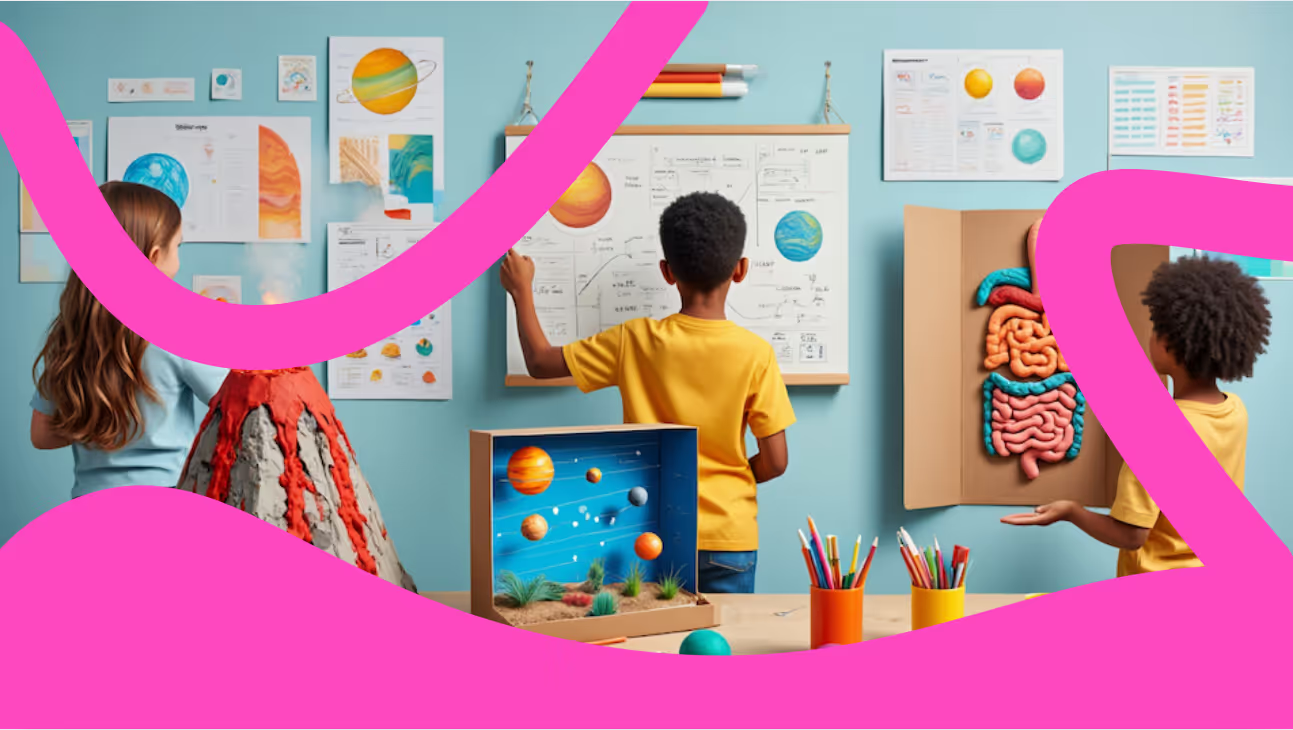
Growing life learners: 7 benefits of project-based learning
Discover the benefits of project-based learning for growing lifelong learners who can apply knowledge and think critically to produce real outcomes.
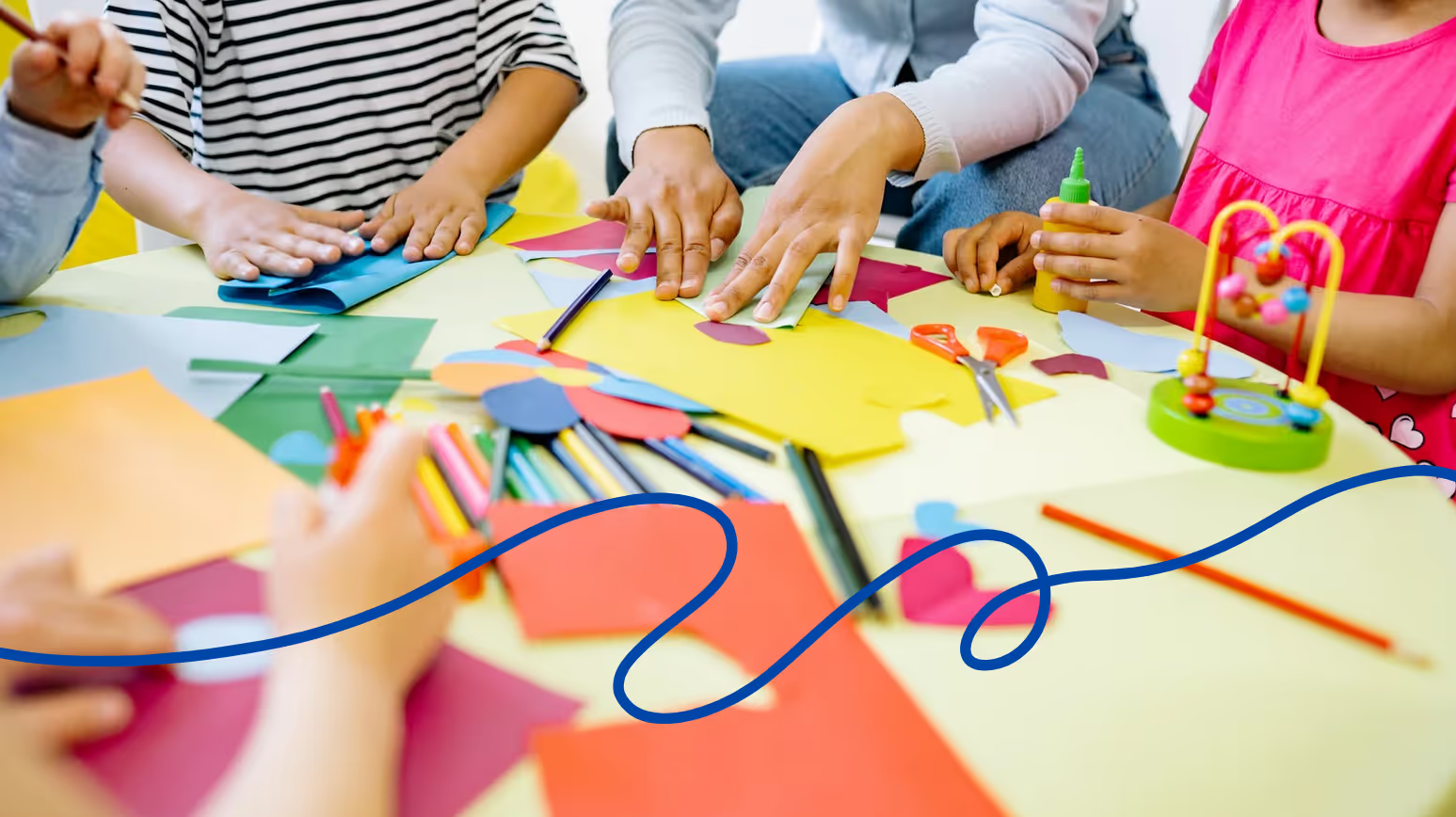
Project-based learning in elementary school: Why it works
Discover how project-based learning helps elementary kids thrive with real-world projects, hands-on lessons, and deeper engagement.