Why K-12 Virtual School Might Be Right for Your Child
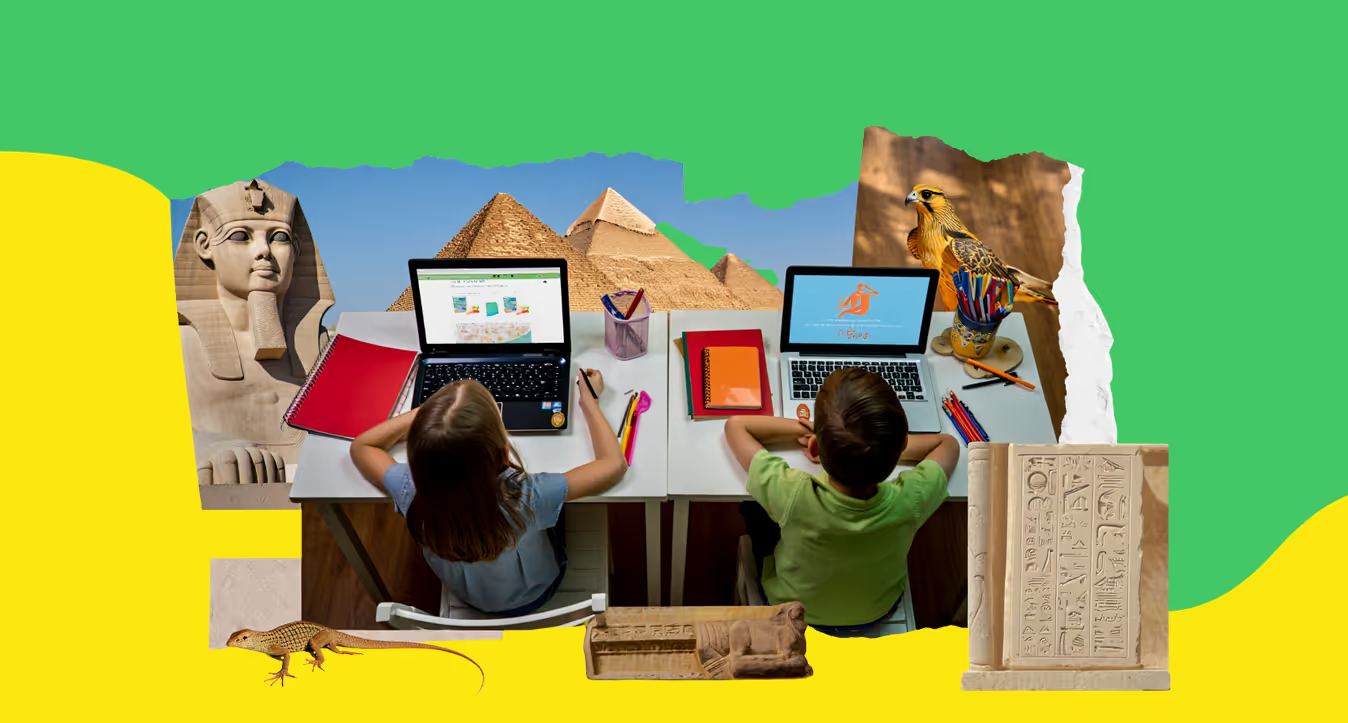
Online school programs aren’t the backup plan they used to be. For many families, a K-12 school that’s online is a bold and brilliant choice — one that puts your child’s needs, well-being, and potential first.
Still, choosing virtual learning can come with questions. How will this affect their social life? Their focus? What about your sanity? Will they still receive a high-quality education?
With the right setup, support, and curriculum, K-12 virtual school can be more than just a workable solution. It can be a game-changer for your kiddo’s education. We’ll walk through what works, what to expect, and how to set your child up to not just cope with online school, but to thrive in it.
Why families are choosing online learning
Increasingly, parents are stepping away from the traditional classroom, not on a whim, but because something isn’t working.
The BBC reported that in the UK, councils received nearly 50,000 notifications from families choosing to home educate in just one academic year, the highest number since the pandemic. And in the US, enrollment in full-time K-12 virtual schools has more than doubled over the past five years, with similar surges happening around the world.
Here are just a few of the reasons families are embracing the online route:
- Bullying or social trauma
According to research conducted by the Australian government, one in four students between Year 4 and Year 9 report being bullied regularly. When school becomes a source of anxiety instead of safety, stepping back to heal emotionally, socially, and academically can make all the difference.
- Mental health or sensory needs
For kids who are overwhelmed by loud classrooms, bright lights, or constant stimulation, learning at home can offer calm, consistency, and control.
- SEND or learning differences
Kids who need extra support often fall through the cracks in a one-size-fits-all system. Virtual programs with certified teachers can be more accommodating and capable of offering more personalized learning.
- Lifestyle flexibility or travel
Whether you're a traveling family, have a non-traditional work schedule, or simply want to spend more time together, virtual instruction offers the freedom that most schools can’t.
- Burnout or curriculum mismatch
Some kids are simply exhausted or uninspired by traditional school. Virtual learning offers the room to learn at their own pace and rediscover their love of learning.
How to build a foundation for success at home
You don’t need a Pinterest-perfect homeschool setup to provide your kiddo with a great experience. But a bit of structure and intention go a long way in helping your child settle into virtual learning and enjoy it.
Here’s how to lay the groundwork for a smooth, focused day at K-12 virtual school:
Learning space
A good learning environment doesn’t have to be big, but it does need to be predictable. Kids focus better when they know what to expect, and having a designated spot for school helps signal, “This is work time.”
A few small tweaks to their environment can make a big difference in how calm, focused, and engaged they feel during the day.
-
Choose a dedicated spot for virtual learning, even if it’s just a quiet corner of the dining room. Having a designated school area helps them stay focused. Discourage your child from doing their schoolwork while sitting in bed or lounging on the couch.
-
Set up their school space with the essentials for student success: a desk or table, a comfortable chair, a working device, and good lighting. Items for organizing school supplies are helpful as well, like writing material holders and craft supply boxes.
-
If background noise is a problem, invest in noise-cancelling headphones or use white noise.
-
Add a few personal touches like a small plant, favourite water bottle, or motivational print so it feels cozy.
Routine: Build structure (without being rigid)
Kids thrive on rhythm. While one of the big perks of online school is flexibility, too much freedom can quickly lead to overwhelm or aimless days.
A simple, repeatable routine helps your child know what to expect, stay on track, and feel a sense of accomplishment by the end of the day. Your child’s virtual school day doesn’t have to look like a traditional school schedule; it just needs to work for your family.
-
Set a consistent start and end time each day. Get dressed, eat breakfast, and “log in” — these cues help the brain shift into learning mode.
-
If your K-12 virtual school isn’t live, schedule short brain breaks every 45-60 minutes. These can be movement breaks, snacks, quick stretches, or a run around the garden. Live, all-day online schools generally have breaks built-in.
-
Build in outdoor time. Even 15 minutes of fresh air can reset focus.
Tech management: Balance screens with smart habits
Online learning means screen time. There’s no way around it. But with a few thoughtful strategies, you can make tech work for your child, not against them. The goal is to support focus, protect their eyes and energy, and weave in offline habits that help with memory, motivation, and mental breaks.
-
Use paper notebooks or worksheets to supplement on-screen work. Writing things down by hand boosts memory and reinforces learning.
-
Encourage handwriting when possible — even a quick morning journal or spelling practice on paper can help balance the day.
-
Give your child a physical to-do list they can check off throughout the day. It’s satisfying, visual, and motivating.
-
Install screen-time limiting apps (like Forest, Freedom, or Apple’s Screen Time settings) to block non-school distractions.
-
Sync calendars with assignment due dates. This could be a wall planner, Google Calendar, or a whiteboard in their learning space.
Mindset: Encourage ownership and celebrate progress
Online school can be a major shift for kiddos of any age. Helping them take ownership of their day and feel proud of their efforts (not just the results) builds long-term confidence.
There will be messy moments, off days, and challenges. But with the right mindset, your child can grow in ways that go far beyond academics.
-
Focus on effort, not perfection. Celebrate hard work, problem-solving, and progress: “You really stuck with that” goes a lot further than “You got it right.”
-
Normalize the learning curve. It’s okay if it takes a few weeks to settle in — this is a big change, and small wins count.
-
Acknowledge the good days, and let the tough ones go. You’re building resilience as much as you’re covering math, social studies, and reading.
Pick a school that’s not just Zoom and worksheets
As you explore online options for your kiddo, look for signs that the school values connection as much as content. A great online school should feel like a community, not just a website. Think: live lessons with other kids, hands-on projects that push your child to think, and ways for kids to interact beyond just clicking “submit.”
Ask questions like:
-
Are there live lessons taught by real teachers, not just videos or self-paced slideshows? How experienced are the educators? How many students per teacher?
-
Does the program offer structured social-emotional learning (SEL) with small-group discussions, breakout rooms, or guided check-ins?
-
Are there clubs, projects, or fun extras where your child can talk to other kids and feel like part of something?
bina is a great example of this kind of supportive, well-rounded approach. While it’s not technically a K-12 program (it's designed for younger learners from preschool and kindergarten-aged up to age 12), it’s a great model of what virtual learning can be when it’s done with heart and intention.
-
Every day includes live, interactive classes so kids are active participants, not just passive watchers. We also use a personalized learning model called precision education so kiddos learn according to their abilities.
-
There’s built-in time for social connection, from the “Digital Playground” to teacher-led activities.
-
Emotional well-being is a core focus, with daily SEL check-ins that help children feel seen, heard, and supported.
For families whose children have struggled in traditional classrooms, this kind of environment can be a total game-changer.
Turning online school chaos into wins
Virtual learning comes with its fair share of bumps, from motivation slumps to tech overload and everything in between. But with the right strategies, those challenges can become opportunities to build independence, resilience, and stronger habits.
Here are some of the most common concerns parents face and simple, practical ways to turn things around.
My kid has no motivation
The shift to online school can feel like a hard left turn, especially for kids who are used to external structure, bells, and busy classrooms. Without those built-in cues, motivation can take a dip. But the good news is it can be rebuilt and even improved with a few simple tools.
Try breaking goals into bite-sized, visual wins. A physical checklist, whiteboard tracker, or sticker chart can work wonders. Set mini daily goals, like “finish one assignment before snack,” and bigger weekly goals with small rewards. Some ideas are extra play time, a special lunch, or choosing the next family movie.
They’re always on a screen
Online school naturally means more screen time, and it can feel like your child is glued to a device from morning to night. But, according to National Geographic, it’s not just the amount of screen time that matters, but the quality. When screen time is used for active learning, collaboration, and creativity, it’s a very different experience from passive scrolling or watching.
That said, balance still matters. Build in natural tech-free pauses throughout the day. Even just 10 to 15 minutes between lessons can be enough. Encourage movement breaks, snacks away from the desk, or a quick step outside for fresh air. Think of these like mental reset buttons.
Offline hobbies are a great way to re-engage the senses. Let your child paint, bake, build LEGO sets, read a graphic novel, or dig in the garden. Anything that gives their eyes (and brain) a break from pixels.
If they’re prone to screen fatigue or headaches, consider blue light glasses and remind them to blink often and look away from the screen every 20 minutes. You can also adjust device settings to reduce glare and use apps that nudge them to take breaks.
Screens may be the medium, but with the right balance, they don’t have to be the problem.
Are kids who attend a K-12 virtual school missing out?
It’s natural to wonder if your child is missing out on the “real school” experience — the social moments, the group work, the everyday buzz. But online learning done right offers different (and sometimes better) kinds of connection and growth.
Programs like bina create space for both live interaction and hands-on work. Students connect with teachers and classmates in real time for around five hours a day, and balance that with off-screen projects like writing, building, painting, or crafting.
Social growth still happens, just in a more intentional, less pressured way. And while this may not be a forever setup, it can be exactly what your child needs right now to build confidence, self-awareness, and independence.
I feel out of touch with my child’s virtual learning experience
When school happens behind a screen, it’s easy to feel disconnected from what your child’s actually doing. But staying in the loop doesn’t have to mean hovering.
Try a simple weekly “pulse check” — a quick look at progress or upcoming assignments, paired with a casual chat. It helps you spot issues early without turning every day into a progress report.
If your school offers progress updates or parent reporting, make the most of them. For example, bina sends detailed quarterly reports that show how kids are doing across microcredentials, plus a personal note from their teacher, giving you a clear picture without needing to constantly check in.
I’m overwhelmed and burnt out
With K-12 virtual school, you’re not the teacher, and you shouldn’t have to be. One of the biggest mindset shifts in virtual school is remembering that your role is to support, not to shoulder everything.
Lean on the program’s structure, ask for help when needed, and take your own “recess” when you can. Step away, regroup, and remind yourself that this doesn’t have to look perfect to be working.
Bad days happen in every school — brick-and-mortar or virtual. What matters is the long game. And if you can, connect with other online school parents. A WhatsApp or Facebook group can be a sanity-saver when you need advice, a vent, or just someone else who gets it.
Add in life beyond the screen
Online school works best when it’s balanced with real-world fun and connection. Try mixing in more off-line activities.
- Join a local co-op, sports team, or dance class.
- Organize social events and field trips with other virtual learners (picnic, museum day, or a chaotic but fun “study session”).
- Encourage hobbies where kids use their hands (drawing, baking, gardening).
Balance doesn’t mean doing everything — just weaving in a few grounding moments that make life feel full, not just digital.
You’ve got this (even if it doesn’t always feel like it)
Choosing online school is a brave, intentional choice. One that puts your child’s needs first, and gives you the freedom to shape a school experience that actually fits who they are.
Yes, there will be tricky days, tech hiccups, and focus battles. There will also be moments that remind you exactly why you chose this path: a child who’s calmer, more confident, and starting to love learning again.
It won’t always be smooth, but it doesn’t have to be perfect to be powerful. With a little structure, some support, and a lot of grace (for them and for you), this road less traveled might just lead to your best school year yet.
FAQs
Will my child fall behind if I enroll them in a virtual K-12 school?
Not if the program is solid and your child is engaged. Many kids get ahead online because they can move at their own pace and receive more focused support for everything from language arts and essay writing to science and coding. For example, with personalized instruction, an elementary-aged learner who excels at math could start tackling topics usually reserved for kids in middle school.
Can we go back to traditional school later?
Absolutely. Many families use online school for a season, like to recover, reset, or travel, and return to in-person learning later when it feels right. Whether kids attend full-time online public schools or private ones, going back to traditional school is possible.
How many hours a day will my kiddo be learning online?
It varies by grade and program, but most virtual schools offer a mix of live sessions and independent work totaling three to six hours a day. Younger kids often do best with shorter blocks and plenty of breaks. Older kids taking high school courses might need more time for studying and homework.
Accredited, full-time school for grades K-12
Bring the best of the classroom to your home
See if we're a fit

More to read
10 social-emotional learning activities to support your child’s education
Discover 10 social-emotional learning activities you can do with your child at home. Get tips to support their education.


Why social-emotional learning matters
Discover what social-emotional learning is and how it helps your child build confidence, manage emotions, and thrive in both school and life.


Homeschool mom schedules: Learning from home without burnout
Homeschooling often starts with a clear goal: more flexibility, a calmer learning environment, or an education that fits your child better than a…
