10 best online homeschool programs in 2026
Homeschooling isn’t a one-size-fits-all deal — it’s as unique as your kiddo. Some kids shine with live teachers guiding every step, while others benefit from a self-paced, DIY setup. And sometimes, the perfect mix of both is just what you need.
With so many options online, how do you figure out what fits your child’s learning style and your family’s rhythm? We’ve rounded up the 10 best online homeschool programs in 2026 so you can compare leading at-home learning options.
1. bina
- Ages: 4-12
- Accredited: Yes
- Instruction style: Fully live
bina isn’t traditional homeschooling — it’s a full-time, accredited online school built for modern families. Kids attend daily, live, interactive classes with experienced teachers, so parents don’t have to teach or plan lessons. It’s a structured, fun, and complete at-home education that helps kids thrive and makes life easier for parents, too.
With precision education and small class sizes (just six to eight students in a class), every child gets the attention they need while learning online alongside peers from around the world. The immersive, project-based learning style keeps little learners engaged and curious, perfect for kiddos who want more interaction and hands-on learning than what a traditional classroom provides.
Because bina’s teachers take the time to understand how each child learns, every student gets the support they need to thrive. Through small-group interactions, one-on-one time, observation during live classes, and real-time data from learning platforms, teachers track each child's progress, interests, and needs. Instead of just showing up for class calls, teachers continually tune in to how each student learns best, helping every kiddo stay engaged, confident, and on track.
This global, accredited school is built for families who want a high-quality education at home without having to find time to juggle parenting and teaching.
Pros:
- 100% live classes for better engagement and real-time connection (no self-paced content)
- Small class sizes for personalized attention and strong teacher-student relationships
- Precision education tailored to each child’s interests, pace, and learning style, including kids with special education needs and accelerated learners
- Strong focus on social-emotional learning and life skills (20–25% of the day)
- Internationally accredited for smooth transitions to worldwide schools
- Flexible enrollment to start at different times of the year
Cons:
- Only for kids aged 4-12 — no options for older students
- Structured and less flexible than asynchronous online homeschool programs
2. Bridgeway Academy
- Ages: Pre-K-12
- Accredited: Yes
- Instruction style: Mixed model (live classes optional)
Bridgeway Academy’s flexible online homeschool program offers a mix of self-paced online courses, live classes, and full academic support. Homeschool families can choose between independent study, teacher-led programs, and full-service homeschooling packages.
At Bridgeway, the amount of live instruction depends on the program. Some involve more self-paced learning, which means parents need to spend more time guiding their child.
Bridgeway’s live online classes meet just once a week, creating a flexible setup. This may work well for independent learners, but kiddos won’t get a lot of time with the same teachers or classmates. They could potentially miss out on building those steady connections week to week that an all-live online program offers.
Pros:
- Customizable learning paths
- Accredited diploma options
Cons:
- Full-service programs can be pricey
- Not all courses include live instruction — many rely on self-paced learning
- Some programs require parents to take the lead on teaching
3. K12
- Ages: K-12
- Accredited: Yes
- Instruction style: Mostly live (depends on state)
K12 partners with state-funded public school programs in the US, making it one of the most affordable online homeschool solutions. In many states, families can access a full-time online school program for free or at a very low cost.
K12’s program follows a traditional school structure, with certified teachers, a set curriculum, and often, attendance and standardized testing requirements. So, while it’s technically “homeschooling,” it functions more like a virtual public school.
Live classes are included, but how often they happen (and how interactive they are) depends on your state and the specific program you enroll in. Class sizes tend to be bigger than in a private online school, so your child might not get much one-on-one attention.
Pros
- Free or low-cost in many states
- Advanced Placement (AP) classes and career-focused courses for older students
Cons
- Large class sizes and less individualized attention
- Follows the public school calendar (limited flexibility)
- Low live share per student — kids have fewer opportunities to actively participate and get teacher feedback
4. Sora Schools
- Grades: 6-12
- Accredited: Yes (Cognia, WASC)
- Instruction style: Mostly live (student-directed scheduling)
Sora Schools is a project-based online middle and high school designed for curious, independent learners. Instead of traditional classes, students dive into “learning expeditions” — hands-on projects based on real-world topics and personal interests.
Students work with certified teachers in live sessions, but they also help shape their schedules and choose what they want to explore. The unstructured format might be tricky for kids who need more guidance. And while there’s no traditional homework, there’s still a fair amount of independent work outside class time.
Pros:
- Project-based learning that adapts to student interests
- Live classes and flexible scheduling
- Built-in time for clubs, group work, and student-led activities
Cons:
- Only for middle to high schoolers
- Students need to be more self-motivated to do self-paced work
5. Time4Learning
- Ages: Pre-K-12
- Accredited: No (but widely accepted)
- Instruction style: Fully self-paced
Time4Learning is a self-paced, flexible curriculum designed for self-motivated learners. There are no live classes or set schedules, so students move through lessons on their own time.
All instruction is pre-recorded, and the platform handles grading and progress tracking. There’s no teacher interaction or peer collaboration built in. This setup can work well for students who prefer working solo, but could be difficult for those who need real-time guidance or feedback.
For younger kiddos, only core subjects (math, language arts, science, and social studies) are included, and kids will need regular support from a homeschooling parent to stay on track.
Pros:
- Kids can move through lessons at their own pace
- Progress tracking and grading are built in
- Affordable monthly subscription
Cons:
- Not accredited — parents handle compliance and record-keeping
- Only core subjects are offered for younger students
- No live classes or teacher interaction
- Requires a lot of involvement from parents
6. The Keystone School
- Ages: Middle and high school
- Accredited: Yes
- Instruction style: Fully self-paced
The Keystone School is built for older students who need flexibility. Maybe your teen wants to graduate early, catch up, or just learn at their speed — Keystone lets them do that. It offers a wide range of courses, including APs, and students can start at any time.
There are certified teachers, but no live classes. Everything’s done on the student’s schedule, and communication happens through messages or email. While support is there, it's not immediate, and there isn’t much day-to-day structure. This might work for some families, but others might find it a little too open-ended.
Pros:
- Self-paced learning
- Accredited diploma options
- Advanced Placement (AP) courses available
Cons:
- Less structured for younger students
- No live teaching or face-to-face interaction
- Requires solid time management skills
7. Oak Meadow
- Ages: Pre-K -12
- Accredited: Yes
- Instruction style: Fully self-paced
Oak Meadow is a progressive, Waldorf-inspired homeschool curriculum with a strong emphasis on creative, hands-on learning. Families can choose printed books or digital formats, and the curriculum encourages kids to think critically and explore their own ideas.
There’s no live teaching, and it assumes a lot of parent involvement, especially for younger grades. It’s best for families who want a slower, more mindful pace.
Pros:
- Creative, flexible learning that avoids screen overload
- Offers print and digital curriculum options
- Accredited diploma for older students
Cons:
- Requires a lot from parents, especially in the early years
- Waldorf-inspired style (focuses on the holistic development of each child) isn’t for everyone
8. Abeka Academy
- Ages: Pre-K-12
- Accredited: Yes
- Instruction style: Fully self-paced (video-based)
Abeka Academy is a structured, Christian homeschool program with a strong academic reputation and a very traditional setup. Students follow along with video lessons taught by experienced teachers. It mirrors the feel of a traditional in-person classroom but is online.
The curriculum has a clear religious foundation, which is a plus for some families. But there’s very little room to change the pace or mix things up. Students use at-home textbooks and video lessons to learn. The program isn’t designed to adjust to individual needs.
Pros:
- Video-based instruction by experienced teachers
- Rigorous academic standards
- Accredited diploma program
Cons:
- Limited hands-on activities
- Little flexibility for different learning styles or pacing
- Not suitable for families looking for a secular curriculum
9. Calvert Homeschool
- Ages: Pre-K-12
- Accredited: Yes
- Instruction style: Fully self-paced
Calvert takes a traditional, structured approach to homeschooling. The programs are available in both online and print formats, giving families some flexibility on how screen-heavy they want things to be.
There’s no live teaching at Calvert, and the learning style is independent. If your child does better with interactive lessons or thrives on group energy, this might not be the most engaging option. While it works well for kiddos who like working on their own and can stick to a routine, it could feel a bit unengaging or isolating for others.
Pros:
- Strong academic foundation
- Self-paced setup that’s easy to manage at home
- Accredited diploma is available for high schoolers
Cons:
- No live instruction or real-time feedback
- Not very interactive, which can feel isolating
- Requires students to be self-motivated to stay on track
10. Khan Academy
- Ages: K -12
- Accredited: No
- Instruction style: Fully self-paced
Khan Academy is free and widely respected, especially for its math and science content. It’s great as a supplement to fill in gaps or offer extra practice in some subjects, including math, economics, language arts, and life skills. But it’s not designed to be a full homeschool program on its own.
There’s no accreditation, no real curriculum planning, and no live teaching or feedback. It’s all self-paced videos and practice exercises. That said, for independent learners or families on a tight budget, it’s a solid resource. You’ll just need to pair it with something more structured if your kiddos are learning at home full-time.
Pros:
- Free, high-quality instruction in core subjects
- Easy to use and fully self-paced
- Great for review or extra support
Cons:
- Not a complete online homeschool program
- No accreditation or live instruction
- Requires parent-led curriculum planning
How to choose the best online homeschool program
Picking the right online homeschool program isn’t just another item on your to-do list — it’s the foundation for your child’s daily learning and will impact how they grow academically and socially. Here’s what to consider when making this important choice.
What’s most important for your family?
Before you dive into curriculum options and course catalogs, take a moment to think about what really matters to you and your child.
Do you want a structured, school-like experience or more flexibility? Is accreditation a must? Would your child benefit from small classes or extra one-on-one support? Will they thrive if they’re learning independently or engaging with a familiar group they see online every day?
Making a list of your priorities will help you narrow things down fast.
What are the accreditation and academic standards?
If you want to make sure your child’s education will be recognized and taken seriously, accreditation is a must. Some programs follow national or international curricula, like:
- UK Standards
- US Common Core
- International Baccalaureate (IB)
- Australian Curriculum
This matters because it ensures a high-quality education and keeps doors open for your child’s future. Take bina, for example — it’s an internationally accredited school that prepares students for whatever comes next, whether that’s continuing online or transitioning to a traditional school.
Live classes or self-paced learning?
Not all online homeschool programs work the same way. Some offer fully live classes, where kids interact with teachers and classmates in real time. Others are completely self-paced, where students watch recorded lessons and work through materials on their own.
Take into account the different setups:
- Live classes mean better engagement, individual attention from a teacher, and plenty of chances to connect, collaborate, and play with other kiddos.
- Self-paced learning is more flexible but requires a lot of motivation from kids and often a lot of supervision from parents.
What’s in the curriculum?
A solid online homeschool program should cover more than just the basics. Look for a well-rounded curriculum that includes:
- Reading, writing, and math
- Science and social studies
- Digital skills and technology
- The arts and creative projects
- Social-emotional learning
bina, for example, makes learning fun by weaving in biome-themed units that tie everything together. Instead of just memorizing facts, kids explore how things connect in the real world, which keeps them curious and excited to learn.
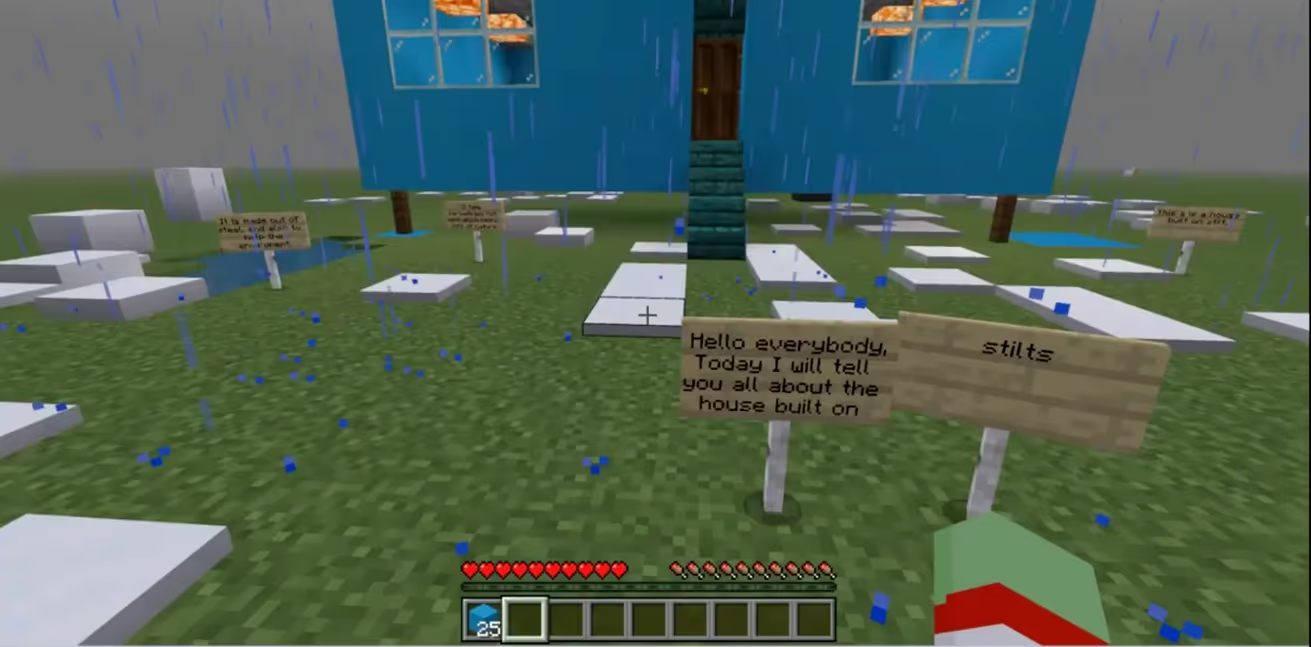
And because tech is woven into how they learn, kiddos naturally build the digital skills they'll need for the future. For example, one of our students created this game after learning about the tundra biome, helping them practice their coding skills while encouraging them to engage with what they learned in a playful, creative way.
How much parent involvement is required?
Some homeschool programs expect parents to do most of the teaching and grading, which is a big-time commitment. Others offer fully structured lessons from experienced teachers so you can step back while your child still gets a high-quality education and support.
Can it adapt to your family’s lifestyle?
This is a big one, especially if your family moves around a lot. The best online homeschool programs let kiddos learn from anywhere and offer multiple time zone options.
Social interaction: Will your child make friends?
A common concern of homeschooling is students feeling isolated. Programs with small, live classes naturally create space for interaction. Kids can build real relationships online through group projects, discussions, and shared routines.
What’s the cost, and is it worth it?
Online homeschool programs range from budget-friendly to premium. When comparing costs, consider:
- What’s included (teacher support, live classes, curriculum, extras)
- Payment options and scholarships
- Long-term value — is it helping your child stay engaged, and will it prepare them for their future?
Bring the best of the classroom to your home
Homeschooling has its challenges — from keeping little learners engaged to balancing work and school. And making sure your child gets a complete, well-rounded education? That’s no small task. But that’s where we come in.
bina brings the cozy classroom environment to your home with live teachers, small class sizes, and lessons tailored to your child’s pace. Your kids get real support, interactive learning, and all the fun of school without the stress of planning lessons or grading papers.
If you’re looking for a fully accredited, engaging online school that makes at-home learning a breeze, book a call with bina today. We’d love to help you find the perfect learning setup for you and your curious kiddo.
Accredited, full-time school for grades K-12
Bring the best of the classroom to your home
See if we're a fit

More to read

What is the best online homeschool curriculum for your child?
Discover the best online homeschool curricula for 2026, from live teacher-led options to self-paced programs. Find the right fit for your family.



The best 7 online accredited homeschool programs in Georgia
You're sold on the idea of having your kiddo learn at home for the flexibility, the personalization, and the fact that your child doesn't have to fit a…



The best 7 online accredited homeschool programs in Illinois
Learning at home sounds appealing to many parents, right? More flexibility, more family time, and a calmer pace. What’s not to love?