Tiny classes, huge impact: 10 benefits of smaller class sizes
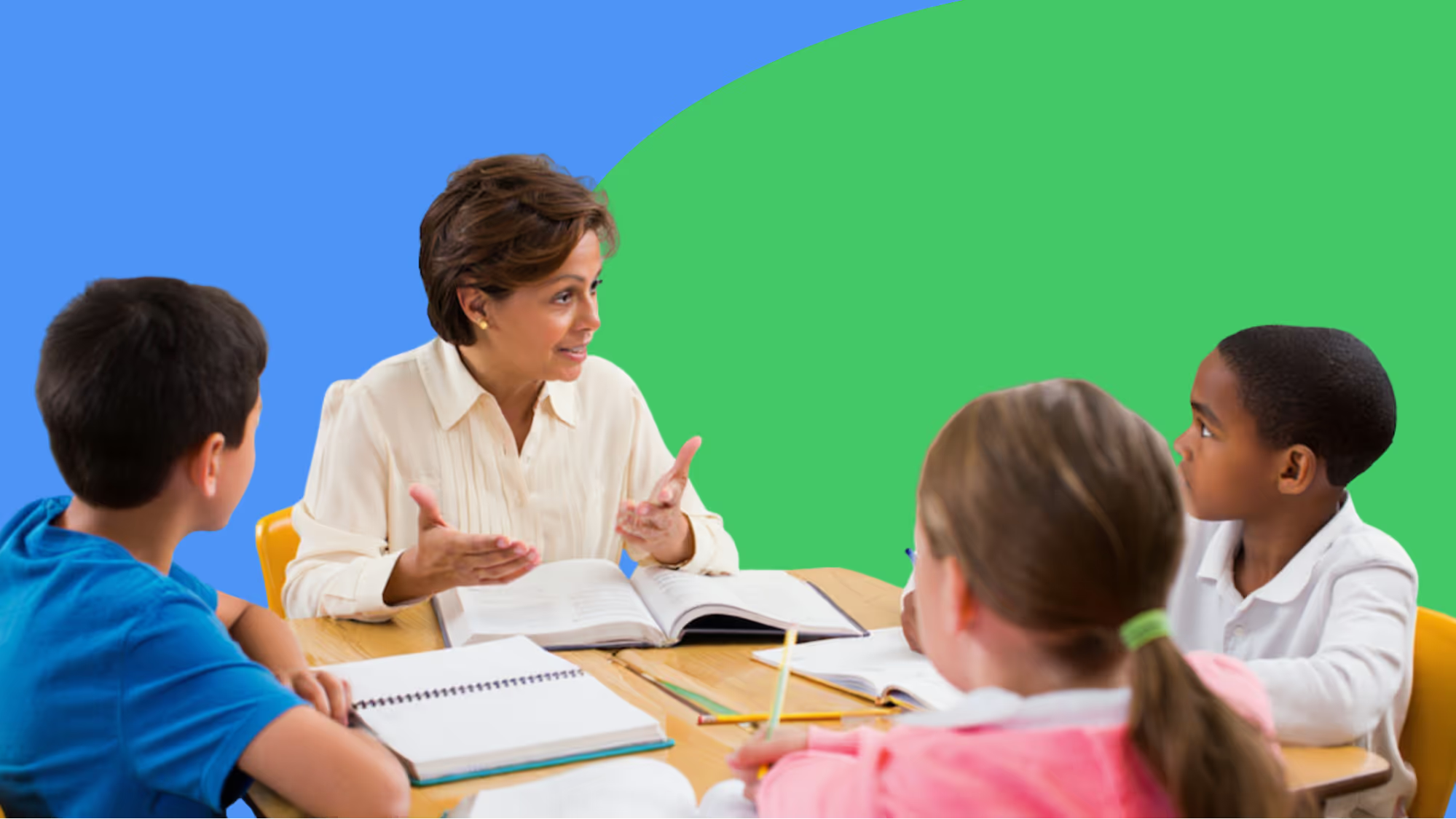
If you’ve ever tried helping three kids with homework at once, imagine doing it with 20. All with different moods, questions, and pencil-sharpening needs. Teachers somehow pull it off daily, but they’re still human. The fewer kids in the room, the more magic (and sanity) there is to go around. That’s why smaller class sizes offer so many benefits.
Small class sizes create a space where every child is seen, heard, and challenged at just the right level. Let’s look at why the benefits of smaller class sizes go far beyond quieter classrooms and how “less” can truly mean so much more.
Why are smaller classes better?
Smaller classes work better for one simple reason: they make learning personal. With fewer kiddos to keep still, teachers can really focus on each child, and lessons stop being one-size-fits-all. Kids feel understood and confident enough to take risks. And that’s when real learning happens.
Research published in the National Center for Education Statistics shows that the average elementary school class in the US has about 19 students. In France, that number rises to 22 in elementary school and 26 in middle school, which is the largest in the European Union, according to Le Monde’s “Europe of Education*”* report. And in Australia, despite years of debate about class-size reduction, EduResearch found that class sizes have barely shifted in a decade, going from 24 to 23 students per class.
That’s a lot of personalities, questions, and needs for one teacher to juggle. Even the most skilled educators can only divide their attention so far. In big classes, quiet kids fade into the background, struggling learners get overlooked, and too much time goes into maintaining order instead of inspiring curiosity.
Smaller classes shift the story. When teachers have the time and space to connect with each student, behavior improves, and learning starts to feel exciting again. They bring calm to the chaos and bring teaching back to the individual.
Here’s what that difference looks like in action.
1. Kids learn more in small groups
Fewer kids in a class means teachers get to do what they’re best at — actually teach. They can slow down when someone needs extra help or speed up when the class is flying. Lessons become more focused, interactive, and effective.
And the research backs this up. Tennessee’s Project STAR found that kids who started school in smaller classes of around 15 students learned faster and performed better in reading and math than those in bigger groups.
And those benefits didn’t fade. Years later, those same kids were still ahead. This was the case not just in academics, but also in terms of their ability to focus and tackle new challenges.
2. Every kiddo gets noticed
In a small class, every child has a name and a voice, not just a seat number. Teachers can see how each student is doing day by day, instead of catching up weeks later when a report card rolls around.
In his study, The Enduring Effects of Small Classes, education researcher Jeremy D. Finn found that the magic of small classes isn’t just about fewer desks. It’s about what happens between them.
With fewer students, teachers can pick up on the small cues: the puzzled look, the half-raised hand, the child who’s about to give up. Lessons shift on the fly, feedback comes faster, and every kid gets seen. The very “smallness” of the class changes how students engage. They participate more, act out less, and feel more connected to learning.
3. A learning environment with fewer distractions
Smaller classes just have a different energy. There are fewer wandering minds and less need to pause teaching to ask, “Please stop poking your friend with that pencil.” Teachers can spot the early signs of restlessness (a whisper here, a fidget there) and bring everyone back on track before things spiral into chaos.
Experts have seen it play out in the data, too. A study in the Organization Management Journal found that students in smaller classes are less likely to act out, thanks to easier class management and stronger teacher-student connections.
That sense of calm makes a real difference since every interruption eats into learning time and focus. One large-scale study from AERA Open found that the average classroom is interrupted more than 2,000 times a year, adding up to 10 to 20 full days of lost learning time. That’s nearly a month of potential learning gone to announcements, distractions, and constant resets. When classes are smaller, those interruptions drop dramatically, and the focus stays where it belongs: on the kids and their learning.
4. More confident participation
In a smaller class, even the quietest kids find their voice. With fewer faces in the classroom, it feels safer to share an idea or admit, “I don’t get it.”
There’s more space for all kiddos to speak up and more time for teachers to listen. Kids ask more questions, take more chances, and start to see that their thoughts matter. Over time, that builds real confidence and strong communication skills that stretch far beyond the classroom.
Researchers have seen this play out in real classrooms. A study published in the British Educational Research Journal found that students in smaller classes had more active exchanges with teachers. Kids were more engaged in lessons overall, especially those who usually held back or struggled to keep up.
5. A stronger sense of belonging
Small classes change how kids feel and how they learn. Instead of a sea of faces, it feels like a team. Friendships form more easily. There’s space for laughter, teamwork, and support — the kind of social glue that helps children feel comfortable being themselves.
Research published in the International Journal of Academic Research found that students in smaller classes report a greater sense of belonging and emotional security, which supports motivation and academic performance.
That sense of connection is what makes small classes the perfect environment for social-emotional learning. Teachers can model empathy, guide cooperation, and help kids understand their feelings. It’s one of the quiet but powerful benefits of smaller class sizes. Kids build confidence and emotional intelligence alongside academics.
6. Stronger student–teacher relationships
When classes are small, teachers can truly know their students. Not just their grades, but their personalities, quirks, and strengths. They notice who lights up during science lessons, who needs a nudge to join in, and who’s quietly mastering new skills behind the scenes.
That closeness builds real trust. Kids feel comfortable asking for help or admitting when they’re stuck, and teachers can respond in ways that are personal and encouraging. It turns learning into a partnership, not a performance.
7. Happier, less-stressed teachers
Ask any teacher what they’d do with an extra hour in their day, and the list would be long. More planning time, better lessons, maybe even a proper lunch break.
Smaller classes make that possible. With fewer students to manage, teachers can think ahead instead of constantly playing catch-up. The classroom setting feels calmer, and the job itself, more sustainable.
A large-scale study in BMC Public Health of over 5,000 Japanese teachers found that reducing class sizes by just five students cuts working hours by nearly three hours a week. And when teachers have the headspace to be patient, creative, and present, kids pick up on it. The whole room runs more smoothly.
8. More learning time, leading to better academic outcomes
When the class isn’t packed to the brim, lessons have room to breathe. Teachers can linger on tricky concepts, explore ideas more deeply, and give each child the personalized attention they need to understand.
There’s also more space for creativity, like science experiments, class debates, art projects, and those unexpected questions that lead somewhere new. Instead of rushing to get through the syllabus, teachers can slow down and make sure real learning sticks.
9. Easier classroom management
Picture a class where everyone’s paying attention. Not because they have to, but because they can. That’s what smaller groups make possible. When there are only a dozen curious faces instead of thirty, it’s easier to keep the entire group engaged.
Fewer students means the energy stays calmer, routines feel natural, and everyone knows what’s expected. Instead of spending half the lesson managing noise or settling disputes, teachers can keep the focus where it belongs: on learning, creativity, and connection.
10. A more personal, connected school experience
When class sizes stay small, school stops feeling like a crowd and starts feeling like a community. Most kids feel comfortable being themselves in smaller, intimate groups. There’s less pressure to act a certain way or worry about being judged by peers when school days involve meeting with the same small group of friends. It’s the kind of learning environment that’s calm and close-knit, where children want to learn and genuinely enjoy being part of something bigger than themselves.
That’s the magic of small class sizes: a school experience that feels both personal and full of connection.
How bina embraces small class sizes
At bina, small classes are the starting point for everything. Each class has just six to eight students and two educators, so there’s plenty of space to truly focus on each kiddo.
Because the groups are so small, teachers can shape every lesson around the kids sitting in front of them. They know each student’s learning preferences, energy, and strengths, and can spot the moments when someone needs a challenge or a little extra time to catch up.
If a child needs more support, our teachers slow down, explain things differently, or add in one-on-one time without anyone falling behind. It’s learning that moves at the pace of the child, not the clock. It’s thoughtful teaching, made possible by design, and it’s what makes bina different.
FAQs
Do children learn better in smaller groups?
Yes, most kids do learn better in smaller groups. Teachers have more time to focus on each child, which leads to stronger understanding, confidence, and engagement. Kids participate more, ask more questions, and feel more connected to their learning.
What are the disadvantages of a small classroom?
The main drawback is cost since smaller classes require more teachers and space. But most researchers agree the benefits far outweigh the expense: calmer classrooms, happier teachers, and kids who learn more deeply and confidently.
Why is it better to have fewer kids in a class?
With fewer students, teachers can tailor lessons to fit each child’s pace and needs. There’s more time for meaningful feedback, and kids feel comfortable speaking up without getting lost in the shuffle.
Why should reduced class size lead to increased student achievement?
Because when teachers spend less time managing student behavior and more time teaching, everyone gets more attention and support. That extra time and care translate directly into better learning outcomes and stronger academic growth.
Accredited, full-time school for grades K-12
Bring the best of the classroom to your home
See if we're a fit

More to read
Interdisciplinary Learning Helps Kids Remember More
Discover how interdisciplinary learning enhances children's memory retention and fosters a love for knowledge. Explore the benefits of this integrated teaching approach that connects subjects for deeper understanding and engagement.

Six reasons we love small class sizes
At bina, we cap our class sizes at 6 students. Here’s a list of 6 major benefits to having such small classes.

What is an online alternative school, and is it right for your child?
Wondering if an online alternative school is right for your child? Explore types, benefits, and real examples for kids who need a different way to learn.