7 project-based learning examples for inspiring young minds
What if going to school meant designing a sustainable city or performing a play based on a historical event?
So, instead of just listening to lessons, Olivia gets to build a diorama of her favourite habitat, and Ethan and his teammates are challenged to make a board game using addition and subtraction.
That deep engagement, that self-led exploration — that's the heart of project-based learning. It's about empowering kids like Olivia and Ethan to become active problem-solvers and passionate learners.
And it's easier than you might think to implement project-based learning into the classroom. Let's explore seven PBL examples that will truly inspire your kiddos.
What is project-based learning?
Imagine students not just reading about history but creating a documentary; not just studying science, but building a self-sustaining mini-ecosystem. Project-based learning (PBL) brings learning to life by connecting classroom concepts to real-world applications.
In PBL, students are empowered to explore complex questions and problems that exist in the real world. This hands-on approach makes learning more relatable and meaningful as students take ownership of their learning.
Project-based learning vs. traditional learning
Why has PBL become such a hot topic in education over the past few decades? And how does it differ from traditional learning? Let’s take a look at how education has changed.
Traditional learning
Traditional learning focuses more on rote memorisation and passive learning through lessons and textbooks. Students have less agency when it comes to what and how they learn, and less opportunity to ask questions and explore their own interests.
It emphasises theoretical knowledge, meaning learning is often less connected to practical application. Traditional assessment is often based on standardised tests, which may not fully reflect the depth of student understanding.
Traditional learning is less about active participation and collaboration and more about individual work and learning.
Project-based learning
Project-based learning fosters a deeper understanding by encouraging students to actively explore real-world issues. Students learn by thinking about problems, creating solutions, and communicating their ideas. So, instead of passively following instructions, they become active participants in the learning process.
By immersing students in hands-on activities, PBL cultivates inquiry, problem-solving, and critical thinking. Students are challenged to ask questions, investigate, and develop their own solutions.
PBL is a student-centric approach. Teachers act more like facilitators than lecturers. They don't simply provide answers but guide students through the projects.
It also offers a more holistic way to assess what kids are learning. It’s not just about test scores — the process, teamwork, final product, and presentation are all important and taken into consideration.
How project-based learning benefits students
The skills your students need to thrive in the 21st century are different from those needed in the past. PBL prepares them for the future by helping them:
Develop skills for the future
In today’s world, kids need more than memorised facts and textbook knowledge. They need to develop critical thinking skills, problem-solving skills, and creativity. Project-based learning empowers them to do just that.
Learning based on real-world situations teaches students transferable skills — skills that they can apply in their lives. It’s more in line with how adults in the working world gain and use knowledge.
Research proves that the PBL framework has a positive impact on students’ creativity and competitiveness. Through PBL, they are challenged to solve problems, develop innovative solutions, and adapt to new situations. This prepares them to do the same in everyday situations outside the classroom, too.
Foster deeper understanding and retention
While education shouldn’t be all about test scores, PBL does improve academic performance. Studies have shown that students in PBL classrooms outperformed their peers by eight percentage points on science tests.
It has to do with thedeeper engagement students experience. Since students are encouraged to research real-life issues and explore them from multiple angles, they have a meaningful learning experience and more easily connect to the learning material.
Active learning significantly improves both academic achievement and learning retention compared to teacher-led learning because students lead their learning process.
Make learning fun and engaging
Studies show that 25% to 54% of Gen Z K-12 students don’t feel engaged at school, but bina believes that school should be fun and engaging.
PBL encourages students to engage deeply and actively through meaningful and passionate projects that spark interest and drive.
When students take ownership of the project, they are more invested in the learning process. It promotes curiosity, which acts as an intrinsic motivation — so learning itself becomes a reward.
Improve teamwork and communication
Many PBL projects involve collaboration. Students learn how to work together to come up with solutions, navigate different perspectives, and develop teamwork skills.
Through collaborating on projects, they also learn effective communication skills and conflict resolution skills — all very important skills for the future.
But that’s not all. Students learn to express and convey ideas through different media, such as verbal presentations, written reports, and digital media.
Key elements of project-based learning
What makes project-based learning so effective? It's a combination of key elements that work together to create a transformative learning experience:
Challenging problem or question
PBL starts with a compelling, open-ended question or problem in the real world. It should be engaging and relevant but complex enough to require research and critical thinking that’s age-appropriate.
At bina, many of our projects are bound to one of the UN's Sustainable Development Goals (SDGs). These are 17 global goals designed to address challenges facing our planet and people, such as poverty, inequality, and climate change.
Sustained inquiry
Sustained inquiry starts with kids asking questions. Then, a deep and sustained process of investigation follows. Students research, collect data, and analyse information to understand the driving question or challenge.
This process helps them develop research skills, learn to evaluate information sources, and build their knowledge base.
Authenticity
A fundamental principle of PBL is connecting learning to real-world contexts, issues, and applications. Think environmental issues, current events, or real-world professions.
Learning becomes more meaningful, relevant, and purposeful as students see how their learning applies to the real world and understand why it matters.
Student voice and choice
Students lead their own learning — they have a voice and choice in the project process.
They can often choose their project topics within the curriculum's themes and explore different research and presentation methods. This gives students more agency in a framework that the teacher provides.
Reflection
A big part of PBL is reflection. Students are encouraged to think critically about their learning process and outcomes.
They reflect on what they have learned, how they have grown, and what they could have done differently. Self-assessment cultivates a growth mindset that they can carry on into their everyday lives.
Critique and revision
In PBL, there's a heavy emphasis on feedback and revision. Students receive constructive criticism from their classmates and teachers and use this feedback to improve their work.
This is an important aspect because it shifts the perception of mistakes being bad and scary to being a normal part of the learning process.
Public product
PBL projects often result in a presentation, exhibition, or digital portfolio. Students decide how to present their projects and share their learning with a wider audience.
Having a public stage and audience gives their work a purpose beyond just a grade. It’s a chance for students to showcase their achievements and take pride in their work.
7 project-based learning examples to try in the classroom
Sounds exciting, doesn't it? Try these seven project-based learning examples to get your kiddos started:
1. Kindness campaign
We all want to teach our children to be kind. So, why not empower them to make a difference with a hands-on project like a kindness campaign?
Students will need to plan and execute a campaign to promote kindness within their school, local community, or simply in their home.
It could be organising a community art project about kindness. They’re required to observe their surroundings, brainstorm ideas, create marketing materials, and organise acts of kindness.
This project not only fosters social responsibility but also builds social-emotional learning (SEL) skills. It allows students to make a positive impact and see their contributions make a difference.
2. Bug hotel
Want a fun way to learn about the incredible world of insects? A bug hotel is perfect! Students will design and build a habitat (bug hotel) using recycled materials.
They’ll research insect traits, habitats and ecosystems and observe and document the insects that visit their hotel. Students learn to observe, collect data, and practice scientific documentation.
Creating a habitat from scratch makes learning more interactive and memorable. It’s also a good way to get children to connect with and appreciate nature.
3. Voices of the rainforest
Travel to the Amazon rainforest and explore the amazing biodiversity and the challenges it faces today. Students study and research indigenous communities, issues like deforestation, and real-world solutions.
As a final project, our students created digital slideshows sharing what they learned about rainforest ecosystems, conservation strategies, and protecting biodiversity.
Each student also wrote a poem about the beauty and complexity of the rainforest and the urgency of preserving it for future generations.
This project seamlessly blends research, creativity, and technology, while encouraging students to become advocates of nature.
4. Playground for everyone
A big part of childhood memories are made in playgrounds. A playground for everyone challenge asks students to design a space where every child can create those memories.
They’ll need to design a playground that is accessible and inclusive for all children. To do this, they’ll consider different abilities and needs, research, design, and present their playground concepts.
How would someone in a wheelchair get to the playground facilities? How would a child with visual impairments interact with the playground?
It’s a powerful way to foster empathy and inclusivity. It also introduces students to design thinking, encouraging them to be creative and think outside the box.
5. Wildlife conservation board game
Most kids love animals — leverage this passion and have them create a wildlife conservation board game.
This project combines the best of both worlds — learning with play. Students will learn about wildlife conservation and the challenges animals face while also applying their knowledge to design a game.
Gamification makes learning more interactive and engaging and helps with knowledge retention.
Students will engage in research, game design, and playtesting, creating everything from game rules and boards to cards and playing pieces.
6. Life showcase
How different would life be for someone living in the Arctic tundra or the Sahara Desert? The life showcase project invites students to step into others’ shoes by learning about the people, cultures, and ecosystems in different environments.
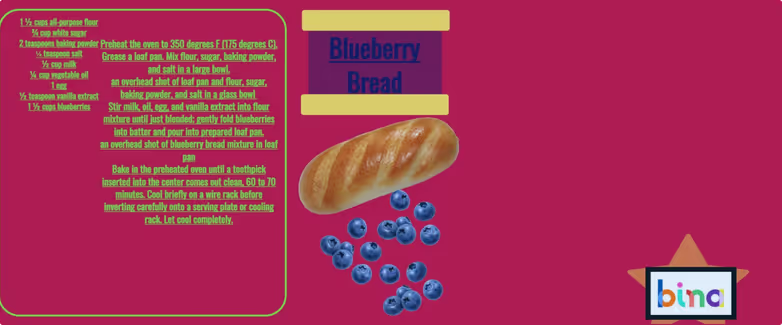
In our Tundra Biome, our students studied the coldest and most extreme tundras on Earth. They examined different types of tundra dwellings, architectural adaptations, and even traditional foods eaten by communities living in these climates.
They showcased a multimedia presentation as a final project, involving their own tundra-inspired recipe, a 3D model of a tundra dwelling, and a soundtrack that evokes feelings of life in the tundra.
7. Global news report
To help children understand the world around them, ask them to research current events and create a global news report. It could be presented in any format, including video, written articles, or digital presentations.
But this project goes beyond simply reading headlines — it challenges students to become investigators of global issues.
By taking on the role of news creators, students learn to analyse information critically, understand diverse perspectives, and communicate complex ideas.
What project-based learning looks like at bina
bina takes project-based learning seriously. We want our children to take charge of their own learning, to become active explorers and confident investigators, and to be prepared for the future.
That’s why PBL is a core philosophy embedded into our curriculum. In addition to implementing some of the examples listed above, our students work in biomes, which are based on real thematic worlds like the rainforest or the savanna. Then, they design and develop a PBL project that showcases what they have learned in their biomes.
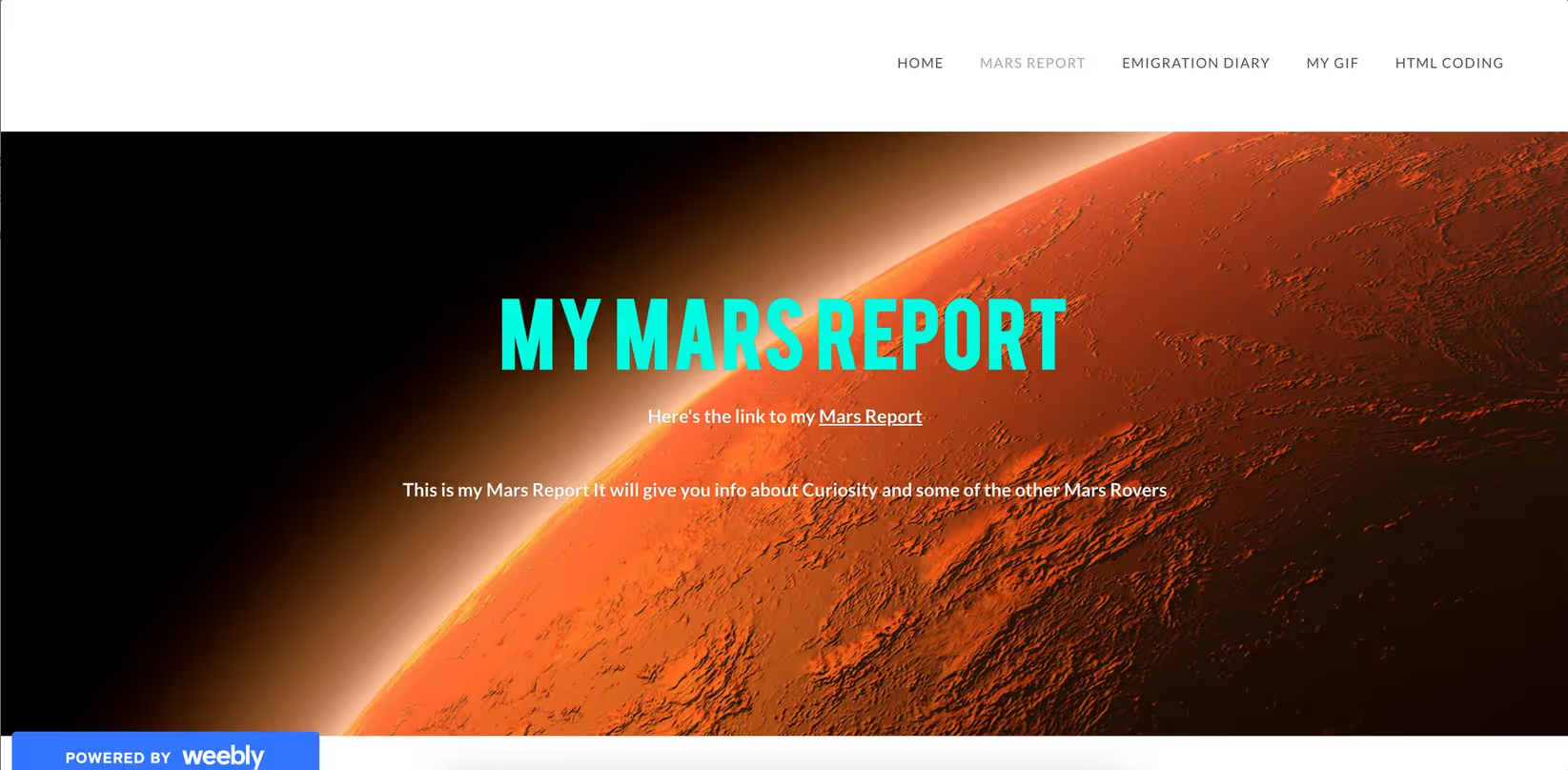
Natalie, one of our upper-elementary students in the desert biome, coded and designed a website about moving to Mars. After learning about the extreme conditions of deserts on Earth and Mars and immigration history, she created a first-person narrative about establishing a Martian colony. Her project was a beautiful integration of science, history, literacy, and technology.
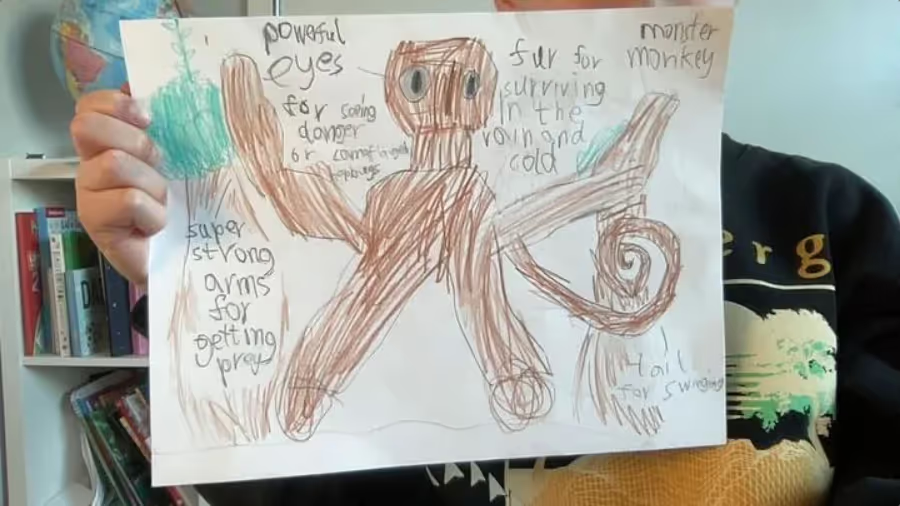
During the rainforest biome, Dina explored how evolution, inheritance, and adaptation shape the natural world. Then, she designed her own imaginary creature that would survive in the make-believe Cloudvine rainforest. Besides getting creative, she also applied her learning to create specific adaptations that her creature would need in that environment. In doing so, complex biological concepts came alive in a fun and meaningful way.
Our students are always empowered to apply their learning and find creative solutions. In the process, they get to witness their impact in the classroom, the community, and even the world.
So, come explore the possibilities of project-based learning at bina.
Accredited, full-time school for grades K-12
Bring the best of the classroom to your home
See if we're a fit
More to read
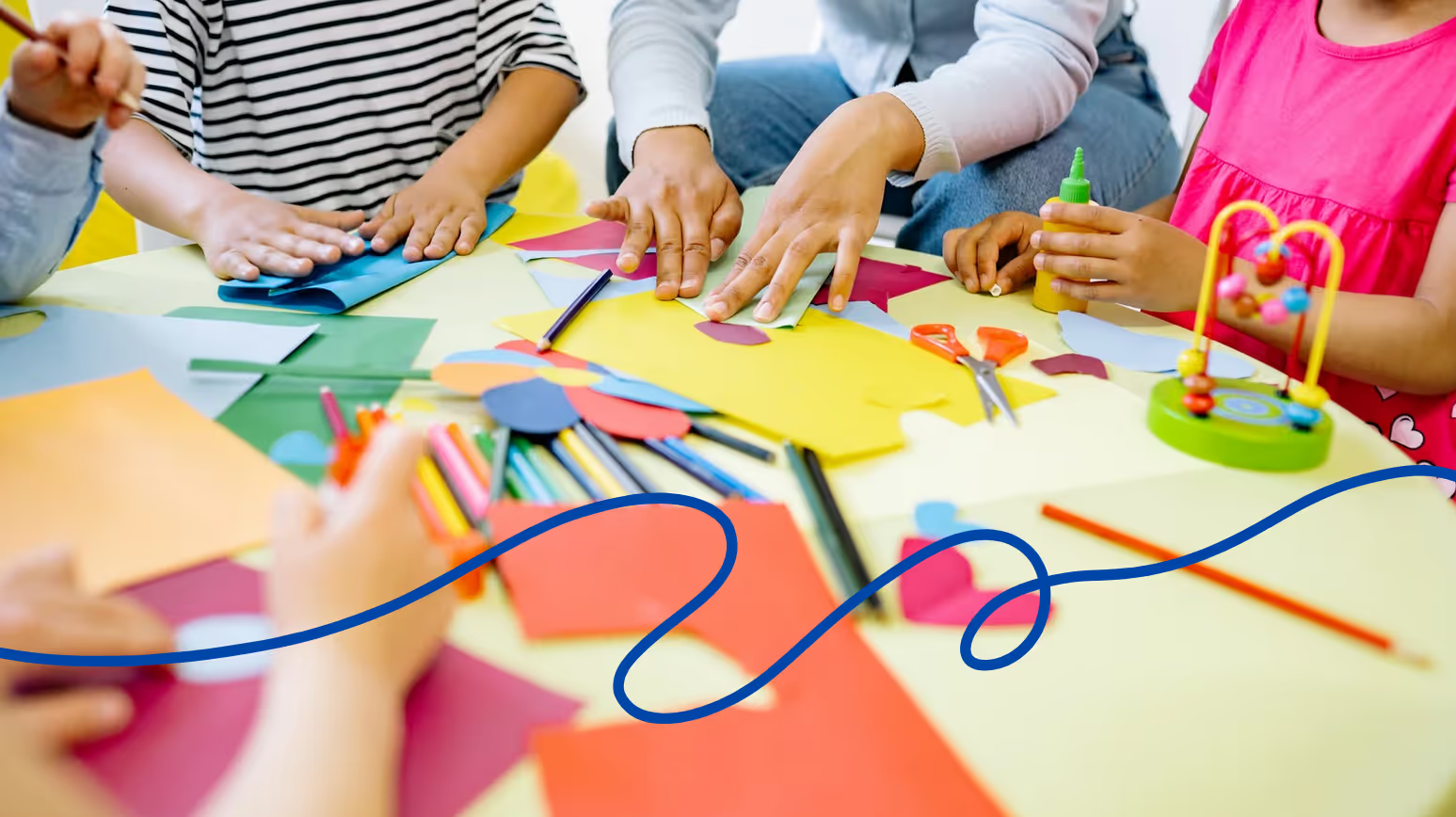
Project-based learning in elementary school: Why it works
Discover how project-based learning helps elementary kids thrive with real-world projects, hands-on lessons, and deeper engagement.

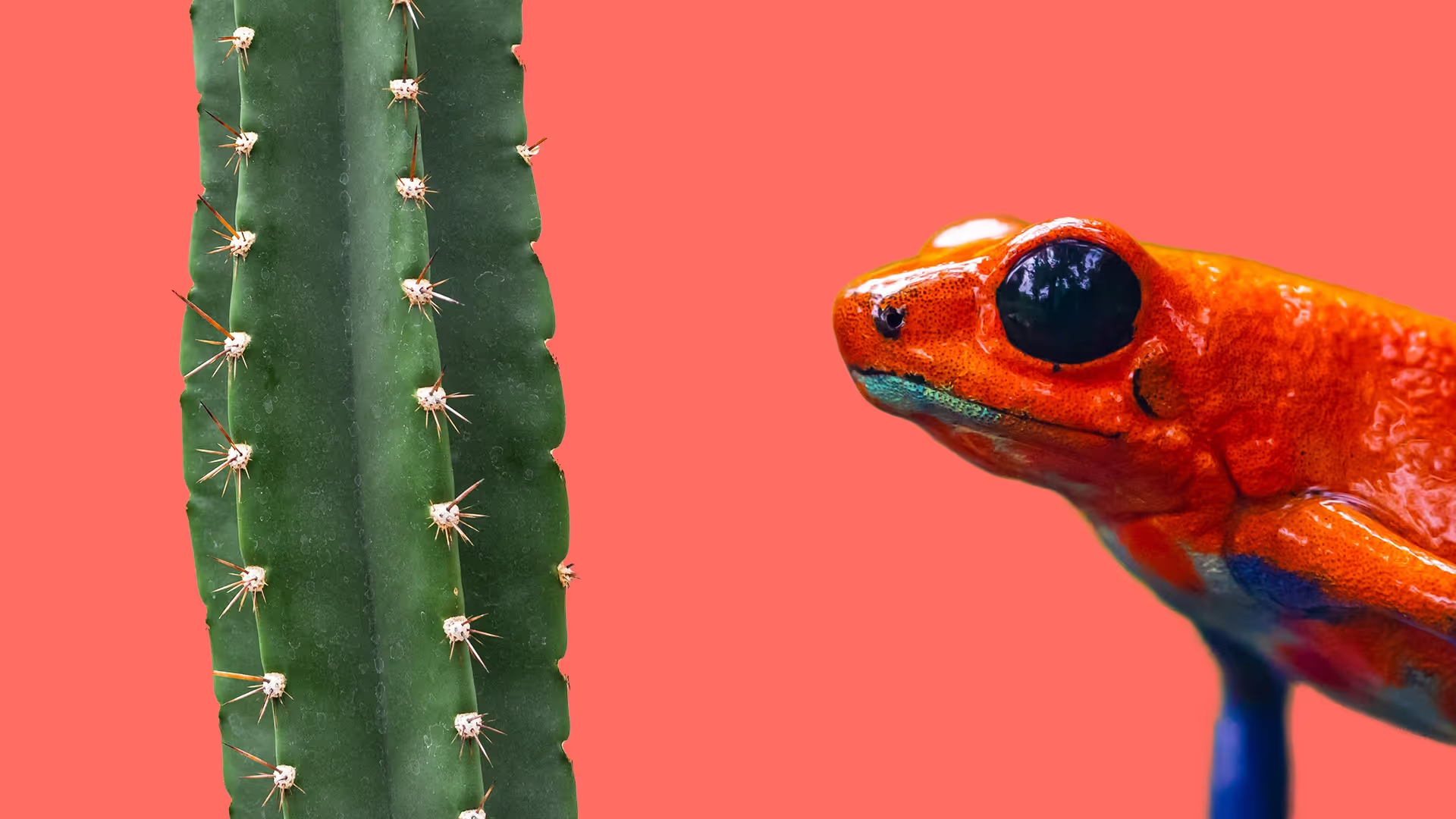
Project-based learning: Exploring authentic questions
Project-based learning is a cornerstone of our curriculum. Our students focus on real-world questions that tap into what they’re actually curious about.

Growing life learners: 7 benefits of project-based learning
Discover the benefits of project-based learning for growing lifelong learners who can apply knowledge and think critically to produce real outcomes.