Alternative Schooling Options for Modern Families

The world our children are growing up in is rapidly changing. The knowledge and skills that shaped our childhoods are no longer the ones today’s kids will need tomorrow. They live in a different world - one that's more connected, more complex, and moving at an unprecedented speed.
Yet, school hasn’t quite kept pace. Traditional education still follows a model built for an era when the future was more predictable, and the goal was to prepare children for a single type of life and career. Now, families are asking what kind of learning will help their children stay curious, confident, and adaptable. That’s why we’re seeing more families turn to alternative education options—because they’re seeking learning environments that reflect the world their children will live in: flexible, digital, creative, and global.
The Rise of Alternative Schooling Options
While traditional education achieved extraordinary things, like expanding literacy and access to knowledge worldwide, it was built for an era that prized standardization and efficiency above all else. Today’s world asks something new of our children: adaptability, emotional intelligence, and global awareness. But many schools remain tied to legacy structures like fixed grade levels and one-size-fits-all assessments. These systems were designed for scale, not for how humans truly learn.
Alternative schooling offers a way forward, placing the learner, rather than the system, at the centre.
What alternative schooling options are available to you in 2026?
1. Online Learning Programs
Online-first schools reimagine what structured learning can look like in a digital space. At bina, for instance, our learners join small, globally connected peer groups. Each class is live, collaborative, and guided by educators who know each child well. Everyone learns in real time, together, and we teach thematically. Every six weeks, learners explore a new biome that anchors subjects like science, geography, history, and art. Lessons vary in length depending on age and stage.
We practice continuous evaluation instead of relying on standardized testing, and break learning into small, meaningful steps, tracking growth with detailed insight. A quarter of every day is devoted to social-emotional learning. During that time, we focus on relationships, emotional awareness, decision-making, and reflection. “We don’t just expect kids to figure out how to be good humans by accident,” says Noam. These capacities aren’t extras. They’re essential to learning and growing. And learning continues beyond the screen. We support families with ideas for offline play, movement, and connection. We recommend local activities, create opportunities to meet other families in person, and host optional camps to help kids develop both digital social skills and physical social skills. At bina, we believe learning should be meaningful and challenging, but also joyful. As Noam says, “It better be challenging fun. Hard fun. But it has to be fun.”
Sora is another example of an online school that focuses on interactive, collaborative, instructor-led online courses, relying on project-based distance learning with guidance from expert mentors. Learners design their own projects, work in collaborative “houses,” and are assessed based on real-world skills and portfolio development. Khan World School is an example of an online school that blends mastery-based learning with Socratic seminars. It gives students access to both asynchronous content and deep, discussion-led exploration.
These models offer global access and flexible scheduling, combining self-paced content with opportunities for deep, guided dialogue. For families who want a modern approach to education, especially those who travel or want to step away from traditional pace and structure, these programs can be an excellent fit. Most online schools are primarily asynchronous and independent, and as such, they work best for students who are curious and self-motivated. But this can often require stronger parental involvement to ensure social development and routine are still in place. The bina School, on the other hand, focuses more heavily on collaboration and synchronous learning. This can help kids feel more involved and set a clearer, more structured path for learning, but it necessarily means following a stricter schedule than your more typical online schools.
2. Microschools
Microschools offer small, personalized learning communities that often operate independently from traditional school systems. Typically serving fewer than 20 students, they prioritize individualized instruction, flexible pacing, and strong relationships between educators and learners.
A growing number of microschools are making this model more accessible to families worldwide. For example, Barcelona-based Learnlife brings a future-focused approach to life skills, wellbeing, and project-based learning, and is expanding its network of learning hubs across Europe and beyond. In the U.S., KaiPod Learning supports homeschoolers and online learners with in-person pods and dedicated learning coaches, blending structure with flexibility at a more affordable price point than one-on-one academies.
The bina School offers many of the same benefits as a microschool, from small group sizes, to individual attention and collaborative learning. Classes are led by trained educators with shared pedagogical frameworks and quality oversight across the board. And because it’s fully online, there are no location-based limits. Families anywhere can access bina’s community, curriculum, and daily live sessions, combining the warmth and personalization of a microschool with the structure and reliability of a broader institution.
The microschooling model offers a nurturing alternative to large, traditional classrooms, prioritizing personalization, flexibility, and close-knit communities. For many families, these schools create an environment where children feel seen and supported. The tradeoff is that quality can vary across different setups, depending on the educators and resources available. Parents considering this path should look closely at each program’s approach, structure, and long-term support.
3. Homeschooling
Homeschooling gives families the freedom to design their own learning journey, choosing the curriculum, setting the schedule, and aligning the experience with their values, lifestyle, or beliefs. For many families, especially those seeking more time together or a less conventional rhythm of life, it’s a chance to make learning feel personal and intentional. Children can follow their curiosity without pressure, and learning can happen through everyday life, not just formal instruction.
But that same freedom can also become a challenge. With so many curriculum options, learning philosophies, and scheduling decisions to navigate, it can be hard to know what’s “enough”. Caregivers take on an enormous role—not just as parents, but as educators, planners, and facilitators. And without a clear educational framework, or roadmap, that ensures consistent exposure to foundational skills and broader competencies, children may struggle to meet the expectations of future academic, professional, or social settings.
Education isn’t easy, and homeschooling isn’t always simple. Families exploring this path should look for support systems that help ensure both the joy and the rigour of learning are present.
4. Hybrid Models
Hybrid schools combine the flexibility of independent learning with the connection and structure of in-person experiences. These models are growing in popularity among families who want more autonomy than traditional schools offer, but still value a shared learning environment. One standout example is Acton Academy, which blends its online core curriculum with in-person Socratic discussions, real-world projects, and hands-on experiences. Students are given significant responsibility for setting their own goals, tracking progress, and collaborating with peers. Instead of traditional teachers, adult “guides” help facilitate learning without dictating it.
For families who want the benefits of innovation without losing the social fabric of school, hybrid models can offer a compelling middle ground. These schools support autonomy, collaboration, and purpose-driven learning, while still fostering relationships and routine. However, because hybrid models vary widely, parents should look closely at how each school balances structure with freedom, and whether their child thrives with that balance.
5. Montessori Schools and Waldorf Schools
The Montessori Schools and the Waldorf Schools are two of the most established alternative education models, with over a century of practice behind them. Both prioritize whole-child development and are built around the idea that children learn best when they are given time, space, and autonomy to explore the world on their terms. Montessori classrooms emphasize hands-on, self-directed learning in a calm, structured environment. Waldorf schools take a more arts-and story-driven approach, focusing on imagination, play, and creativity in early education. Technology is intentionally limited, especially in the early years, to give children time to develop physical, emotional, and social foundations through movement, rhythm, and narrative-based learning. Teachers often stay with the same group of students for several years to foster deep connection and trust.
These models offer nurturing, developmentally aligned environments that honour a child’s natural curiosity and pace. Montessori classrooms are well-suited to learners who thrive with independence and hands-on exploration, while Waldorf schools provide a creative and imaginative foundation for education. However, both approaches may pose challenges for families seeking more structure or academic alignment with conventional standards. Montessori’s open-ended curriculum can sometimes leave gaps in areas like math or science, while Waldorf’s slower academic pacing, especially when it comes to reading and writing, may delay core skill development. For families considering these options, it’s important to weigh the benefits of a gentle, child-centred philosophy against the need for more traditional academic benchmarks later on.
The Future of Education: Choosing the Right Path for Your Family
As more families look beyond traditional systems, the question isn’t just what we’re moving away from. It’s what we’re moving toward. So, what does future-ready, non-traditional schooling look like?
We believe it starts with seeing each child as an individual. Kids learn in different ways and at different paces. Education should reflect that. While we remain mindful of grade-level expectations, thoughtful grouping by developmental stage and skill level helps create learning environments where children feel both supported and challenged. It’s about finding the right fit, not just by age, but by readiness.
The future of education should also be built around how humans really learn. At bina, we draw on three core approaches to make that happen:
- Project-based learning, where students engage with real-world problems across disciplines, tying knowledge to action and building skills that last.
- Play-based learning, especially in the early years, where creativity, movement, and joyful discovery build everything from empathy to motor skills.
- Theme-based learning, which connects subjects around a central concept. Our learners explore “biomes” like rainforests or deserts every six weeks, integrating science, history, geography, and art into one immersive experience.
As we ready our children for the world of tomorrow, social-emotional learning shouldn’t sit on the sidelines. Skills like communication, self-awareness, and resilience are foundational, and they’re most powerful when they’re woven into the everyday fabric of learning. We also see enormous value in helping children grow up with a global perspective. When learners connect across time zones, cultures, and backgrounds, it naturally fosters empathy, openness, and a sense of belonging to something bigger than themselves.
The role of the educator is also facing a natural evolution. In a future-ready classroom, teachers should act less like instructors and more like guides, supporting inquiry, encouraging reflection, and helping learners take ownership of their path.
Thinking It Through: What Kind of Learning Environment Fits Your Family?
Once you start considering the different alternative schooling options available, it helps to reflect on what kind of environment will best support your child’s growth and your family’s needs. Here are a few guiding questions to help you get started:
- **How much structure does your child need to feel safe and focused?**Some learners thrive with open-ended freedom, while others need more routine. Would your child benefit more from a freer, project-based environment or the predictable rhythm of a more traditional model?
- **How do they learn best—by doing, by listening, through movement, through play?**Understanding how your child absorbs information can help you identify the right fit. Would a theme-based or play-based program unlock their curiosity? Or do they need more individualized support?
- **What role do you want to play in their learning?**Some models ask more of parents in terms of planning, presence, and facilitation. Others offer more hands-off guidance. Consider how much time and energy you can commit.
- **What kind of social environment is important to you?**Does your child need regular peer interaction, or do they feel more comfortable in smaller groups? Would they enjoy being part of a global learning community?
- **What values do you want their education to reflect?**What matters most to your family? Academic excellence, emotional intelligence, global citizenship, creative expression? Something else?
- **Are you looking for flexibility to travel or relocate?**If you move often or want to incorporate travel into your child’s life, models with digital or hybrid elements may offer the consistency and continuity you need.
- **Do you have access to a supportive learning community?**Connection matters for both kids and caregivers. Does the model you’re considering provide opportunities for friendships, mentorship, and collaboration?
- **Is your child currently thriving, or are they struggling with traditional systems?**If your child feels disengaged or anxious in a conventional setting, try to understand why. Are the classes too big? Does the subject matter move too slowly or too fast?
The Shift Starts with Us
Families today are navigating a world that looks very different from the one we grew up in. It’s only natural to ask whether the education models that shaped our childhood still make sense for our children. More and more, the answer is: not always. And that reality begs the question— what does my child need to grow, thrive, and stay curious?
For some families, that means exploring new approaches and ideas. There is no one-size-fits-all attitude to learning. The truth is that it’s all about identifying what’s right for each child and acting in their best interest.
From there, the path starts to take shape.
Accredited, full-time school for grades K-12
Bring the best of the classroom to your home
See if we're a fit
More to read
Alternative school meaning, explained for parents
From online learning to project-based models, find out what alternative school really means, and why more families are choosing this flexible path.

Private homeschool programs or private online school?
Considering private homeschool programs? Learn why more families are choosing private online schools for a structured and accredited education.
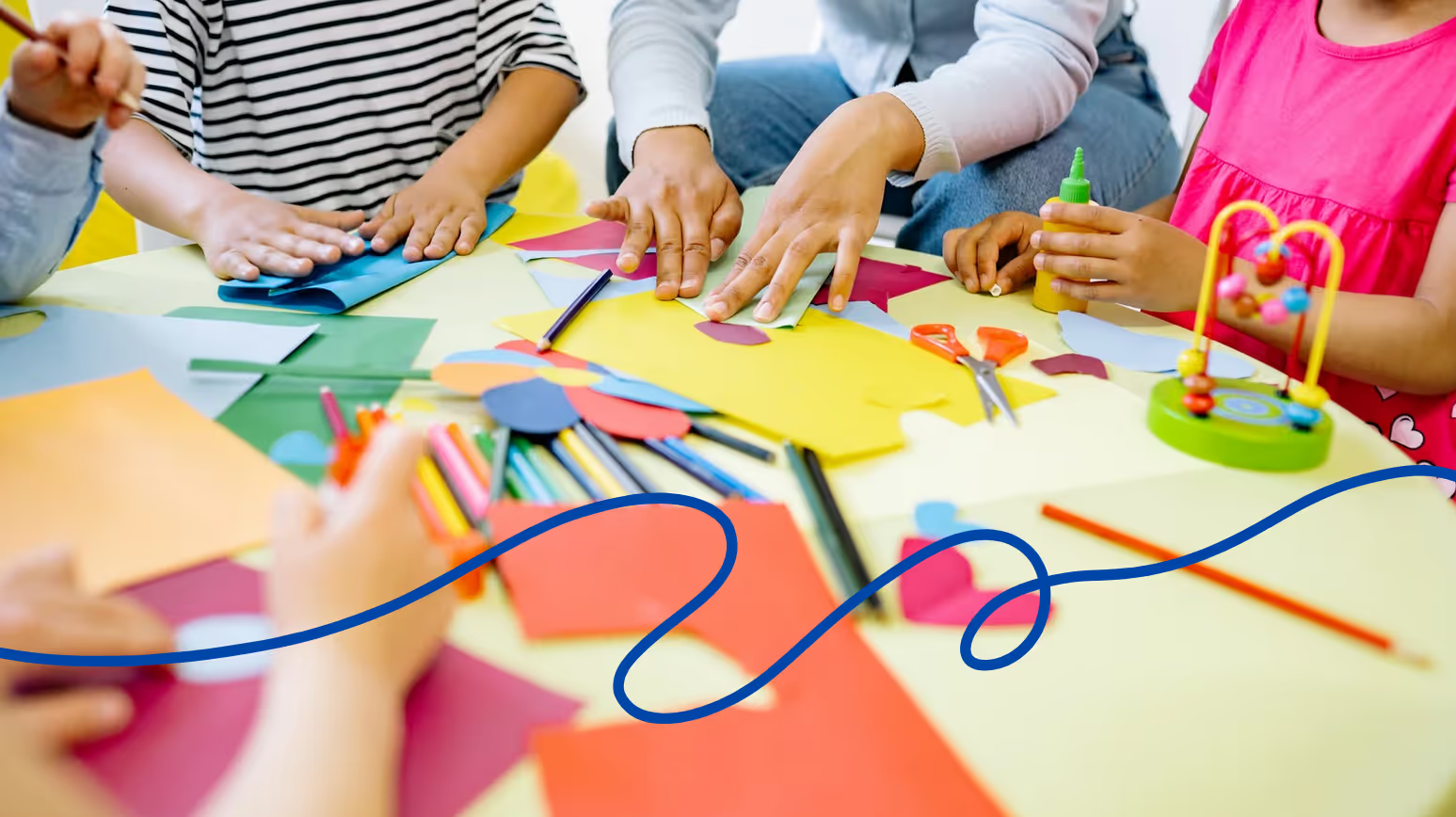
Project-based learning in elementary school: Why it works
Discover how project-based learning helps elementary kids thrive with real-world projects, hands-on lessons, and deeper engagement.