Montessori homeschool curriculum explained: Is it right for your family?
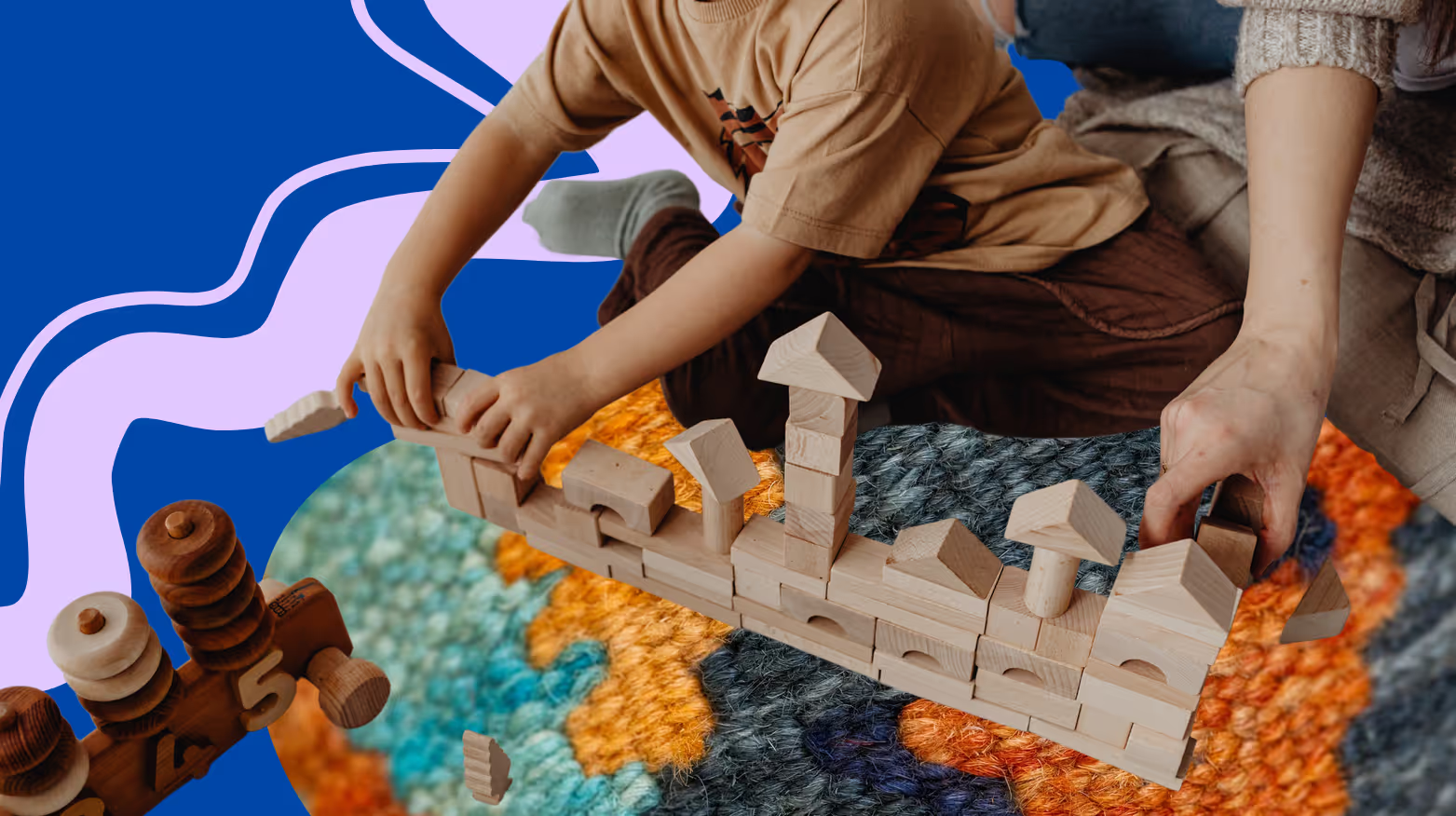
Montessori homeschooling is calm, hands-on, and kid-led. No rigid schedules, no busy work, and no gold stars required. It’s a great fit for families who want a more natural, flexible way for their kids to learn at home.
Sounds great, right? But it’s not always easy to pull off. Between the cost of high-quality materials and the sheer time investment it takes to do it well, it can quickly become overwhelming. Montessori might look simple, but it’s built on deep expertise. Most certified teachers train for over a year, something that’s hard to replicate as a parent without a serious time commitment.
In this guide, we break down what a Montessori homeschool curriculum looks like, who it’s ideal for, and where it might fall short. We’ll also show you other outside-the-box options, so you can decide if Montessori at home is right for your family.
What is Montessori education?
Montessori education is all about trusting kids to lead their own learning. Instead of sitting through long lessons or memorizing facts, children explore the world through hands-on activities, real-life tasks, and a carefully prepared environment.
Developed by Dr. Maria Montessori over a century ago, the method is built on a few core ideas:
- Independence – kids choose their work and move at their own pace
- Hands-on learning – materials are tactile, not digital or abstract
- Freedom within limits – children are free to explore, but within clear boundaries
- Mixed-age classrooms – kids learn from and with each other
- Respect for the child – educators observe and guide, rather than direct
Montessori encourages deep concentration, practical life skills, and self-motivation. It’s not about rewards or grades but about creating space for kids to discover, try, and grow on their own terms.
While Montessori classrooms are often associated with private preschools, many parents are now bringing this method into their homes. They adjust the philosophy to fit their family’s rhythm, space, and resources.
What is in a Montessori homeschool curriculum?
Montessori homeschooling is about building a home environment that encourages independence, exploration, and hands-on learning. The curriculum looks more like a collection of thoughtfully chosen materials and activities than a formal syllabus.
You won’t find bells ringing or kids sitting in rows. Instead, there’s a focus on flow, calm, and self-direction.
A typical Montessori homeschool setup focuses on these key areas:
- Practical life – everyday tasks like cooking, cleaning, and organizing
- Sensorial – activities that help kids refine their senses, for example, sorting objects by texture or sound
- Math – concrete materials like number rods and bead chains
- Language – phonics-based learning, storytelling, and writing
- Cultural subjects – geography, science, art, and music woven into everyday life
The parents’ role is to observe and guide, not micromanage every moment. They set up the environment, offer choices, and observe how their child engages. And while some families use a full Montessori homeschool program, others mix and match materials to suit their child’s interests.
The beauty of Montessori at home is that it’s flexible. But that flexibility also means you become the architect of your child’s learning experience.
What does a day of Montessori homeschooling look like?
A Montessori-style day is child-led and gently structured, with a focus on deep, focused work rather than bouncing from subject to subject. Days don’t rely on rigid schedules, but they still have rhythm.
Here’s a snapshot of what a Montessori homeschool day might look like:
09:00 – Morning work cycle
This is the heart of the Montessori day. Kids choose from a set of prepared activities. This could be making shapes with modeling dough, matching letters to sounds, or working with number rods. The goal is uninterrupted focus. You might see your child fully absorbed in one task for 30 - 60 minutes.
10:30 – Snack and outdoor time
Movement and nature are important in Montessori. After working hard, kids take a break to reset, often heading outside to garden, go for a walk, or play freely.
11:00 – Language or cultural study
Older kids might write in a nature journal, learn about continents with a puzzle map, or read a story and act it out. Younger kiddos may focus on phonics games or simple vocabulary work.
12:00 – Lunch and life skills
Montessori sees mealtimes as learning opportunities. Kids help prepare meals and clean up, practicing independence and responsibility.
13:00 – Math or sensorial work
In the afternoon, your child might return to hands-on math activities, like building number chains or exploring fractions with wooden circles. Sensorial work could include sorting objects by texture or practicing pattern-making with strips of colored paper or fabric.
14:00 – Quiet time or creative work
Art, music, and rest are essential parts of the day. Montessori respects children’s need for downtime, so the day winds down with sketching, listening to music, or reading independently.
Benefits of Montessori homeschooling
Montessori homeschooling has a lot going for it. Some families feel like it’s a breath of fresh air compared to the traditional, one-size-fits-all education found in most public schools. Some of the perks include:
It builds independence
Montessori encourages kids to take ownership of their learning. They choose what to work on, how long to focus, and when they feel done. This naturally builds confidence and a sense of personal responsibility.
It supports deep, focused learning
With minimal distractions and lots of hands-on materials, kids can dig into activities and lessons. Montessori nurtures concentration and calm, two things that can feel rare in modern schooling.
It works well across ages
Montessori is great for mixed-age households. Younger kids learn from older siblings, and everyone works at their level. There’s no pressure to stay “on grade.”
It’s flexible and customizable
Montessori homeschooling is easy to tailor. You can follow your child’s interests, adjust the pace as needed, and build a daily flow that feels natural, not forced.
Challenges of Montessori homeschooling
Like any educational approach, Montessori comes with challenges, especially when you’re trying to take it all on yourself. It might look simple and serene from the outside, but providing a high-quality Montessori education takes more than just buying a few wooden toys and letting your child lead the way.
You’re in charge of everything
When you choose to homeschool Montessori-style, you’re signing up to do it all — gather materials, map out the learning path, and keep tabs on progress. It’s a huge task, even for the most organized parents.
Montessori materials can be expensive
Those beautiful wooden tools and tactile resources aren’t always budget-friendly. A basic Montessori classroom package can cost upward of $1,500. And for elementary-aged kids, costs climb even higher. Sure, you can find alternatives, but it takes time, research, and often compromises on quality.
There’s limited outside support
Unless you’re part of a local co-op or online community, you may find yourself navigating everything solo. And if you’re new to Montessori, it’s easy to second-guess whether you’re doing it “right”, especially without feedback from trained educators or peers.
It’s a method built on years of training
Montessori may look straightforward, but it’s backed by deep, formal training. Certified Montessori teachers typically train for over a year before stepping into a classroom. That level of expertise is tough to replicate at home, no matter how well-intentioned you are. Without it, it can be difficult to use the method in a way that really supports your child’s learning and growth.
It may not offer enough structure for some kids
While many children thrive in a child-led, flexible environment, others need more structure, routine, and direct instruction. Montessori’s open-ended nature can feel too unstructured for some learners, particularly at home.
Is Montessori the right approach for your family?
What works for one family might flop for another, and that’s okay. Some kids thrive with structure, others need space to explore. And as a parent, your time, energy, and confidence play a huge role in what works.
Montessori is a popular choice, but it’s not your average homeschool setup. It’s hands-on, child-led, and rooted in independence, which makes it very different from traditional, parent-led, or workbook-based programs.
Here’s what to consider before you invest in that Montessori setup, and how bina offers another alternative to traditional school but with fewer question marks:
- Who’s in charge of learning?
In most homeschooling styles, you’re the captain — mapping out lessons, teaching subjects, and keeping things on track. Montessori flips the script: your child takes the lead, and you guide quietly from the sidelines.
At bina, your child learns with the full support of qualified educators. Every class is taught live by two teachers, with real-time instruction, project-based learning, and regular, personalized feedback. Kiddos make decisions about what types of projects to do, letting them play a larger role in their education. They learn through doing, and are in charge of their creative process.
- How much planning is on your plate?
Going Montessori means you’re curating everything, so it’s creative and flexible. But it’s a lot of work and mental energy. Pre-packaged curricula can save time, but they feel rigid.
At bina, we give your child a globally aligned, ready-to-go curriculum that still leaves room for exploration. Our curriculum is grounded in UK standards with elements of the US Common Core, International Baccalaureate (IB PYP), and the Australian curriculum woven in.
It’s complete, accredited, and travel-ready, so your child can move schools or countries without missing a beat.
- How connected is the learning experience?
Montessori often leans into quiet, focused, solo work. That’s great for some kids, but others crave chatter and teamwork.
At bina, students join live daily classes with peers from around the world, in groups of up to 8 kids. It’s still child-led, but now it’s collaborative. Think school, but global, personal, and with a front-row seat in every lesson.
- How hands-on are you willing to be?
Montessori parents wear a lot of hats, from facilitator and guide to environment designer. It’s meaningful work, but it’s also a big ask.
bina brings in expert educators to take the pressure off. They handle the teaching, tracking, and day-to-day structure, so you can step back without stepping out.
Different paths, shared goals
If you love the idea of Montessori — child-led learning, hands-on exploration, calm focus — but feel unsure about doing it all yourself, you’re not alone. Montessori homeschooling is beautiful in theory, but it can be tough to manage without formal training or a supportive learning community.
The good news? You don’t have to choose between freedom and structure. bina is a global online school that shares Montessori’s love for independence and deep engagement. But we add the magic of live teachers, real-time feedback, global friendships, and just the right amount of structure.
Curious to learn more? Book a call to see how bina can nurture your kiddo’s independence, spark their imagination, and take the pressure off you.
FAQs
Can I do Montessori without being trained?
Yes. While training helps, many parents successfully implement Montessori principles at home by learning as they go. There are also plenty of blogs, books, and online communities to help you get started.
Do I need to buy all the materials?
Not at all. The original materials are beautiful but expensive. Many families use budget-friendly alternatives or DIY versions. The most important thing is the mindset, not the brand name.
Can I mix Montessori with other methods?
Absolutely. Many homeschooling families take a blended approach, combining Montessori principles with other tools and curricula. Others turn to a full solution like bina, which offers structure and community without the need to piece it all together yourself.
What is the biggest criticism of Montessori?
Some of the biggest criticisms are that it requires a lot of time and patience from adults, doesn’t focus much on group work or teamwork, and has been slow to include technology in learning. While the method encourages independence, it may not cover all the skills kids need in today’s world without some updates.
What is not allowed in the Montessori homeschool curriculum?
Montessori discourages anything that distracts from focused, purposeful learning. That includes rewards (like stickers or grades), punishments, and overstimulating toys. You also won’t find fantasy play, memorization drills, or lots of screen time, especially in the early years. The emphasis is on real-life tasks, natural materials, and learning at the child’s pace.
Accredited, full-time school for grades K-12
Bring the best of the classroom to your home
See if we're a fit

More to read
Alternative school program options for every kind of learner
Explore alternative school programs like Montessori, Waldorf, online schools, and more. Find the right fit for your child’s needs and learning style.

Top Geography Homeschool Curriculum Options and Resources
Compare geography homeschool programs, find helpful resources, and see how to choose the right fit for your child’s learning.

Homeschool vs. online school: What’s best for your family?
Homeschooling and online school offer at-home learning, but they’re not the same. Learn the differences and which one is right for your child’s education.