Top Geography Homeschool Curriculum Options and Resources
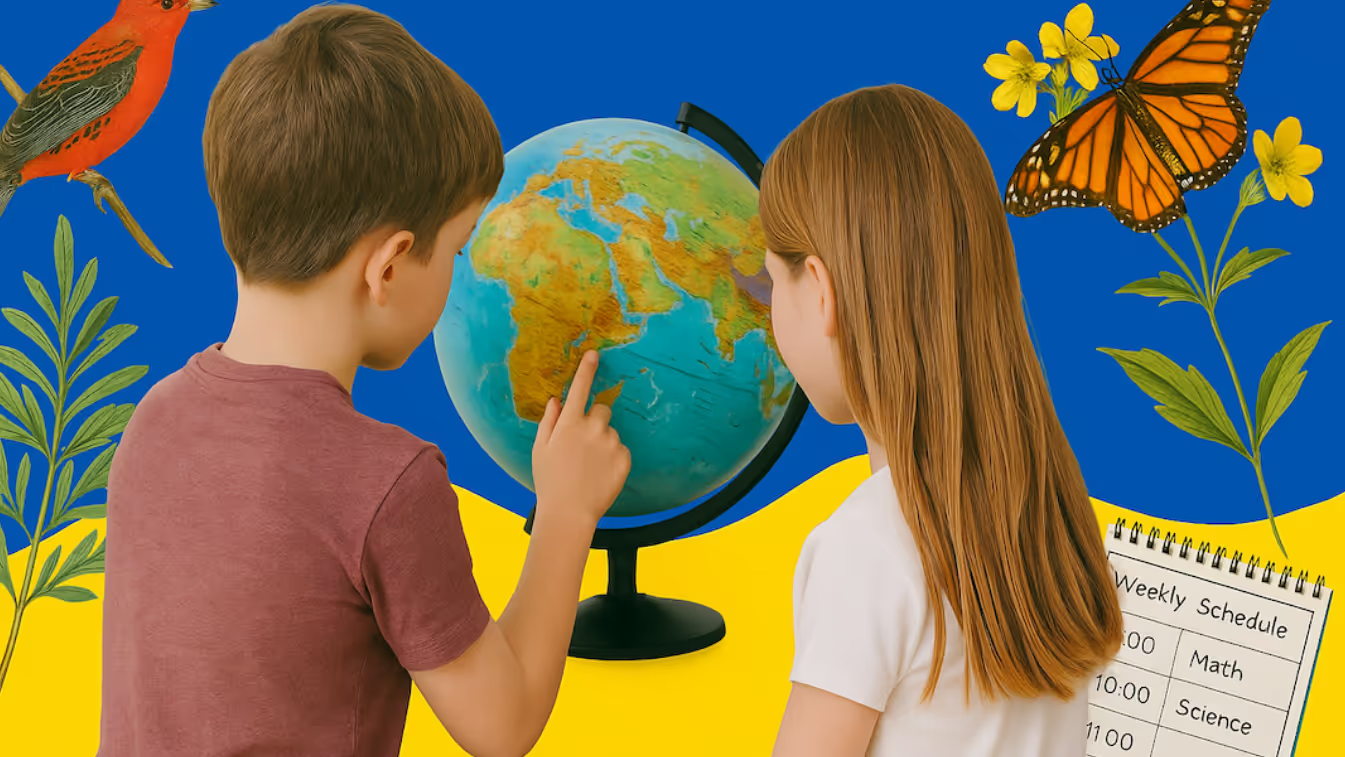
Geography is more than just memorizing countries on a map. It’s about understanding the world and the people who live in it. However, when you’re homeschooling your kiddo, it can be challenging to know where to begin. Should you go all in on maps and globes? Focus on culture? Climate?
This guide walks you through the different types of homeschool geography curricula, helpful resources, common challenges, and how to choose the one that fits your kiddo best.
Different types of homeschool geography curricula
Not every child learns geography the same way. Some do well with maps, others with stories, and some need hands-on projects to make the information stick. Here are a few of the most common approaches you’ll come across.
Map-based learning
Maps and globes are the bread and butter of geography. Kiddos learn continents, countries, capitals, and physical features while building spatial awareness. It’s great for nailing the basics, though it can feel flat without some creativity.
Literature-based
Stories can carry kids across the world without leaving the couch. Travel tales, explorer biographies, and cultural picture books bring places to life in a way no worksheet can. This approach is magical for book-loving families, blending reading skills with geography. The trick is finding the right stories and connecting them back to the map.
Project-based
This is geography you can touch. Kiddos might build volcano models, sketch climate charts, or make a diorama of the Sahara. It’s perfect for hands-on learners who thrive when they’re creating, not just memorizing. Learning through projects takes a little extra prep for parents, but the payoff is big: kids remember what they do.
Digital and interactive
From Google Earth flyovers to virtual field trips, digital geography turns the world into a clickable classroom. Gamified lessons and interactive maps keep kids engaged and curious.
Unit study approach
Unit studies weave geography into everything else. Studying “rainforests” might mean science (ecosystems), history (indigenous tribes), art (rainforest creature drawings), and, of course, mapping. This style makes learning feel whole and connected. It’s flexible, family-friendly, and great for mixing ages. It just takes some planning to cover all the basics.
Five homeschool geography curriculum choices
Once you know the learning style that works best for your family, it helps to see real curriculum options in action. Here are five choices for homeschool parents.
1. DK Geography Workbooks
DK’s beautifully illustrated workbooks cover key geography concepts like maps, landforms, climate, and world cultures. Designed by age and grade level, each book includes colorful diagrams, short explanations, and practice activities to reinforce learning.
DK Geography Workbooks are ideal for secular families looking for a clear, structured approach for their geography homeschool curriculum.
Pros:
- Engaging visuals and easy-to-follow format
- Affordable and widely available
Cons:
- Limited depth for advanced learners
- Less emphasis on hands-on or project-based work
Who it’s for: Independent learners who thrive with colorful workbooks and clear structure.
2. Around the World with Picture Books (Beautiful Feet Books)
The Around the World program uses carefully selected picture books to introduce children to the landscapes, wildlife, and cultures of different regions. Each unit includes a teacher guide with discussion prompts, mapping activities, and cultural enrichment ideas like crafts and recipes. The curriculum has Christian roots, but the content is flexible and widely appreciated for its cultural and story-driven approach.
Pros:
- Literature-rich and immersive
- Connects geography with culture and storytelling
Cons:
- Requires more parent involvement for prep and reading
- Less suited for older learners who prefer in-depth study
Who it’s for: Story-loving families who want geography tied to culture, art, and read-aloud time.
3. Core Knowledge History & Geography (CKHG)
CKHG is a full, free (yes, free!) secular homeschool curriculum for history and geography. It offers a structured sequence of units for Grades K–8 with student books, teacher guides, colorful maps, and online resources.
Geography is woven in with the civics, culture, and history curriculum. For example, students explore continents and countries, world deserts, the geography of the Americas, world rivers, and more. Parents can follow the suggested sequence, or pick units that match their child’s interests, adding hands-on projects or field trips to make it even more lively.
Pros:
- Geography and history are taught together
- Free to download
Cons:
- May need to find extra resources to get a global perspective
- Not ideal for kids who prefer story-based or hands-on activities
Who it’s for: Parents looking for a free, all-in-one program that connects geography with history.
4. Let's Go Geography
Let’s Go Geography is an online homeschool geography curriculum for K-4 that takes kids on a world tour, exploring a new country or region almost every week. Lessons include map work, flag printables, music and videos, reading, crafts, and a “Travel Journal” for kids to record what they’ve learned. It’s secular, subscription-based, and you choose which activities to do, so you can adjust for your child’s style and schedule.
Pros:
- Fun, bite-sized weekly format
- Combines physical geography with cultural studies
Cons:
- Internet access required for full experience
- Works best for elementary-aged students
Who it’s for: Parents looking for a light, global program with crafts and activities.
5. Layers of Learning
Layers of Learning is a secular, unit-study program that mixes geography with history, science, and even the arts. Instead of keeping subjects in separate boxes, it connects them so kids see how everything fits together. A geography unit might cover landforms, climate, or map skills, and lessons are brought to life with stories, hands-on projects, and games.
This geography homeschool curriculum is designed for family learning, which means siblings of different ages can learn side by side. There are built-in ways to dig deeper if you’ve got older kids who want more of a challenge.
Pros:
- Integrates geography into a broader learning context
- Hands-on and adaptable for multiple grades
Cons:
- Requires planning to gather materials for activities
- Less structured pacing, and families must set their own schedule
Who it’s for: Families who want to mix geography with other subjects in a creative, project-based way.
Additional resources for homeschool geography
Curriculum is just one piece of the puzzle. To keep geography fresh and engaging, many families add extras, from apps to games to cultural activities. Here are a few simple resources that make a big difference.
Online tools and platforms
Digital tools like Google Earth, National Geographic Kids, and EarthViewer can make geography feel real instead of abstract.
With Google Earth, you can “fly” to almost any spot on the planet, zoom in on landmarks, and even take 3D tours of cities or natural wonders. Nat Geo Kids offers interactive games, videos, and articles tailored for younger learners. EarthViewer is great for showing how continents and climates have changed over millions of years.
These tools are easy to add to a weekly routine, whether as a quick visual break from workbook time or as the spark for a deeper project.
Atlases and wall maps
Sometimes, the simplest tools are still the best. A big wall map or atlas gives kids a point of reference and builds spatial awareness over time. Hang a world map in your homeschool space and use stickers or pins to mark places you’ve studied, read about in books, or even traveled to as a family.
Geography games and puzzles
Games bring a low-pressure way to sneak in learning. Ticket to Ride teaches route planning across countries. Where in the World? is a classic trivia-style game. Apps like GeoGuessr make memorizing world geography feel like play. Even a simple world puzzle can help kids build mental maps of continents and countries.
Cultural exploration kits
Cultural kits (whether subscription boxes or DIY versions) introduce kids to a country through its food, crafts, music, and traditions. You could cook a recipe from another culture, listen to regional music, or build a simple craft connected to that place.
These experiences help kids connect geography to real people and their way of life. It’s not just about “where” a country is, but also who lives there and what their daily life looks like.
Challenges of homeschool geography lessons
Teaching geography at home can be rewarding, but it comes with a few unique hurdles. Here are some common challenges parents face.
Making abstract concepts concrete
Concepts like tectonic plates shifting or time zones stretching across continents are tricky to explain in words alone. Without visuals or hands-on models, kids may find these ideas too abstract.
You can bridge the gap with simple tools: for example, using an orange to show Earth’s layers, or a globe and flashlight to explain day and night. The challenge is finding ways to make the “invisible” parts of geography visible and memorable.
Finding diverse, global perspectives
A lot of geography curricula lean heavily on Western perspectives, like maps centered on Europe, stories of European explorers, or examples drawn mainly from the US. That can leave kids with a limited view of the world.
The challenge is making sure your child also sees indigenous voices, non-Western cultures, and regions that often get overlooked. Parents can supplement with documentaries, books by authors from different countries, or even connect with pen pals abroad. It takes extra effort, but it helps kids grow up with a more balanced, empathetic worldview.
Encouraging long-term engagement
Geography doesn’t always have the built-in drama of history or the “aha!” of science experiments. Without real-world connections, kids may see it as just memorizing maps.
The tricky part is keeping the subject alive week after week. Linking lessons to current events (“Where is this happening on the map?”), family travel, or even regional food and music can help. Variety is key. One week it might be a map quiz, the next a cooking project, the next a virtual tour.
Juggling content depth vs. breadth
Geography is huge. It covers everything from mountain ranges and weather systems to cultures, languages, and trade routes. Parents often struggle with how much to cover. Do you go broad and touch on everything, or dive deep into fewer topics?
There’s no single “right” way, but trying to do both can feel overwhelming. A practical approach is to pick a focus for the year (like continents or landforms) while weaving in lighter exposure to other areas. Over time, kids build a layered understanding without parents feeling like they have to teach the entire world in one go.
How bina teaches your kiddo geography
At bina, geography is taught as an adventure. It’s about helping kids understand the living, breathing world around them. Through our biome-based learning themes, students explore deserts, rainforests, oceans, and cities, discovering how people, animals, and environments are connected.
What sets bina apart:
-
Full-time, fully live school: five hours a day, Monday to Friday, with real teachers and classmates (not self-paced videos).
-
Internationally accredited: Meets and exceeds UK standards while blending in US Common Core, IB, Australian, and Canadian elements. bina is accredited by Cognia and Cambridge.
-
Small classes, big attention: Only six to eight students per class, with two educators.
-
Global classrooms: Kids learn alongside peers from dozens of countries, building cross-cultural awareness early on.
With precision education, we personalize geography lessons to your child’s pace and interests, while our small class sizes and experienced educators ensure every learner feels supported. Kids don’t just learn where places are. They learn why they matter, how cultures adapt, and what it means to be part of a global community. If you want to find out more about what learning is like at bina, let’s talk!
Accredited, full-time school for grades K-12
Bring the best of the classroom to your home
See if we're a fit

More to read
Homeschool history curriculum: Choices, resources, and challenges
Explore your options for homeschool history curriculum. Learn about different programs, find helpful resources, and explore precision learning with bina.

Alternative school program options for every kind of learner
Explore alternative school programs like Montessori, Waldorf, online schools, and more. Find the right fit for your child’s needs and learning style.

What is the best online homeschool curriculum for your child?
Discover the best online homeschool curricula for 2026, from live teacher-led options to self-paced programs. Find the right fit for your family.