How to plan a 1st-grade homeschool schedule for your kiddo
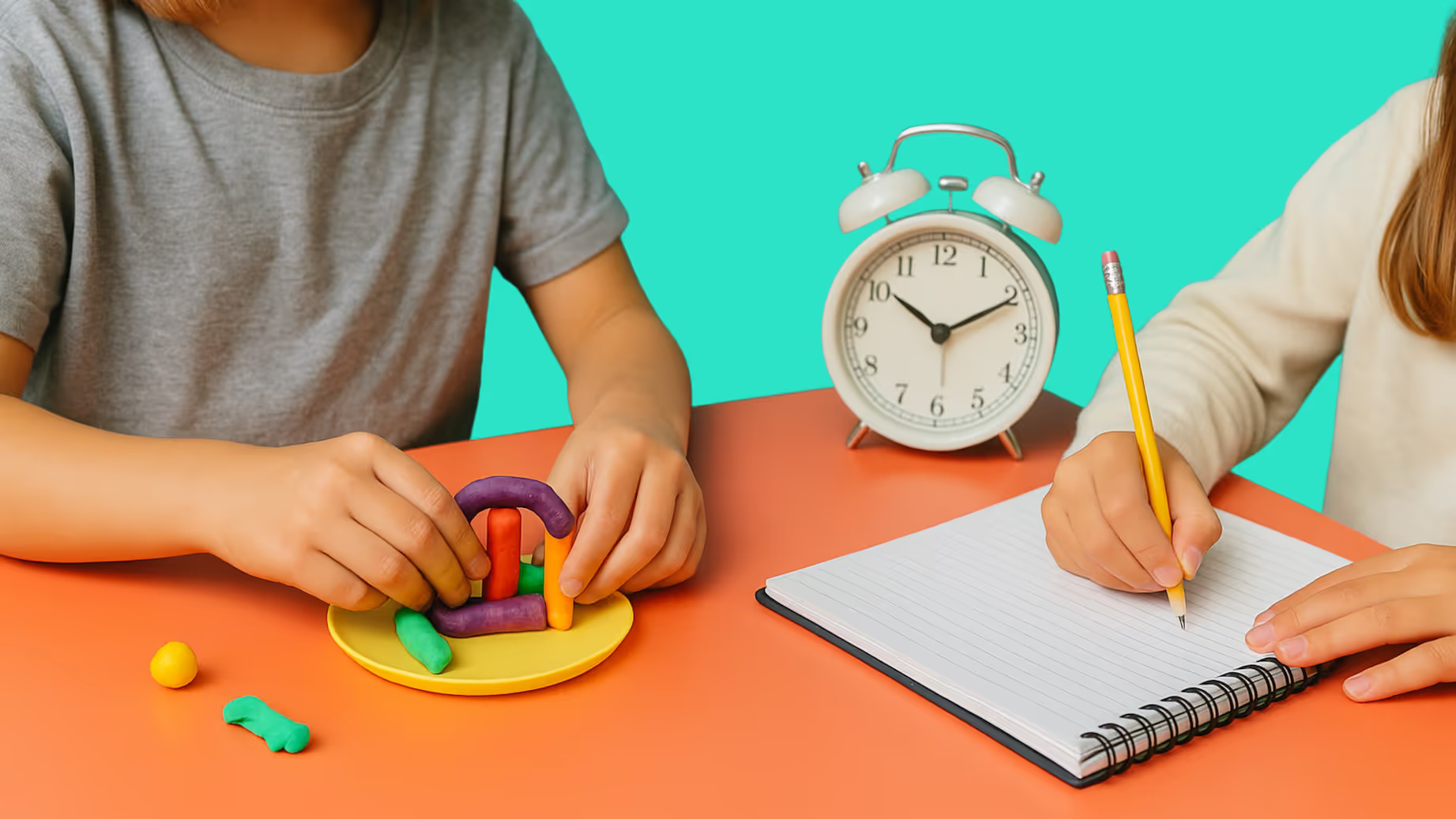
Kindergarten was all about play and discovery, but 1st grade can feel like a whole new ballgame. Suddenly, there are reading logs, math questions, and writing assignments on the table. Yet your kiddo is still so little and eager to get messy with clay, run around at the park, and build homemade forts.
So, how do you balance growing academic skills with the freedom to just be a kid? A homeschool schedule helps bring both sides together. It provides structure for learning new academic skills while making room for play and creativity.
This how-to guide will cover what to include, sample schedules, and tips on creating a 1st-grade homeschool schedule that’s balanced and fun for your kiddo.
Why having a schedule matters in 1st grade
The jump from kindergarten to 1st grade is a big one. In 1st-grade, your kiddo is introduced to heavier academics, such as phonics, spelling tests, math facts, and longer writing assignments. Going from a play-based day to more focused lessons can feel tiring at first. A schedule helps smooth this transition by easing them into this “big kid” routine.
Predictable homeschool routines help kids settle more easily into new expectations and start to build stamina. For example, knowing that math time always comes after morning circle helps them switch gears with less resistance.
For parents, a schedule offers a clear view of what’s working, where support is needed, and what to adjust to keep learning joyful.
What to include in a 1st-grade homeschool schedule
Just like in kindergarten, 1st grade days should still be a mix of focused learning blocks, physical activities, and breaks. For a deeper dive into the subjects to include, see our 1st-grade homeschool curriculum guide.
Math and problem solving
Start 1st-grade math with something fun to spark curiosity. At this age, kids are ready to move beyond counting and memorizing, toward solving real problems.
Help your kiddo build a positive relationship with math through puzzles, riddles, and word problems. The easiest way to do that is by weaving it into everyday life.
Ask your child to help measure flour when baking, practice counting coins at the store, or keep score during family games. Card and board games make critical thinking playful. It’s also a good idea to start mornings with a short math warm-up to wake up the brain.
Reading practice
Language arts play a big role in 1st grade. Kiddos begin reading and writing more independently.
Daily reading practice is essential at this age to help them develop their reading skills. Mix it up with independent reading lessons, guided reading, and parent read-alouds. You can also include a wide range of texts, including picture books, simple chapter books, and nonfiction, too. The variety helps kids improve comprehension.
Start with a short 10-minute practice, and once they get the hang of it, gradually stretch it to 20 minutes. Use the five-finger rule: if your child struggles with five or more words on a page, the book may be too advanced for now.
Project time
Let your kiddo experience the magic of bringing an idea to life with project time. First grade is a great time to introduce project-based learning.
Set aside a daily slot for projects connected to what they’re learning. If they’re studying animals, they might draw and label a habitat; if they’re learning about weather, they could create a journal that tracks daily changes.
Your kiddo can finish some of these projects in a day, while others require a week or more. Longer projects teach kids how to plan, gather materials, and stick with something from start to finish.
Science and exploration
Curiosity is a big part of growing up, so make room for discovery every day. Include hands-on activities, like experiments, nature study, field trips, and cooking, in your homeschool schedules. You can also blend reading with science exploration by researching topics like the life of stars, the changing oceans, and how trees talk to each other in kid-friendly nonfiction books.
Tie projects and experiments into what they’re currently curious about. These activities tap into their natural wonders and teach your child to find answers to their “whys.”
“Why does ice melt?” Try a science experiment with ice cubes in different temperatures of water. “How do plants grow?” Plant seeds in small pots and observe them over time.
Encourage them to record or share findings through drawings, recordings, short sentences, or photos, and share them with you.
Social-emotional growth
Big feelings can feel even bigger for little kids. In 1st grade, your kiddo is starting to navigate those emotions more independently, but they still need guidance.
Simple routines, like check-ins and reflections, give them the language to name their emotions and express them. For example, using a “feelings chart” each morning can help your child identify how they feel before they start the day.
You can also model reflection yourself. Share how your day went honestly: “I felt frustrated that I spilled my coffee in the morning, so I took a deep breath before I cleaned up.” It shows your kiddo how you cope with daily situations or challenges with self-awareness, empathy, and resilience.
Social-emotional skills are something that your kiddo carries with them throughout life. Practicing these skills early shapes the way your child handles emotions, friendships, and new situations as they grow.
Family/life learning
By 1st grade, kids are ready to take on more responsibilities. You might notice your little one wanting to help wash their own plates or walk the dog. These are signs that they’re eager to help and feel capable.
Carve out time for your child to assist with real-life tasks. These tasks help your child practice useful life skills, like baking, folding laundry, or caring for a pet, while bonding with you. They also show your child that responsibility is something to be proud of.
1st-grade homeschool schedule examples
The trick to a 1st-grade schedule is finding balance between structure and flexibility.
Compared to kindergarten:
- Lessons can be slightly longer
- More emphasis on reading, writing, and math every day
- Play and creativity are still essential to prevent burnout
Remember, the goal of a schedule isn’t to box your child in; it’s to guide them. You can always adjust the schedule depending on mood, energy level, or family routines.
Here are a few schedule samples to get you started:
Example homeschool schedule day one: for kids who thrive on routine
This daily homeschool schedule is closer to a traditional school structure. Days start and end at predictable times, and clear blocks are dedicated to core subjects and breaks.
It’s a good fit for kiddos who enjoy routine, consistency, and knowing exactly what comes next.
9:00–9:10 – Morning meetingCalendar, weather, mood check, quick warm-up activity
9:10–9:40 – Block #1: LiteracyPhonics, spelling review, or short journaling
9:40–9:50 – Short breakStretching or a quick indoor game
9:50–10:20 – Block #2: MathPractice addition/subtraction facts, hands-on problem-solving
10:20–10:30 – Snack break
**10:30–11:00 – Block #3: Science or social studies (rotating)**Rotating daily focus (for example, science M/W/F, social studies T/Th)
11:00–12:00 – Early Lunch + recess/free play
12:00–12:30 – Creative artsDrawing, painting, clay, music, or craft project
12:30–13:00 – Block #4: WritingSentence practice, spelling, or short story writing
13:00–13:30 – Physical activityOutdoor play, yoga, or organized sport basics
13:30–14:00 – Block #5: Reading (wind down)
Independent reading or read-aloud with discussion
14:00–14:15 – Wrap-up & reflectionReview highlights, set goals for tomorrow
Example homeschool schedule day two: for kids who need movement
With more breaks built in and flexible time slots, this schedule leaves extra room for movement and discovery. The focus is on learning by doing rather than sitting for long stretches.
Kids who struggle to sit still for long periods or who learn best by moving often feel more comfortable and engaged with this approach.
9:00–9:10 – Morning meeting
Calendar, mood check, and short movement warm-up (jumping jacks, yoga, silly dance)
9:10–9:40 – Block #1: Reading & discussion
Parent read-aloud or shared reading
Drawing a scene to predict what happens next or act out part of the story
9:40–10:00 – Outdoor movement break
Walk, trampoline, ball games, or scavenger hunt
10:00–10:30 – Block #2: Math through play
Board/dice games, or building with blocks
Practice of addition/subtraction woven into activities
10:30–10:50 – Snack + free play
Refuel and let the child choose an activity (puzzles, Legos, imaginative play)
10:50–11:20 – Block #3: Themed project (2–3 times per week)
Could be a science experiment, social studies story, or art project tied to a theme
11:20–12:00 – Open exploration
Independent play, nature sketching, building, or creative storytelling
12:00–13:00 – Lunch + unstructured outdoor play
Full hour for rest, social play (if with siblings or friends), or free time for imagination
13:00–13:30 – Creative choice block
Child picks art, music, dance, or a hands-on project
13:30–14:00 – Block #4: Writing & reflection
Journaling about the day, short story writing, or labeling drawings
14:00–14:15 – Movement-based closing
Yoga stretches, go on a short walk, or play a game to end the day with energy released and a positive tone
Example of a weekly 1st-grade homeschool schedule
A weekly schedule with daily anchors helps your kiddo feel secure while leaving room to pivot. Plan mornings, or whenever your child is most focused, for core skills like literacy and math. Afternoons can be reserved for creativity, movement, and independent exploration.
Monday
Morning: Literacy, math
Midday: Science experiment
Afternoon: Creative arts, writing, reading
Tuesday
Morning: Literacy, math
Midday: Social studies (community, maps, or culture)
Afternoon: Music/dance, writing, reading
Wednesday
Morning: Literacy, math
Midday: Science project or nature walk
Afternoon: Creative arts, writing, reading
Thursday
Morning: Literacy, math
Midday: Social studies story or geography activity
Afternoon: PE/outdoor play, writing, reading
Friday
Morning: Literacy, math
Midday: Fun Friday project (science experiment, cooking activity, or art or social studies)
Afternoon: Reflection activity, creative choice, reading wrap-up
Tips for designing a great 1st-grade homeschool schedule
Your kiddo will start shaping the learning habits in 1st grade that will stay with them for years to come. So, creating a thoughtful schedule sets them up for success. Here’s what you can do:
Build stamina with short, consistent blocks
First grade is the year to practice sticking with a task a little longer. Schedule three to four focused learning blocks daily for core subjects instead of trying to push through long lessons. Short block schedules help kids stay engaged and avoid burnout.
Create routines that build independence
Give your kiddo small responsibilities, like moving magnets on a schedule chart or checking off tasks in a homeschool planner, every day. This helps them take ownership of their learning and feel proud of their progress.
If juggling academics and playtime is too much, here’s another path
Many parents find 1st grade to be the first “real school” year. There’s more reading, writing, and math than in kindergarten. Managing both learning and play can feel overwhelming, especially if you’re also balancing work or siblings at home.
The good news is, you don’t have to do it all yourself.
At bina, our curriculum thoughtfully blends academics with movement, creativity, and play. Each day is built around focused learning blocks with built-in breaks to reset energy and improve focus. Lessons follow a predictable rhythm, and daily SEL check-ins allow teachers to adjust activities based on your child’s energy, interests, learning style, and pace.
As an accredited international online school, bina also gives your child the opportunity to build friendships across the globe. Kids learn how to collaborate across cultures, celebrate differences, and build confidence in who they are. You also have our dedicated Learning Success team to ensure both you and your child feel supported.
FAQs
How many hours should a 1st-grade homeschool day be?
Most homeschooling families find that about two to four hours a day, including breaks, play, and creative activities, works well for 1st grade.
According to a ResearchGate study on first graders’ attention spans, kids can focus for about 18 minutes at a time. So aim for three to five short blocks of core academics, with breaks and play in between.
Do I need to cover every subject every day?
Core subjects like literacy and math are encouraged to be practiced daily to build a strong foundation. But other areas, like science and social studies, can rotate across the week. This approach keeps learning fresh and realistic for young learners.
What if my child struggles to sit still and focus?
It’s very common for 1st graders to struggle with focus. So, if your kiddo has the wiggles, don’t stress! Here are a few strategies to gradually build stamina:
- Short blocks: Keep lessons twenty to thirty minutes max.
- Movement breaks: Plan five to ten minutes every half hour.
- Hands-on learning: Add experiments, crafts, or manipulatives to keep lessons interactive.
- Flexible seating: Try a wobble cushion, a standing desk, or work on the floor.
Accredited, full-time school for grades K-12
Bring the best of the classroom to your home
See if we're a fit

More to read
How to plan a 3rd-grade homeschool schedule for your kiddo
Learn how to plan a 3rd-grade homeschool schedule with balance. Get tips, examples, and daily schedules that mix academics, projects, and play.

How to Plan a 4th-Grade Homeschool Schedule for Your Kiddo
Build a 4th-grade homeschool schedule that balances focus and fun. Get sample routines, weekly plans, and tips to keep learning stress-free.
How to plan a 5th-grade homeschool schedule for your kiddo
See how to create a 5th-grade homeschool schedule that fits your child’s energy and curiosity. Get examples, weekly plans, and parent-approved tips.