How to plan a preschool homeschool schedule for your kiddo
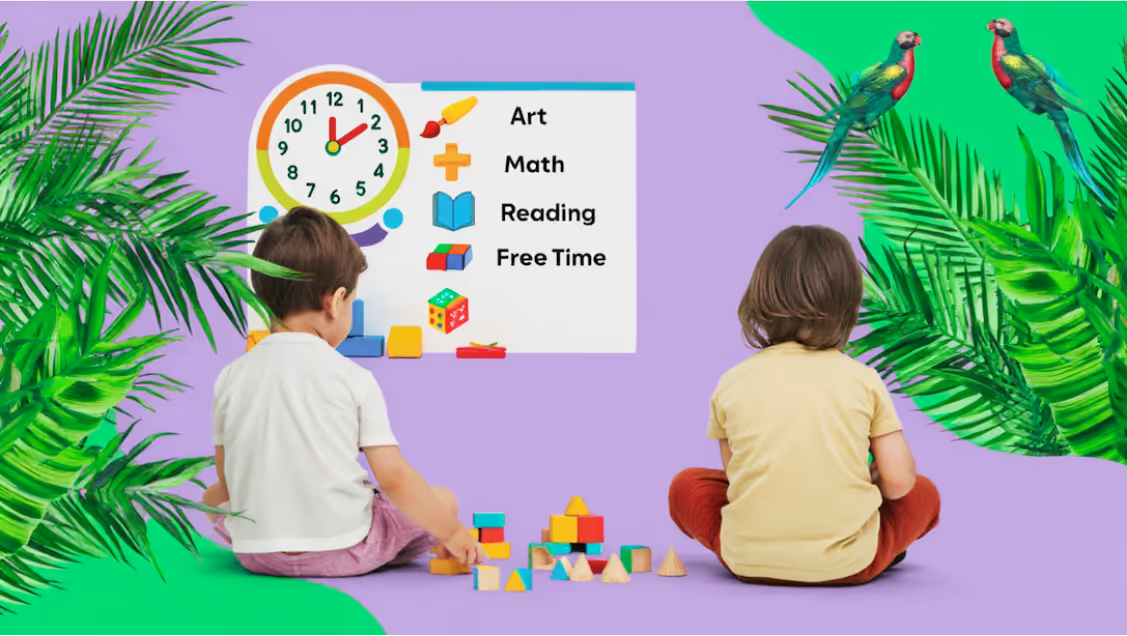
If you’ve ever tried to homeschool a preschooler without a plan, you know it can feel a lot like juggling jelly — messy, wobbly, and gone in five seconds. A homeschool preschool schedule is your secret weapon. It doesn’t need to be strict, just steady enough to guide the day: some wiggle time, some stories, a snack (or three), and plenty of play.
Let’s dive into how to plan a preschool homeschool schedule that keeps your little one learning, laughing, and thriving.
Why having a schedule matters in preschool
Having a predictable homeschool schedule for preschool isn’t just about keeping the chaos in check and the fun front and center. It’s about helping your little one’s world make sense. When children know what comes next, they feel safe enough to explore, play, and learn.
No matter when your kiddo started preschool, a simple routine gives them the building blocks for focus and independence. Those small, everyday moments of listening, trying again, and finishing what they start all fall into place with a steady schedule. It’s a gentle practice for “big kid school,” just with more time to dream and use their imagination.
What to include in a preschool homeschool schedule
Your schedule should be based on a preschool homeschool curriculum, but it doesn’t need to follow it rigidly. It should be more of a guide to balance movement, play, stories, and rest while still leaving room for curiosity to lead the way.
Here’s what a well-rounded preschool day should include.
Wiggle time
Preschoolers weren’t made to sit still. They’re wired to move.
If your child can’t walk down the hallway without hopping, spinning, or pretending to be a dinosaur, that’s perfectly normal (and actually, it’s great). Those bursts of movement are how their brains and bodies grow together. Spontaneous movements, such as running, jumping, climbing, and tumbling, help them build stronger bones, better balance, and sharper motor skills.
According to the review article, Physical Activity in Preschoolers: Understanding Prevalence and Measurement Issues, preschoolers’ activity naturally comes in quick, messy bursts, not long stretches of sitting still. That means your schedule should make space for plenty of movement breaks scattered throughout the day, not just one long exercise block. A few minutes of dancing between activities or a quick backyard run can help your kiddo’s brain recharge for the next activity.
Unstructured free play
When children get to explore without adult direction, they practice creativity, problem-solving, and emotional control in the most natural way possible. They invent their own rules, experiment with what works (and what doesn’t), and learn how to navigate frustration, joy, and collaboration, all on their own terms.
Research backs this up. A study published in Early Childhood Research Quarterly found that children aged two to five who spent more time in unstructured play (both quiet and active) developed stronger self-regulation skills years later than other children.
So when your kiddo is building with blocks, running around with a cape, or quietly sorting shapes, it’s play-based learning, aka brain-work in disguise.
Story time and early literacy
Preschool is the perfect stage for nurturing a love of reading and language, and daily story time is one of the simplest, most powerful tools you can add to your homeschool schedule to help with this.
But story time doesn’t have to mean sitting quietly while you read. Preschoolers learn best when they can jump in and be part of the story. Try these ideas to keep it playful:
-
Turn sound into a game. Clap out syllables, make up nonsense rhymes, or spot words that start with the same sound.
-
Act it out. Grab puppets, toys, or dress-up clothes and bring the story to life.
-
Pause for big questions. “What do you think happens next?” or “Why do you think she did that?”
-
Let them lead. Ask your child to retell the story or invent a new ending.
Preschool homeschool schedule examples
If you’re wondering how all these pieces come together, here are a few sample preschool homeschool schedules to help you get started. They combine learning time, movement breaks, and space for curiosity to take the lead.
Example schedule one: for the budding builder
If your preschooler is the type who’d rather stack, hammer, or take things apart just to see how they work, this schedule is right up their alley. It’s built around tinkering, creating, and connecting lessons to real, touchable experiences.
9:00–9:10 – Learning warm-up
Start the day with a short, upbeat morning circle. Talk about the weather, share feelings, and sing a “build the day” song while stacking blocks to represent each activity.
9:10–9:25 – Block #1: Literacy play
Make literacy and letter work hands-on: go on a letter hunt with magnetic tiles, trace letters in sand or playdough, or stack blocks with letter stickers to form simple words.
9:25–9:35 – Movement break
Give those wiggly bodies a reset with a few minutes of active fun. Try animal walks (crab crawl, bear walk, frog jump), a short yoga flow with “bridge” or “tabletop” poses, or a mini obstacle course.
9:35–9:50 – Block #2: Math through building
Use building blocks to introduce early math concepts. Count blocks as you stack, create color patterns with Legos, or compare the height of towers.
9:50–10:00 – Snack break
Turn snack time into a mini building challenge. Let your child stack cheese cubes into towers, line up fruit “bricks,” or piece together simple shapes.
10:00–10:20 – Block #3: Discovery time (STEM focus)
Bring science into their world of building. Try simple STEM experiments like making bridges from straws, testing which household objects roll or slide, or crafting a DIY rain gauge.
10:20–11:00 – Free play (construction corner)
Set up an open-ended building zone where creativity leads the way. Pull out blankets for fort building, stack boxes to make towers, or create a pretend “construction site” with toy trucks and blocks.
11:00–11:45 – Creative arts
Encourage 3D creativity with materials they can shape and transform. Sculpt with clay, paint boxes to decorate their forts, or make collages using recycled materials.
11:45–12:30 – Lunch + recess
Share lunch and talk about the morning’s builds. Then head outside for sandbox play, digging, or building with sticks and stones.
12:30–12:50 – Reading time
Choose stories about builders, machines, or inventors. Ask simple questions like, “What could you build from this story?” to stretch imagination.
12:50–13:30 – Rest/nap time
Offer quiet rest with independent activities like listening to music, puzzles, or drawing.
13:30–13:50 – Block #4: Big hands-on project
Revisit the day’s theme with a larger creative build. Try a Lego town, a cardboard rocket ship, or a marble run. Anything that ties back to the morning’s concepts to help your kiddo connect what they’ve learned through play.
13:50–14:00 – Wrap-up & reflection
End the day with circle time. Let your child show their favorite creation, share something they learned, or pick tomorrow’s project.
Example schedule two: for the artist at heart
This daily framework is for the dreamers who learn best through creativity and self-expression. The play-and-learn flow balances art projects, stories, movement, and calm moments to recharge.
9:00–9:10 – Rise and shine time
Start with a quick check-in. Talk about the weather, sing a song, and let your child draw what they think the day will look like.
9:10–9:25 – Block #1: Literacy through art
Blend art and language by drawing letters in sand, painting with water, or making “story art” by sketching characters from a book. Encourage kids to connect words, images, and storytelling.
9:25–9:35 – Movement break
Let loose with a short dance party, ribbon twirling, or animal-inspired yoga poses.
9:35–9:50 – Block #2: Math in art
Play with patterns and shapes. String beads by color, make shape collages, or count each stamp in a printing project.
9:50–10:00 – Snack break
Make snack time a creative canvas. Encourage your child to design fruit faces, lay out colorful snack patterns, or “paint” with spreads.
10:00–10:20 – Block #3: Science + creativity
Explore art with a scientific twist to encourage curiosity and noticing. Mix colors to see new shades appear or feel different textures like smooth leaves and rough bark.
10:20–11:00 – Free play
Let creativity lead. Offer open-ended art materials, props for pretend play, or blocks for building imaginary worlds.
11:00–11:45 – Creative arts focus
Dive deeper into art or music. Paint, sculpt with clay, collage with recycled materials, or make music using homemade instruments. Encourage them to follow their mood and ideas.
11:45–12:30 – Lunch + recess
Enjoy lunch together with a picnic outdoors (weather permitting). Then, let your kiddo burn some energy with chalk drawing, playground time, or a short nature walk.
12:30–12:50 – Reading time
Choose picture books with bold, expressive illustrations. After reading, invite your child to draw their favorite part of the story or recreate it with a puppet performance.
12:50–13:30 – Rest/nap time
Reset focus and encourage calm with coloring, soft music, or an audiobook.
13:30–13:50 – Block #4: Big creative project
End the day with a “grand creation” like a mural, cardboard costume, or art tied to the morning’s theme. Let your child take the lead and proudly showcase their imagination.
13:50–14:00 – Wrap-up & reflection
Finish with an “art show and tell.” Share the day’s work and talk about what they liked best.
Sample of a weekly preschool homeschool schedule
Here’s a simple weekly rhythm to keep your preschool days fresh and engaging. Each day highlights a different theme, blending learning, play, and time to recharge in an easy, flexible flow.
Monday – Movement and music
-
Morning: Circle time with songs and dance, then active play like animal walks, scooter rides, or a backyard obstacle course.
-
Afternoon: Make simple homemade instruments and hold a rhythm jam session to wind down the day.
Tuesday – Storytelling and pretend play
-
Morning: Read-aloud followed by acting out the story with puppets or costumes. Add in rhyming or sound-matching games.
-
Afternoon: Create a dramatic play corner — maybe a pretend shop, doctor’s office, or restaurant. Let their imaginations take over.
Wednesday – Nature and discovery
-
Morning: Head outside for a walk or bug hunt. Try a simple science activity like sink-or-float, color mixing, or planting seeds.
-
Afternoon: Bring the outdoors in with an art project inspired by your discoveries — leaves, flowers, or textures found in nature.
Thursday – Art and making
-
Morning: After circle time, dive into creative projects like painting, clay, or collage. Add a little math through art by sorting colors or stamping shapes.
-
Afternoon: Work on a collaborative project such as a mural, cardboard fort, or group sculpture using recycled materials.
Friday – Fun Friday
-
Morning: Start with sensory play using water tables, rice bins, or playdough. Then, try a simple baking project for counting, mixing, and tasting fun.
-
Afternoon: Gather for a short reflection circle to share favorite memories from the week, and then finish with outdoor free play.
Tips for designing a great homeschool preschool schedule
No two preschool days look the same, but these tips will help you build a flexible routine that keeps your kiddo engaged.
Alternate active and calm
Preschoolers thrive on balance. Mix high-energy moments, like dancing or outdoor play, with quieter ones such as story time or drawing. This gentle back-and-forth helps them stay focused and regulate their emotions throughout the day.
Use routines, not rigid clocks
A preschooler doesn’t need a minute-by-minute timetable. Instead, think in terms of a daily rhythm: “morning circle, wiggle break, snack, story, play.” Predictable order gives kids a sense of security, even if the exact times shift.
Don’t forget rest
Even if your preschooler has outgrown naps, they still need time to recharge. NIH research shows that about an hour of rest, even quiet downtime, helps little brains process what they’ve learned and come back calmer and more focused.
Follow their interests
Kids learn best when their interests guide the day. If your child’s obsessed with dinosaurs, count toy dinos during math or read dinosaur stories during literacy time. Their curiosity is an invaluable tool, so let it steer the learning experience.
You don’t have to have it all figured out
We know how hard it is to put a schedule together — from figuring out what to include to adjusting when things don’t go to plan. Some days you’ll find the perfect rhythm. Other days, the crayons melt down before you do.
At bina, we take the pressure off. Our globally accredited, full-time virtual school for ages four to 12 gives your child a consistent, engaging routine led by real teachers, not screens or worksheets. Small, live classes (just six to eight students) mean every child gets attention, connection, and room to grow.
You get peace of mind knowing the learning plan is handled, and your child thrives in a setting made for their curiosity and connection.
FAQs
Do preschoolers really need homeschool schedules?
Yes, but a schedule for a preschooler doesn’t need to be strict. It provides young children with a predictable rhythm they can rely on, which helps with transitions and reduces meltdowns.
Should I schedule free play, or just let it happen naturally?
Both. Preschoolers thrive on a mix of planned activities and open-ended free play. It’s okay to block off “play time” in the schedule to make sure it happens.
What’s the difference between a routine and a schedule for preschoolers?
A schedule has set times (like 9:00 circle time), while a routine is more about order (first circle time, then story). For preschoolers, routines often work better than a clock-driven schedule.
Do I need to include breaks or rest time?
Absolutely. Whether it’s naps, quiet time, or just lying on the couch with a book, rest is as important as active learning at this age.
Accredited, full-time school for grades K-12
Bring the best of the classroom to your home
See if we're a fit

More to read


How to create a summer homeschool schedule that sparks learning
Learn how to build a summer homeschool schedule that keeps learning fun and flexible. Explore sample routines, tips, and examples.

How to Plan a 4th-Grade Homeschool Schedule for Your Kiddo
Build a 4th-grade homeschool schedule that balances focus and fun. Get sample routines, weekly plans, and tips to keep learning stress-free.
How to plan a 3rd-grade homeschool schedule for your kiddo
Learn how to plan a 3rd-grade homeschool schedule with balance. Get tips, examples, and daily schedules that mix academics, projects, and play.