Accredited homeschool programs (What to know before choosing)
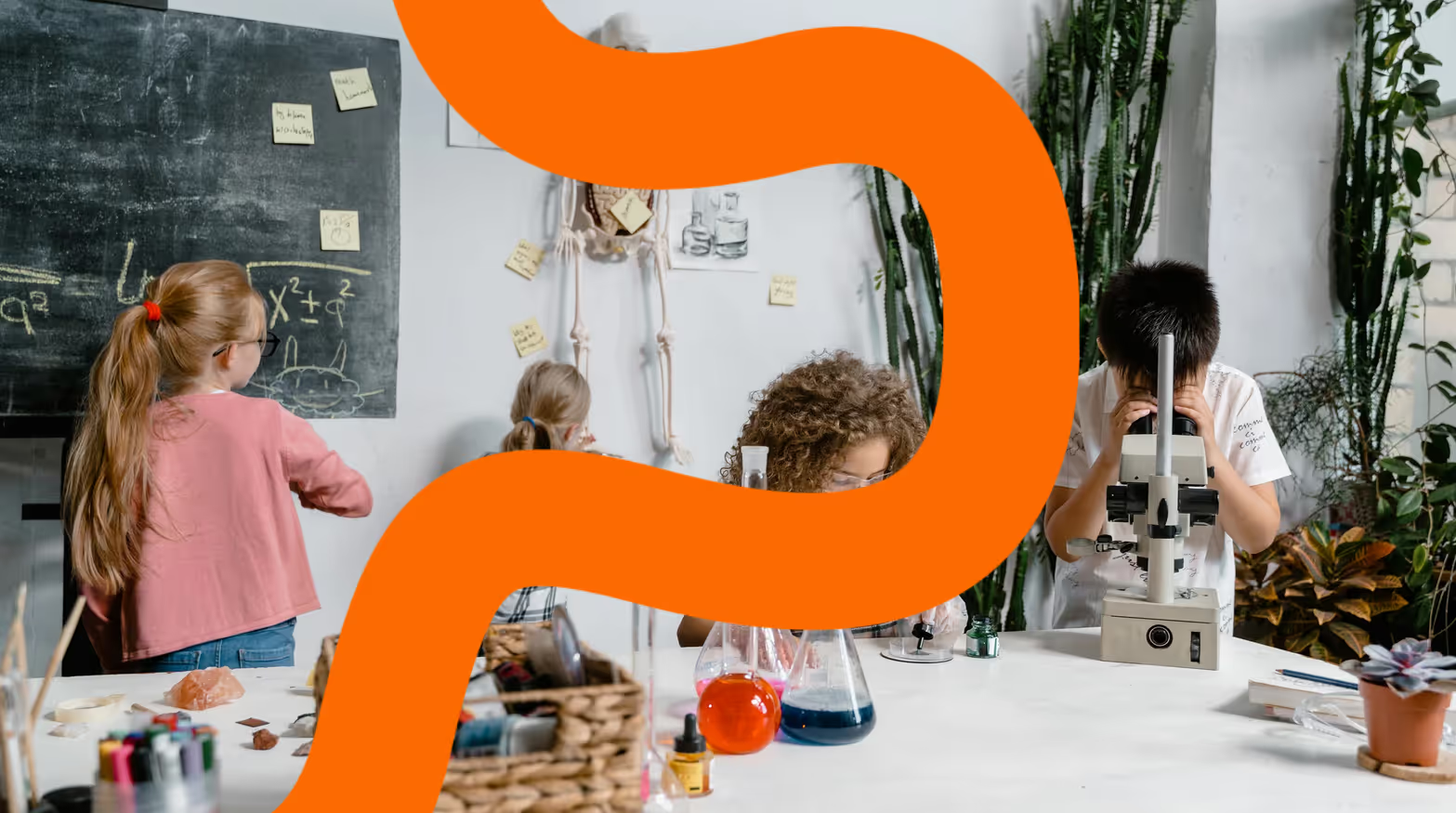
Homeschooling and online learning have taken off in recent years. And it’s not just in one part of the world — the shift is global. In the US, Italy, Australia, and the UK, for example, the numbers keep going up.
Using a homeschool option instead of traditional school is appealing to many families. When kids learn at home, parents have more control over the curriculum and how their children learn. There are fewer distractions and more space to focus on learning things that will help kids thrive in the 21st century, including social-emotional skills, life skills, and digital skills.
Of course, homeschooling comes with challenges. One of the biggest is figuring out how to provide a high-quality education from home and whether you need an accredited curriculum to do so.
So, if you’re wondering, "Do I need to use an accredited curriculum?" or "How do I know what my child should be learning at home?” read on. We answer all these questions and more in this article.
What is an accredited homeschool program?
First, let's look at what accreditation actually means. While it might sound like a fancy buzzword, it plays a huge role in education, especially in non-traditional formats like homeschooling.
Accreditation is essentially a quality check. It means a school or educational program has been checked and approved by an independent accrediting body to ensure it meets specific educational standards.
For example, in the US, these bodies include Cognia, the Independent Schools Association of the Central States (ISACS), and the Middle States Commission of Higher Education (MSCHE).
In the UK, different bodies are used, such as Cambridge Assessment International Education and the Office for Standards in Education, Children's Services and Skills (Ofsted).
Think of it as a stamp of approval that says, “Yes, this program is legit, and yes, your child’s education will be recognized and respected.”
The standards of accreditation usually include:
- Curriculum quality
- Teacher qualifications
- Student support systems
- Assessment methods
- Administrative processes
Now, here’s the thing: If you’re piecing together your own homeschool curriculum from different books, websites, and YouTube rabbit holes, it won’t be accredited.
The easiest way to get that shiny stamp of accreditation is to enroll in a structured online homeschool program. However, most online schools don’t offer all-live classes to students around the world, especially for younger kids in the preschool through primary school age group.
That’s where bina comes in — an accredited global online school for four to 12-year-olds that offers live, interactive classes.
At bina, kiddos learn from qualified teachers and follow an accredited curriculum, and you get peace of mind knowing they’re getting a comprehensive education in the comfort of home.
Plus, because we care about your kiddo's current day-to-day and their future, our school also incorporates social-emotional and life skills into daily lessons. Learners develop everything from greater self-awareness and resilience to personal finance knowledge and communication skills.
Kids learn how to manage their emotions, have empathy for others, and tackle life’s curveballs with confidence. This way, they can more easily deal with big emotions, whether that’s missing you during a lesson or feeling frustrated when their friend doesn’t want to play their favorite game during a playdate. We teach them how to handle it all with kindness, empathy, and reflection.
Also, unlike traditional accredited homeschool programs that have students work independently with limited interaction, bina brings the classroom to life with real-time teaching and a warm, supportive online environment.
Do I need an accredited homeschool curriculum?
If you’re wondering if your homeschool program has to be accredited, the short answer is, not always.
In many cases, you can still meet your state or country’s homeschool requirements using a non-accredited program. However, managing everything from putting together a curriculum to teaching and giving your child feedback so they grow can be a bit of a maze (hello, late-night Google sessions and second-guessing everything).
Also, an unaccredited curriculum can cause quite a few bumps in the road if:
-
Your kiddo wants to re-enter traditional schooling at some point. Accredited curricula are more likely to offer credit transfer.
-
University or college applications are on the horizon. If you’re not using an accredited homeschool program, be sure to keep track of your child’s work so you can demonstrate what topics they’ve learned and what their knowledge level is on core subjects like math, reading, and science.
On the flip side, accredited programs come with some pretty great perks:
-
Higher curriculum quality: Courses align with national and international standards, which is excellent for future college credit or even global opportunities.
-
More structure, less stress: Lessons are laid out clearly and are easy to follow.
-
Extra support: Some programs offer ongoing support and guidance. At online schools, like bina, your child is in a small class of no more than eight students with two dedicated teachers and all the guidance they need to excel academically and emotionally.
What are the legal requirements for homeschooling?
When it comes to homeschooling laws and requirements, there’s no one-size-fits-all answer. It really depends on where in the world (or even which state) you live.
Let’s look at registration, for starters:
-
In the UK, if your child is already enrolled in a school, you'll need to let the school know you're planning to homeschool. But, beyond that? Registering with local authorities is not legally required (though some councils may ask you to).
-
In Australia, things are a bit more official. Parents must apply through their state or territory’s education department and submit a detailed learning plan that aligns with the local curriculum. It’s more paperwork up front, but it ensures you’re meeting all the requirements (and ticking all the boxes, so to speak) from the get-go.
And then there’s the curriculum side of things, where the rules can range from easygoing to highly structured:
For example, in the US, Texas keeps things light. Homeschoolers just have to cover five core subjects: reading, spelling, grammar, math, and good citizenship.
Meanwhile, New York has much stricter rules. Kids between grades one and six are expected to learn 12 subjects and attend 900 hours of instruction per year.
As you can see, the rules vary, even between neighboring states or provinces. So, checking what's required where you live is critical.
What learning at an accredited online school is like
Homeschooling is an excellent option for parents who want their children to have a comprehensive educational foundation, without the location constraints of traditional schools.
But homeschooling isn’t your only option for learning at home.
At bina, your child still learns from the comfort of home, but you (yes, you, busy parent) don’t have to handle the teaching, grading, lesson planning, or keeping up with education standards.
This way, you get all the perks of learning at home without juggling the role of a full-time teacher. Here are just a few reasons why many families love online schools like bina.
Accredited program and qualified teachers
An accredited online school follows a recognized curriculum that meets national or international education standards. This means your kiddo’s educational journey is on par with (or even ahead of) traditional schools. As a result, it makes transitions to other schools or applying to universities so much easier.
At bina, your child is also taught by experienced, certified educators who know how to teach, engage, and adapt to different learning styles and needs. They’re not just supervisors — they’re passionate educators trained to bring out the best in each little one.
Total parent freedom
With live, accredited online schools, there’s no need for late-night lesson planning or for you to relearn pre-algebra or give your child feedback on their essay writing. At bina, the teachers handle everything — lessons, grading, and feedback.
You can rest assured knowing your child is learning (and loving every second of it) with an experienced teacher while you take care of your day-to-day responsibilities.
Small class sizes and personalized learning
bina has six to eight students per class, meaning your child won’t get lost in the noise. Instead, every voice is heard and every question is answered.
Kids are placed not just by age, but also by where they are academically and emotionally. In other words, your kiddo gets to learn with other kids on their level.
Plus, our teachers use precision education, so we adjust lessons to your child’s unique needs and strengths.
Interactive tools (quizzes, videos, and more)
Lessons come to life with videos, games, interactive quizzes, and hands-on learning. Your child won’t just sit and stare — they’ll do, create, and collaborate.
They’ll also get to talk, share ideas, and work on projects with their classmates so they can have fun while learning and remember more of what they learn.
How to choose the right accredited program for your child
Whether you’re leaning toward a homeschool setup or feeling the pull of an online school like bina, there are a few important things to think about before you hit “enroll.”
Because let’s be honest — choosing the right learning path for your kiddo isn’t just about picking a curriculum. It’s about finding the right fit for your family, your schedule, and your child’s unique needs.
Let’s walk through what to keep in mind:
Consider your child’s learning style
Some kids light up with visuals, others love to listen, and some just need to do a project to make information click. That’s why it’s so important to choose a program that matches your child’s learning style.
At bina, we take a project-based approach, where kiddos learn by doing, exploring, and getting involved.
Think about how much time you’re willing to invest
Are you ready to take on the role of teacher, lesson planner, and grader all in one? If that sounds exciting (and doable), then homeschooling might be right up your alley.
But, if your schedule’s already packed and the thought of crafting math lessons makes you want to hide in the pantry — no judgment — an online school like bina might be a better fit.
With qualified teachers handling teaching and everything that goes along with it, you can focus on being your kiddo’s number-one fan and cheerleader, not their full-time teacher.
Think beyond subjects
When your child is still in the early years, it’s not just about ticking off subjects like math or reading (though bina covers those too — along with science, writing, and even world discovery). What really matters is how they’re learning and who they’re becoming along the way.
At bina, we focus on building resilient, emotionally intelligent little humans who are ready for the world, not just ready for their next test or assignment.
Check the type of accreditation
Not all accreditation is equal. And, if you’ve got big dreams for your kiddo (like studying abroad someday), this matters a lot.
Some schools and online homeschooling programs are nationally accredited, which is great if you’re planning to stay within your country’s education system.
But, if you’re open to international opportunities down the line — say your kiddo wants to apply to universities overseas — you’ll want to make sure the program is internationally recognized.
At bina, our curriculum is aligned with international standards, which means your child gets a globally respected education that keeps doors open, wherever their journey takes them.
Is an accredited online learning program right for your kiddo?
While accredited programs aren’t a legal must in some places, they can offer major advantages, especially if you want structure, recognition, and peace of mind.
Some families thrive with accredited homeschooling, but if you’re looking for an option that offers high-quality one-on-one support, less time commitment (and stress) from your side, and international accreditation, bina might be the right fit.
Accredited, full-time school for grades K-12
Bring the best of the classroom to your home
See if we're a fit

More to read
Private homeschool programs or private online school?
Considering private homeschool programs? Learn why more families are choosing private online schools for a structured and accredited education.



The 6 best accredited homeschool programs in Alabama
Learn about the best Alabama accredited homeschool programs to consider for your kiddo in 2026.

How to choose the best online homeschool for your elementary-aged kiddo
Looking for a high-quality elementary education at home? Learn what to consider, compare popular programs, and find the right fit for your kiddo.