Best Homeschool Spelling Curriculum Options 2026
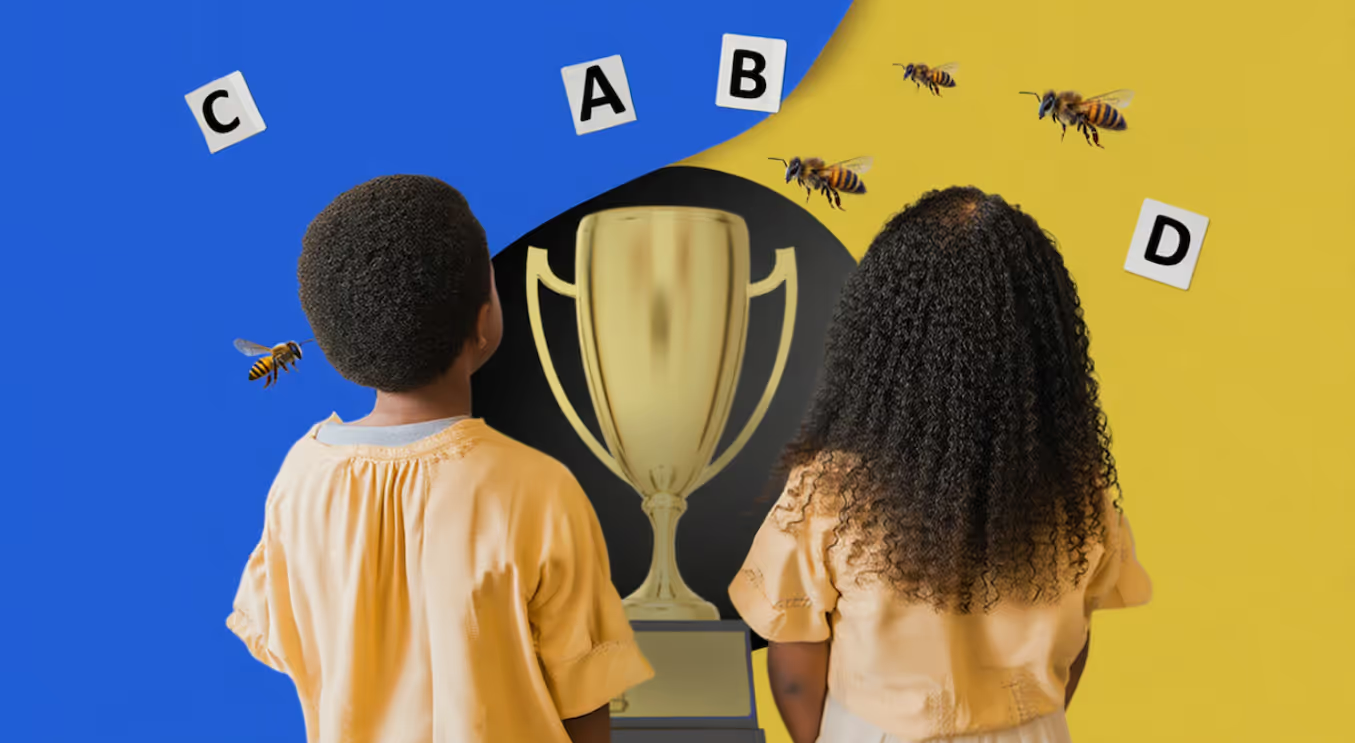
Spelling: it’s either the part of language arts that kids love, or it’s the subject that sparks groans at the kitchen table. Either way, it’s a building block for confident reading and writing.
As a homeschool parent, should you stick with old-school word lists to teach spelling? Try phonics rules? Go digital and let the apps do the heavy lifting? The truth is, there’s no one “right” way to teach spelling. Word games, silly spelling bees, and even word art can all play a role in building spelling skills into your homeschool curriculum.
This guide will walk you through the most popular spelling curriculum types, highlight a few parent favorites, share bonus resources, and call out the challenges (because yes, there will be questions when your child sees spelling logic flip upside down with words like ‘Wednesday’ and ‘castle’). We’ll also show how bina approaches spelling in a way that keeps it meaningful — and dare we say, even fun.
Different types of homeschool spelling curricula
Some kids learn best with rules, some with stories, and some by moving letters around with their hands. These are some of the main approaches you can choose from when teaching a homeschool spelling curriculum.
Phonics-based spelling
Think of this as spelling’s version of building with Legos. Kids learn sounds and patterns (like at → cat, hat, mat) and piece them together to form new words. This homeschool curriculum approach is great for younger learners who are new to reading, such as kindergartners and 1st-graders.
Unit study or theme-based
In a unit study, word lists are pulled straight from history, science, or literature lessons. That means spelling feels more relevant and connected to bigger themes, instead of being a stand-alone subject. It’s a great fit for families who like cross-curricular learning. Just know that this approach to teaching spelling may skip some grade-level basics.
Sight word / whole-word approach
Not every word in English likes to play by the rules (like “said” and “yacht”). That’s where sight words come in. Kids memorize these frequent oddballs to boost fluency and confidence. It’s full of quick wins, but there’s less strategy for tackling brand-new words.
Rule- and pattern-based spelling
“I before E except after C…” Whether you loved or hated these rules in school, they stick around for a reason. A rule-based spelling curriculum gives kids logical roadmaps for tackling tricky words and tools to figure out words on their own. The downside is that the English language breaks a lot of rules, making learning spelling this way a little confusing.
Copywork and dictation / literature-based spelling
Instead of random lists, kids copy lines from books, poems, or even their own writing. Doing this sneaks grammar, writing, and spelling practice into meaningful text and real stories, making words more memorable. The catch is that it’s less structured, so some patterns might slip through the cracks.
Multisensory / Orton–Gillingham inspired
This approach to homeschool spelling gets kids using their eyes, ears, voices, and hands all at once. They might trace words in sand, tap out syllables, or build words with letter tiles. It’s especially powerful for kids with dyslexia or other learning differences because it helps the brain lock words in from multiple angles. Keep in mind that it usually takes more prep and parent time to set up the activities.
Five homeschool spelling curriculum choices
Not sure where to start? Here are five homeschool spelling curriculum favorites, with the pros and cons spelled out (pun intended).
1. All About Spelling
All About Spelling is a big favorite in the homeschool world because it makes teaching spelling feel doable, even if you don’t consider yourself a “language arts person.” It’s built on the Orton–Gillingham approach, which means it’s super structured, step-by-step, and taps into all the senses.
Kids don’t just read words. They move tiles, say sounds out loud, write them down, and review with flashcards. That multisensory mix makes spelling stick, especially for kids with dyslexia or other learning differences.
Pros:
- There are fully scripted lessons, so you always know exactly what to say and do.
- Multisensory tools like tiles and flashcards keep learning hands-on.
- It’s designed with homeschoolers in mind, so it fits into a home routine.
Cons:
- It’s parent-intensive, not a “hand them a workbook and walk away” program.
- It doesn’t cover handwriting, so you’ll want a separate resource for that.
2. Spelling Workout
Spelling Workout is your go-to classic workbook, but with a little creative flair. Created by Modern Curriculum Press, it’s a research-based program for grades K–8 that teaches spelling with phonetic principles, word structure, and word origins.
Each lesson focuses on a specific spelling pattern or concept and connects it back to reading and writing. Kids begin with a quick pretest to see what they already know, and then self-correct their work. From there, they practice the new pattern through short activities. The lessons also use puzzles like crosswords and riddles that make reviewing a little more fun.
Pros:
- It combines phonics, vocabulary, and word origins into one cohesive program.
- Teacher’s guides support flexible pacing (choose a three-day or five-day schedule).
- Pretests and final tests help track what kids learned and what to practice.
Cons:
- All the tasks can feel like extra busywork for kids who are already strong spellers.
- It’s not ideal for kids who learn best by doing.
3. Schofield & Sims Spelling
Schofield & Sims is a well-known name in UK education, and their spelling series is designed to line up closely with the National Curriculum. The series runs from Year 1 through Year 6, with six workbooks that grow with your child. Early on, it builds from phonics. Then, it gradually layers in spelling rules, tricky patterns, and even word roots, so kids start to see the “why” behind the words they’re writing.
Each book is clean, structured, and easy to slot into your day. There’s also a teacher’s guide plus a resource book with photocopiable worksheets, so you don’t have to reinvent the wheel for practice or assessment.
Pros:
- It’s fully aligned with the UK National Curriculum.
- You get ready-made teacher support and extra worksheets.
- Kids go beyond phonics into rules, patterns, and word meanings.
Cons:
- It’s workbook-heavy, and there’s not much room for creativity or fun twists.
- Lacks hands-on activities, so active learners may lose interest.
4. Sound Waves Spelling
Sound Waves Spelling is a science-backed, Aussie-designed spelling system that’s both school-approved and homeschool-friendly. It’s built on a systematic synthetic phonics approach, meaning kids learn one sound (phoneme) and the different ways it's written (graphemes) all in a logical, step-by-step sequence.
You get full teaching support via online slides, videos, and lesson plans, paired with student books and decodable readers that match each phonics lesson. The materials also include assessments and tools to catch and support any areas where learners might be slipping.
Pros:
- This spelling curriculum takes an evidence-based approach that builds from phonics to advanced word knowledge.
- It includes a wide range of resources: student books, readers, lesson slides, and assessments.
- It’s fully aligned with the Australian Curriculum.
Cons:
- It may feel too structured for families wanting flexible learning.
- Kids need both digital access and physical materials to get the full experience.
5. Spelling You See
Spelling You See skips those dry word lists and weekly tests and takes a completely different path from traditional programs. Instead, it leans into something research-backed and developmentally smart: copywork, dictation, “chunking,” and a quick daily huddle that’s under 10 minutes.
The idea is to develop visual memory and recognize how words look within meaningful passages rather than just memorizing sequences of letters. This means spelling becomes a natural part of writing, not an isolated chore.
Lessons are organized into seven levels that follow how children naturally develop as spellers, rather than focusing on their age or grade. As they progress, the passages they work with grow alongside them: beginning with simple nursery rhymes, then moving into engaging stories about history, science, and everyday life.
Pros:
- There are no endless word lists or stressful tests.
- Short, consistent lessons (often 10 minutes or less) keep spelling from feeling overwhelming.
- Placement is based on skill level, not grade.
Cons:
- Parent involvement is required, especially with dictation lessons.
- It doesn’t teach explicit spelling rules.
Challenges of homeschool spelling lessons
Working through a homeschool spelling curriculum can test your patience. Some days it feels like nothing is sticking, and it’s easy to question whether you’re doing it “right.” Here are some of the most common challenges of teaching a homeschool spelling curriculum and how to handle them.
Keeping it interesting
“Write each word three times” gets old fast. Kids need variety to stay engaged, whether that’s turning spelling into a game, using magnetic letters, or sneaking words into a scavenger hunt. The more you can mix things up, the less spelling feels like a chore and the more it feels like part of everyday life.
Different learning styles
Every child has their own way of learning. Some love rules and patterns, others are visual learners who need color and pictures. Some simply can’t sit still without a game or hands-on activity. If one approach to an online homeschool curriculum isn’t clicking, don’t panic. Just try another. Matching the method to your child’s learning style can turn frustration into progress.
Balancing memorization vs. application
Lists can help with recall, but memorizing words isn’t enough on its own. The real test is whether your child uses those words correctly in their writing. That’s why it’s important to weave spelling into stories, journal entries, or dictation passages. The goal is to make spelling a tool for communication, not just a test to pass.
Tracking progress
Spelling improvement can be sneaky. Unlike math, there isn’t always a big “aha!” moment — it’s more about gradual accuracy over time. Without regular dictation, review, or informal checks, it’s easy to wonder if anything is sticking. Keeping a simple spelling journal or revisiting old word lists can help you see just how far your child has come.
Parental confidence
You might worry that you aren’t teaching spelling “the right way.” But the truth is, there isn’t just one right way. What matters most is consistency — regular practice, feedback, and encouragement. It’s perfectly fine to learn alongside your child, and sometimes your willingness to model persistence is the best lesson of all.
How bina teaches your kiddo spelling
At bina, spelling isn’t a separate box to tick. It’s part of the bigger picture of reading, writing, and communication. Instead of drilling random word lists, kids learn spelling in context, which makes it more meaningful and easier to remember.
Here’s what that looks like in practice:
-
Precision learning that fits your child – Teachers use real-time insights to craft spelling activities that challenge (not overwhelm) each child. It’s education tailored to their pace, not one-size-fits-all.
-
Small classes – With no more than eight students and two teachers, spelling support is always just a question away. That means plenty of individual attention and space for each child to learn.
-
Contextual learning – We pull spelling words from our nine themed biomes, like Marine or Rainforest. That way, spelling is a part of stories, science, and real-world exploration.
-
Live, full-time instruction – Classes are happening in real time, not pre-recorded. Educators give feedback as kids write, collaborate on shared projects, and apply spelling right in the moment.
-
Global classroom environment – Learning takes place with peers from across the world. That means spelling lessons are threaded into multicultural themes, helping kids see how words and ideas connect in the world.
At bina, kids aren’t just memorizing words. With our project-based, real-world approach, bina helps children see spelling as a tool to express themselves and connect with others.
See how bina makes spelling click
Tired of endless word lists? At bina, spelling grows out of real lessons, stories, and projects. With small classes and personal support, kids gain confidence while you get peace of mind. Discover how our online primary school keeps learning connected and spelling stress-free.
Accredited, full-time school for grades K-12
Bring the best of the classroom to your home
See if we're a fit

More to read

What is the best online homeschool curriculum for your child?
Discover the best online homeschool curricula for 2026, from live teacher-led options to self-paced programs. Find the right fit for your family.



The 7 best homeschool reading curriculum options in 2026
Teaching your child to read is one of those core parenting moments you'll remember forever. That feeling you get when they first decode a word or read…


A parent's guide to the 7 best homeschool math curriculum options in 2026
Discover the best homeschool math curriculum options for your kiddo in 2026.